The granddaughter of the founder of Westboro Baptist Church has given a powerful TED talk explaining how she learned to love her enemies and how this led her to leave the church.
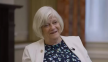
Megan Phelps-Roper, granddaughter of Fred Phelps, who left the church with her younger sister Grace in November, said she was a blue-eyed, chubby-cheeked five-year-old when she joined her family on a picket line for the first time.
'My mom made me leave my dolls in the mini-van. I'd stand on a street corner, in the heavy Kansas humidity, surrounded by a few dozen relatives, with my tiny fists clutching a sign that I couldn't read yet: "Gays are worthy of death." This was the beginning.'
The Westboro protests soon became a daily occurrence and an international phenomenon.
'As a member of Westboro Baptist Church, I became a fixture on picket lines across the country. The end of my anti-gay picketing career, and life as I knew it, came 20 years later, triggered in part by strangers on Twitter, who showed me the power of engaging the "other".
'In my home, life was framed as an epic spiritual battle between good and evil. The "good" was my church and its members. And the evil was everyone else. My church's antics were such that we were constantly at odds with the world. That reinforced our "otherness" on a daily basis.'
From baseball games to military funerals, they trecked across the country with their neon placards, 'to tell others exactly how unclean they were, and exactly why they were headed for damnation'. Phelps-Roper said this was the focus of their whole lives, and the only way to do good 'in a world that sits in Satan's lap'.
Like the rest of her 10 siblings, she believed what she was taught 'with all my heart'.
In 2009, her zeal led her to join Twitter. And she found herself up against the 'digital version' of the 'screaming hordes' she had been seeing at protests since she was five.
She described how on Twitter, someone would arrive at her profile with their usual scorn and she would respond with a mixture of Bible verses and smiley faces. But then something different began to happen – and genuine conversations took place where she and her interrogators tried to find out how they had each come to their separate conclusions about the world.
Sometimes, the people she sparred with on Twitter would turn up at Westboro protests to engage with her in real life.
One such Tweeter, David, turned up at a protest in New Orleans. He took her a sweet pudding to eat from Jerusalem, and she offered him some kosher chocolates while holding a 'God hates Jews' sign. 'There was no confusion about our positions but the line between friend and foe was becoming blurred. We'd started to see each other as human beings, and it changed the way we spoke to one another.'
Over time, these conversations planted the seeds of doubt in her. She began to question things such as why Westboro advocated the death sentence for gays, when Jesus said: 'Let he who is without sin, cast the first stone.' How could they claim to love their neighbour, while at the same time praying for God to destroy them?
The care shown to her on the internet was growing evidence that people on the 'other side' were not the demons she had been led to believe they were.
This changed her life.
'Once I saw that we were not the ultimate arbiters of divine truth, but flawed human beings, I couldn't pretend otherwise.'
She could no longer justify their actions, especially the 'cruel' practice of protesting funerals. This eroded her trust in her church and it became impossible for her to stay.
She left in 2012.
And she was amazed to find that the world, which had access to her past through the internet, was willing to give her a second chance. She wrote an apology for her past and tried to forge a new future. It still amazes her that she was accepted. Her friend David even invited them to stay with his family. 'They held nothing against us. Again, I was astonished.'
She found it a 'relief' to let go of the harsh judgments that ran through her mind with so many people she had encountered.
She said she was speaking out now because of how society is becoming divided and increasingly polarised. 'The path we have chosen looks so like the one I walked away from four years ago.'
It was possible to do something about this, but hard. People have to talk with those they disagree with, to show kindness to those who treat them with contempt.
She outlined four steps to move forward: don't assume 'bad intent', ask questions, stay calm and finally, make the argument.
Megan Phelps-Roper is now a writer and activist.