An Employment Tribunal has refused to strike out a case brought by a Christian electrician who says he was discriminated against by an NHS Trust because of his opposition to "the growing influence of Islam in Britain and other countries".
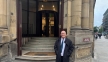
Brian Walker, 66, is being supported by the Christian Legal Centre (CLC) in his claim against North Bristol NHS Trust.
He says he was forced out of his job as an electrician because of his "conservative Christian beliefs" on a number of issues, including Islam, multi-culturalism and same-sex marriage.
At a hearing in November, the Trust asked the Employment Tribunal to strike out the claim on the grounds that his beliefs are "not worthy of respect in a democratic society" and should not be protected by the Equality Act.
Lawyers for the Trust have argued that Mr Walker was disciplined for making offensive comments but not for his beliefs.
Barrister Christopher Milsom argued that Mr Walker's intolerance was reflected in his statement, "I believe Christianity to be the only true way to God, and I do not want people to harm their souls by believing Islam instead."
In a judgment this week agreeing to hear Mr Walker's claim, Judge Reed said opposition to Islam was likely to be a protected belief under the Equality Act.
He referred to the recent case of Maya Forstater, who lost her job at a think tank because of her gender-critical beliefs.
She originally lost her case after a judge ruled that her beliefs were "not worthy of respect in a democratic society". But she later won at appeal when it was ruled that "only beliefs akin to Nazism or espousing totalitarianism would fail to qualify for protection".
Judge Reed said that in light of the Forstater ruling, "it does not appear that that is a submission that is likely to meet with much success."
The full hearing of Mr Walker's claim is due to take place at a two-week trial in Bristol Employment Tribunal from 10 to 21 October.
Mr Walker said he was "relieved and delighted" that the case is now proceeding to a full hearing.
"Christian beliefs, and especially any expressing of them, are being suppressed in the NHS. The argument that my beliefs, which I believe are shared by many, are not worthy of protection under the law must end," he said.
"This case is not about me. I am fighting it for younger generations of Christians who have mortgages to pay and careers to lose."
CLC chief executive Andrea Williams said: "Brian's story shows the dangers people face when daring to question or even joke about inclusion and multiculturalism.
"The fact that NHS lawyers argued that his beliefs are not worthy of respect in a democratic society or protection under the equality act was disturbing. Such a claim equated Brian's Christian conservative beliefs with neo-Nazism.
"In a truly free society we must be able to question and critique each other's beliefs. In this respect, Brian has been vindicated and the judge has ruled that he was free to question another faith and belief."
North Bristol NHS Trust has been contacted for comment.