
In his new book, The Mystery of the Last Supper, Cambridge University Professor Sir Colin Humphreys claims that the Last Supper took place on the Wednesday and not the Thursday before Jesus’ death.
Christians around the world commemorate Jesus’ Last Supper with the disciples on Maundy Thursday.
Professor Humphreys says he used the Gospels and science “hand in hand” to answer the question of when Jesus had his final meal with his disciples and solve an apparent contradiction in the accounts of Matthew, Mark, Luke and John.
While the Gospels of Matthew, Mark and Luke assert that the Last Supper took place at the start of the Passover, John is alone in recording that it took place before the Passover.
Professor Humphreys’ study is based on earlier research he carried out with Oxford astrophysicist Graeme Waddington, in which they identified the date of Jesus’ crucifixion as the morning of Friday 3 April 33.
If Jesus died on April 3, the standard Jewish calendar of AD33 would have placed his crucifixion on the 14th day of the Jewish month of Nisan. The Passover meal, however, falls on the 15th day, which supports John’s account, but not those of the other Gospels.
The official Jewish calendar used at the time of Jesus’ death is still in place today and follows a lunar system in which days run from sunset to sunset.
The professor argues that Jesus used a different calendar to that commonly used by Jews at the time, according to which the Passover always fell earlier and the days were marked from sunrise to sunrise.
He concludes that, according to this calendar, the Last Supper would have taken place on the Wednesday of Holy Week, rather than the Thursday.
This, he contends, would solve the question of how Jesus’ arrest, interrogation and trial before two courts could all take place before his execution on Friday morning.
“Whatever you think about the Bible, the fact is that Jewish people would never mistake the Passover meal for another meal, so for the Gospels to contradict themselves in this regard is really hard to understand,” Professor Humphreys said.
“Many biblical scholars say that, for this reason, you can’t trust the Gospels at all. But if we use science and the Gospels hand in hand, we can actually prove that there was no contradiction.”



-

UN officials demand explanation for Iranian church seizure
-

AI could become a ‘very dangerous master’, warns John Lennox
-
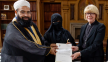
Archbishop of Canterbury withdraws award given to Muslim cleric who praised Bin Laden
-
Calls for Church of England to be 'rooted in scripture' ahead of General Synod elections
-

Most practising Christians are evangelical, study finds
-
Church of England blessing same-sex relationships 'a bridge too far'
Most Popular
News

People view religious education positively, study finds
The government is consulting on plans to add RE to the national curriculum.
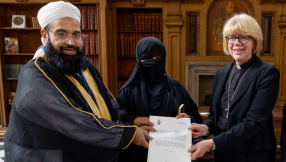
Archbishop of Canterbury withdraws award given to Muslim cleric who praised Bin Laden
Reform leader Nigel Farage said the decision to award Hafiz Muhammad Tahir Mehmood Ashrafi was "astonishing".
How the new General Synod could move beyond the present disagreement over same-sex relationships
How might the next Synod make progress in the next five years based on a recognition that there are those in the Church of England who hold fundamentally opposed positions on the matter? Is there a way of allowing both sides to achieve what they want? Martin Davie argues that the answer to this question is ‘Yes.’
No part of London should become a free speech, gospel exclusion zone
Soho is not exempt from freedom of speech and Christian expression. And Christians do not lose their fundamental freedoms when they cross an invisible boundary into a neighbourhood associated with a different worldview. The streets of London belong to all of us, writes Andrea Williams.








