Christian refugees who have fled ISIS in Iraq and Syria are practising their faith in secret now they live in a Muslim-majority nation, according to a Turkish newspaper.
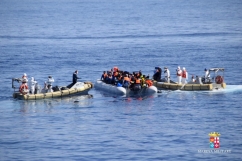
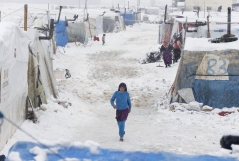
When civil war in Syria broke out in 2011, thousands fled to neighbouring Turkey. The number of refugees swelled following the uprising of so-called Islamic State, and the UN High Commissioner for Refugees says that tens of thousands of Iraqis are now also seeking refuge in Turkish towns and cities, alongside 1.9 million Syrians.
According to the Hurriyet daily newspaper, thousands of Armenians, Syriacs and Chaldean Christian refugees are now living in small Turkish cities including Amasya, Erzurum and Yozgat.
One family who fled Iraq in 2014 told the newspaper that they pretend to be Muslim in public. The Turkish government is secular, but there are fears that it is becoming increasingly Islamist under president Recep Tayyip Erdogan.
"My husband and I fled with our two children one year ago with around 20 other families. There was pressure on us in Iraq," an Armenian woman living in Yozgat, told Hurriyet.
"We have relatives in Europe. We are only getting by thanks to their support.
"Our children cannot go to school here because they cannot speak Turkish. They can only communicate with the children of other Armenian families who have moved here."
Another family who fled Baghdad told the newspaper that their seven-year-old daughter had not spoken since the day their home was raided by ISIS militants in 2014.
"We are working hard to provide her treatment, but she still won't speak," Linda Markaryan said.
"We do not have a future here. Everything in our lives is uncertain. Our only wish is to provide a better future for our children in a place where they are safe and secure... We are pious people, but we have to conduct our sermons and prayers at home. This is hard."
Turkey has a strong Christian heritage – the apostle Paul and Timothy were both born there, and the city of Antioch, now Antakya, was known as "the cradle of Christianity" – but a series of genocides in the early 20th century killed much of the Christian population. The collapse of the Ottoman Empire in 1923 also forced many Armenians, Assyrians, Greeks and Georgians to leave the country, and the population of Turkey is now more than 97 per cent Muslim.
A recent study by the Gordon-Conwell Theological Seminary in Massachusettes found that the Christian population of Turkey has plummeted over the past 100 years from 21.7 per cent to just 0.2 per cent.
In an interview with the BBC in August 2013, however, a Syriac Orthodox priest said that the influx of Syrian refugees into Turkey had revived the faith community.
"Thank God our community is alive again," Father Joaquim said. "On Sundays our church is full with worshippers."