
I've become increasingly dissatisfied with the dry institutional deadness of much of what I see on offer in my local church each Sunday.
|PIC1|But I've also become more and more intolerant of the noisy unstructured mayhem which passes for worship in many 'renewed' churches.
I've been wondering if it's some kind of mid-life Christian crisis, or if it's something to do with my own development as a Christian.
Strangely enough, however, the more I've mentioned it to my Christian friends the more concerned I've become. It seems that a lot of Christians are feeling just the same as me.
Many twentieth century Christians look back to the hymns of Wesley, the gospel songs of Sankey, the brass bands of Booth, or the praise music of Kendrick as their 'definitive' experience of worship. But none of these niche worship cultures seem to meet my need.
Some say that true worship is only to be found at Spring Harvest, Stoneleigh or Easter People. I believe, however, that the church of the new millennium needs to draw from a much wider spectrum of worship resources. I've come to the conclusion that it would be all the richer if it could tap into a much more diverse range of traditions.
Post modernism is all about a re-discovery of roots, and I believe that the church needs to come to appreciate the richness of its heritage and to connect with the mystery of its ancient worship culture. I'm anticipating that the coming years will see a growth of interest in traditional liturgy, ancient prayers, the beauty of silence and the flickering aura of candlelight.
Dr. Eddie Gibbs formerly a lecturer in church planting at the Fuller School of World Mission, has returned to pastoral ministry as a curate in the parish with the world's most salubrious post-code, Beverley Hills 902101. He points out that his parishioners, who are the stars of the movie industry and the culture shapers of America, are looking for spiritual roots and for time to reflect and be still.
|TOP|Gibbs questions whether much of our busy contemporary worship is relevant to the newly emerging post-modern culture. The church of the new millennium will recognise that its worship must be closely connected to the rich and diverse heritage of its ancient past.
A church without a sense of the past has no roots. Though I acknowledge that it can't live on tradition and it won't survive if it lets the past dominate. The church's rich heritage of liturgy needs to be re-discovered with its oft-repeated words full of meaning.
Those who believe that the worship band and the five-line chorus are the definitive form of contemporary worship should beware. Our world is changing fast, and the day is not far distant when the worship group will seem as culturally peculiar as the brass band.
As I look to the future of worship in the U.K. I'm convinced that we need to re-discover the lost art of 'practising the presence of God'. We must find a new awareness of the Holy and come to prayer with a new hunger for the Living God. We must learn how to pray with mind and spirit and echo Paul's experience when he wrote:
|AD|"What should I do, then? I will pray with my spirit, but I will also pray with my mind."(1 Cor.14v15). Worship must both renew and transform.
The bottom line is that true worship must spring from our innermost being, not hindered by personal circumstances, mood swings or spiritual lows. It can't be stimulated by 'mood enhancing' tapes.
We must learn how to worship through tears of sadness and from the anguish of suffering... so that nothing will prevent us from giving our 'sacrifice of praise'. It certainly shouldn't depend on the lyrics of the latest worship guru!
The church of the new millennium must begin to teach that the whole of life is worship, not just an hour on Sundays. There can be no great divide between sacred and secular, Sunday and Monday. All that God's people are, all that they do, and all that they have must become their daily offering of worship.
Worship is all about shopping in the supermarket and driving on congested roads. It flows from good family relationships and from caring for awkward colleagues. It comes out of the frustration of difficult work and the joy of a job well done. It celebrates the presence of God in the nitty-gritty of everyday routine. True worship is true life itself.
"Everything you do or say, then" wrote Paul "should be done in the name of the Lord Jesus, as you give thanks through him to God the Father." (Col 3v17).
The quality of our worship must flow from the quality of our lives. Worship must be what we take to church, not what we go to receive. It must become a lifestyle of sacrifice not an opportunity to get blessed.
[Rev Dr Rob Frost is the Director of Share Jesus international, a mission agency serving seven Christian denominations. He is the leader of Easter People and presents the Sunday Breakfast show on Premier Radio from 8-10am. More on his work can be found at www.sharejesusinternational.com]
49% OFF

MANSPOT Electric Pubic Hair Trimmer - Waterproof Body and Groin Shaver for Men and Women (Black)
$20.39 $40
25% OFF

Lick-Safe Dog Paw and Nose Balm Stick - All-Natural Moisturizer with Coconut Oil for Dry, Cracked Pads and Snout
$11.69 $15.59
77% OFF
Men's Quick Dry Moisture Wicking Polo Shirt - High Elasticity Slim Fit Athletic Top (Runs Small)
$6.99 $29.99
46% OFF

Men's Running Shorts with Zipper Pockets - Lightweight, Quick-Dry, Multi-Sport
$12.95 $23.99
50% OFF

NEWFAST NF-RE523 AC1200 WiFi Extender - 1200Mbps Dual Band Signal Booster & Internet Repeater
$18.5 $36.99
48% OFF

G Gradual Men's 7-inch Workout Running Shorts - Lightweight, Quick-Dry, Comfort
$12.91 $24.99
30% OFF
NOVETE Under Sink Water Filter - 3 Years, 30,000 Gallons, High-Efficiency Filtration
$41.99 $59.99
50% OFF

HDPE All-Weather Adirondack Chair with Built-In Cup Holder - Tool-Free Assembly (Grey)
$69.99 $139.99
60% OFF

HOMETUK Clear Plastic Storage Bins with Dividers - 3-Pack Stackable Acrylic Organizer Containers for Fridge and Pantry
$19.99 $49.99
58% OFF

G Gradual Men's Fishing Shirt - UPF 50+ Lightweight Short Sleeve Button Down with Zipper Pockets
$14.99 $35.99
55% OFF

Everyfun 60" Rectangular Platform Tree Swing - 700lbs Heavy Duty Adjustable Outdoor Swing (Colorful)
$49.99 $110.99
61% OFF

Ekouaer Women's Casual Loose Jumpsuit - One-Piece Printed Sleeveless Wide Leg Romper with Pockets
$14.99 $37.99
36% OFF

Men's Athletic Running Shorts with Zipper Pockets - Lightweight & Quick Dry
$12.74 $19.99
61% OFF

Modern Ceiling Fan with Light and Remote - Reversible Quiet DC Motor
$69.3 $179.99
50% OFF

MOOKA H13 True HEPA Air Purifier for Home Large Room - 1076 sq ft Odor Eliminator
$39.97 $79.95
40% OFF
X-Sense XS01-WX Smart Smoke Alarm - 2.4 GHz Wi-Fi Photoelectric Fire Detector with Mobile App Alerts
$65.99 $109.99
11% OFF

VitaUp Beet Root Gummies with CoQ10 & Grape Seed - Nitric Oxide Circulation Support (60 Count)
$24.91 $27.91

Sealy 2-Pack Tritech 16" Twin Inflatable Air Mattress with Built-in AC Pump
$0 $113.99
20% OFF

INTEX Prism Frame 20ft x 52in Above Ground Pool Set - Round Steel Frame Swimming Pool
$695.99 $869.99

Gardner Pet 43" Heavy Duty Dog Crate with Wheels - Indestructible Folding Metal Cage (Black)
$0 $149.99




-

Diary of a CEO’s Steven Bartlett and John Lennox discuss AI, faith and the search for meaning
-

Belfast churches 'heartbroken' over unrest
-

Is there a two-tier Britain?
-

Churches must disciple well and listen well in response to rise of Christian nationalism
-

Biblical models and the creation of King Arthur
-

Welsh reverend speaks of culture of fear over LGBT issues
Most Popular
related articles
Rev Rob Frost: A New Kind Of Evangelism
Rev Rob Frost: A New Kind Of Evangelism
News
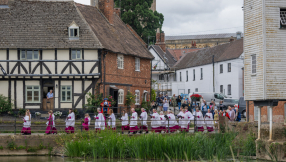
Gloucester churches come together to bless River Avon amid pollution concerns
It is part of a broader campaign against river pollution as concerns remain about the amount of untreated sewage in the Avon.

Life beyond burnout: how Christians can grow in the desert seasons
Christian Today speaks to author and Anglican priest Tish Harrison Warren about growth in desert seasons and why the Church shouldn’t treat all spiritual weariness as a problem to fix.

Iranian-born bishop stands in solidarity with Britain's Jews
2025 had the second highest number of antisemitic incidents on record.

Bishops protest Israeli arrest of another Palestinian Christian
An Evangelical Lutheran has been accused of "promoting terrorist activities".
MANSPOT Electric Pubic Hair Trimmer - Waterproof Body and Groin Shaver for Men and Women (Black)
$20.39
Lick-Safe Dog Paw and Nose Balm Stick - All-Natural Moisturizer with Coconut Oil for Dry, Cracked Pads and Snout
$11.69
Men's Quick Dry Moisture Wicking Polo Shirt - High Elasticity Slim Fit Athletic Top (Runs Small)
$6.99
Men's Running Shorts with Zipper Pockets - Lightweight, Quick-Dry, Multi-Sport
$12.95
NEWFAST NF-RE523 AC1200 WiFi Extender - 1200Mbps Dual Band Signal Booster & Internet Repeater
$18.5
G Gradual Men's 7-inch Workout Running Shorts - Lightweight, Quick-Dry, Comfort
$12.91
NOVETE Under Sink Water Filter - 3 Years, 30,000 Gallons, High-Efficiency Filtration
$41.99
HDPE All-Weather Adirondack Chair with Built-In Cup Holder - Tool-Free Assembly (Grey)
$69.99
HOMETUK Clear Plastic Storage Bins with Dividers - 3-Pack Stackable Acrylic Organizer Containers for Fridge and Pantry
$19.99
G Gradual Men's Fishing Shirt - UPF 50+ Lightweight Short Sleeve Button Down with Zipper Pockets
$14.99
Everyfun 60" Rectangular Platform Tree Swing - 700lbs Heavy Duty Adjustable Outdoor Swing (Colorful)
$49.99
Ekouaer Women's Casual Loose Jumpsuit - One-Piece Printed Sleeveless Wide Leg Romper with Pockets
$14.99
Men's Athletic Running Shorts with Zipper Pockets - Lightweight & Quick Dry
$12.74
Modern Ceiling Fan with Light and Remote - Reversible Quiet DC Motor
$69.3
MOOKA H13 True HEPA Air Purifier for Home Large Room - 1076 sq ft Odor Eliminator
$39.97
X-Sense XS01-WX Smart Smoke Alarm - 2.4 GHz Wi-Fi Photoelectric Fire Detector with Mobile App Alerts
$65.99
VitaUp Beet Root Gummies with CoQ10 & Grape Seed - Nitric Oxide Circulation Support (60 Count)
$24.91
Sealy 2-Pack Tritech 16" Twin Inflatable Air Mattress with Built-in AC Pump
$0
INTEX Prism Frame 20ft x 52in Above Ground Pool Set - Round Steel Frame Swimming Pool
$695.99
Gardner Pet 43" Heavy Duty Dog Crate with Wheels - Indestructible Folding Metal Cage (Black)
$0