
Bishop Michael Nazir-Ali, who announced his resignation as Bishop of Rochester last week, has spoken out against a “values vacuum” in the UK,and called on the nation to rediscover its Christian heritage.
The bishop, who steps down in September, said that the UK had left behind the moral framework provided by the Bible in favour of diversity.
Writing in The Telegraph, he said that there had been a “gradual loss of identity and cohesiveness” in society due to the abandonment of biblical values, which had long been held in the country.
In particular, he said that societies ideas about the sanctity of life, equality, natural rights and freedom all arose from a tradition rooted in the Bible.
He added that other faiths may have values which coincide with Bible-based values of the past, but said they would inevitably emphasise other aspects of life more than others, for example social solidarity over personal freedom.
Bishop Nazir-Ali claimed that there was a “values vacuum” caused by “historical amnesia” and which prompted the nation to remember and repent things like its involvement in the slave trade, exploitative colonialism and religious and ethnic persecution, but forget about things it should celebrate, such as the abolition of slavery, the Magna Carta, universal education and improving workers', women’s and children’s rights.
He said that whilst the church was concerned about this, it had also sometimes been complicit in watching “the erosion of Christian tradition”, for example in liberalising abortion laws and the erosion of marriage and Christianity in public institutions.
The bishop affirmed his support for keeping the Church of England established, saying, “If the State wishes the Church to have a voice in its councils, why should the Church refuse such an opportunity – as long as it is without compromising Christian integrity.”
He also criticised the view expressed by former Lord Chancellor, Lord Falconer, that the establishment of the Church depended on it “staying in tune” with society.
Bishop Nazir-Ali said, “The Church is seen as simply the religious aspect of society, there to endorse any change or chance which politicians deem fit to impose on an unsuspecting nation, rather than being the guardian of the Christian tradition which has provided for nearly everything valuable in this country.”
The bishop also reiterated that he would be spending more time advocating for Christians who suffered persecution in other countries.



-

UN officials demand explanation for Iranian church seizure
-

AI could become a ‘very dangerous master’, warns John Lennox
-
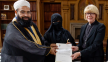
Archbishop of Canterbury withdraws award given to Muslim cleric who praised Bin Laden
-

Calls for Church of England to be 'rooted in scripture' ahead of General Synod elections
-

Most practising Christians are evangelical, study finds
-
Church of England blessing same-sex relationships 'a bridge too far'
Most Popular
News

People view religious education positively, study finds
The government is consulting on plans to add RE to the national curriculum.
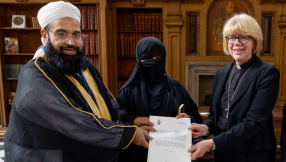
Archbishop of Canterbury withdraws award given to Muslim cleric who praised Bin Laden
Reform leader Nigel Farage said the decision to award Hafiz Muhammad Tahir Mehmood Ashrafi was "astonishing".
How the new General Synod could move beyond the present disagreement over same-sex relationships
How might the next Synod make progress in the next five years based on a recognition that there are those in the Church of England who hold fundamentally opposed positions on the matter? Is there a way of allowing both sides to achieve what they want? Martin Davie argues that the answer to this question is ‘Yes.’
No part of London should become a free speech, gospel exclusion zone
Soho is not exempt from freedom of speech and Christian expression. And Christians do not lose their fundamental freedoms when they cross an invisible boundary into a neighbourhood associated with a different worldview. The streets of London belong to all of us, writes Andrea Williams.








