
Nearly one month after one of the deadliest attacks against Iraqi Christians, Iraq made its first arrests, an interior ministry official said Saturday.
The official, who spoke to Agence France-Presse on the condition of anonymity, said 12 members of the group responsible for the October 31 church siege in Baghdad have been arrested.
The Sunni militant group Islamic State of Iraq has claimed responsibility for the attack against believers at Our Lady of Salvation, Baghdad's main Catholic church.
Militants had stormed the church during mass wearing suicide vests and taking about 120 churchgoers hostage. Nearly 60 people, mainly worshippers, were killed. More were wounded.
Since then, anti-Christian bombings have continued.
Church leaders and the international community have condemned the attacks.
US National Security spokesman Mike Hammer said in a statement that the United States strongly condemns the terrorist attacks in Iraq and offered condolences to the victims' families.
Pope Benedict XVI called the attack "absurd" and the World Council of Churches also denounced the violence.
Meanwhile, human rights watchdogs say extremists are focused on eliminating Christianity from Iraq.
"I’m using the word religion-cide to explain to people what is really taking place in Iraq right now," said Carl Moeller, president of Open Doors USA.
The UN High Commission for Refugees estimated last year that since the US-led invasion of Iraq in 2003, up to 500,000 Christians had left the country. Previously, around 1.2 million Christians lived in Iraq.


-
UN officials demand explanation for Iranian church seizure
-

AI could become a ‘very dangerous master’, warns John Lennox
-
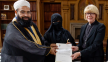
Archbishop of Canterbury withdraws award given to Muslim cleric who praised Bin Laden
-
Calls for Church of England to be 'rooted in scripture' ahead of General Synod elections
-
Most practising Christians are evangelical, study finds
-
How the new General Synod could move beyond the present disagreement over same-sex relationships
Most Popular
News

People view religious education positively, study finds
The government is consulting on plans to add RE to the national curriculum.
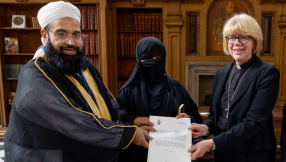
Archbishop of Canterbury withdraws award given to Muslim cleric who praised Bin Laden
Reform leader Nigel Farage said the decision to award Hafiz Muhammad Tahir Mehmood Ashrafi was "astonishing".
How the new General Synod could move beyond the present disagreement over same-sex relationships
How might the next Synod make progress in the next five years based on a recognition that there are those in the Church of England who hold fundamentally opposed positions on the matter? Is there a way of allowing both sides to achieve what they want? Martin Davie argues that the answer to this question is ‘Yes.’
No part of London should become a free speech, gospel exclusion zone
Soho is not exempt from freedom of speech and Christian expression. And Christians do not lose their fundamental freedoms when they cross an invisible boundary into a neighbourhood associated with a different worldview. The streets of London belong to all of us, writes Andrea Williams.








