
The newly-elected moderator of the World Council of Churches (WCC) central committee, Rev. Dr Walter Altmann speaks in this interview about the beauty of the ecumenical vision and the enthusiasm it engenders, the scandal of divisions between Christians, and his dream of churches which allow themselves to be renewed so as to experience the unity of the Christian family.
|PIC1|At the 9th Assembly, you were elected as the moderator of the WCC central committee, which is the highest elected position in the WCC. Many member churches would like to know more about you. Please tell us something about your personal and church background and life.
I was born in Porto Alegre in 1944. My parents were teachers in a Lutheran school and were very active in the life of the church. I had my first ecumenical experiences in the student ecumenical movement. As a theological student, I was a youth delegate to the meeting of the Commission on World Mission and Evangelism in Mexico City in 1963. As a young pastor, at the height of the military dictatorship in Brazil, I travelled semi-secretly to Prague in 1968 to take part as a delegate in the Christian Peace Conference.
Theologically, I draw my inspiration from Karl Barth, Dietrich Bonhoeffer and Luther. I studied for my doctorate in Hamburg, Germany (1969-72). I worked as a parish minister in the south of Brazil until 1974, and I was then appointed professor of systematic theology at the Lutheran School of Theology in São Leopoldo. A particular interest of mine has been to seek convergences between the theology of the Reformation and liberation theology. In the 1970s, and up to 1982, I was a member of the Catholic-Lutheran Bilateral Commission in Brazil. From 1995 to 2001 I was president of the Latin American Council of Churches (CLAI). In 2002 I was elected pastor-president of the Evangelical Church of Lutheran Confession in Brazil (IECLB).
I am married and have four daughters and two grandchildren.
You are the head of one of the largest Protestant churches in Latin America, a context of complex and dynamic socio-economic and ecumenical dimensions. How would you assess the state of the churches and the ecumenical movement in the region at this time?
|TOP|On the one hand, Latin America has a rich ecumenical history. The historic Protestant churches have cooperated among themselves in the field of mission since the mission conference in Panama in 1916, although their approach to mission was often conceived as opposition to the Catholic Church. On the other hand, theological dialogue with the Catholic Church, for example on the part of Lutherans in Brazil, was initiated in 1957, thus predating the Second Vatican Council. In the 1970s, at the time of the military dictatorships in Latin America, there was widespread close ecumenical cooperation in the field of human rights, with a significant contribution from the World Council of Churches.
Today the religious scene in Latin America is characterized by growing religious pluralism, in which prominent features are the growth of Pentecostal churches (who concentrate on the gifts of the Spirit), and Neo-Pentecostal churches (who concentrate on concepts such as spiritual warfare against demons and promises of prosperity for believers). We are also seeing an increasing number of individuals who describe themselves as "non-religious". Many of the new churches reject ecumenism and campaign against it, particularly if the Catholic Church is involved. The greatest challenge is to find ways to overcome these divisions and hostility.
The WCC's 9th Assembly was held in Porto Alegre last February, the first in Latin America. How do you assess the experience and results of the Assembly in the region and globally?
The Ninth Assembly provided an exceptional opportunity for close ecumenical cooperation between the WCC member churches in Brazil and indeed in Latin America as a whole. The many people who participated in the Assembly as delegates, staff, volunteers and visitors returned to their home communities greatly inspired and with their ecumenical commitment strengthened.
|AD|I believe that it was an assembly that combined in a very significant way the sharing of ecumenical experiences (in the Mutirão and in the Ecumenical Conversations), celebration of the faith (in worship and Bible study) and the debates and decision-taking in the business sessions. It thus contributed to a new way of living ecumenically, which is so necessary at this time.
As moderator of the central committee, and as a theologian and church leader, how would you define your ecumenical vision and the purpose of the ecumenical movement?
The constant motivation behind the ecumenical movement has been the desire to achieve full unity between the churches, and on that basis to become more faithful and efficient instruments of God's love in the world. In God's love, the oikoumene extends far beyond the frontiers of the churches and embraces the whole of humankind and the whole created universe.
For the churches, the ecumenical movement is based on the gift of unity that is ours in Christ by faith and baptism. As we journey on, with that as our foundation, we are already practising and experiencing unity in all sorts of ways. We worship the Triune God, Father, Son and Holy Spirit - perfect unity and communion.
I find it natural that for all of us, our faith, spirituality and action are deeply rooted in our respective churches. But I have always felt that our divisions are a flagrant denial of all that we believe, a scandal that is a result of human sin. I therefore have a dream, and I strive for our churches to be renewed in all that stands in the way of unity within the Christian family, following a common path of communion, witness and service. The ecumenical movement has a deep longing for ever greater communion and cannot rest content with a minimalist agenda.
What do you see as the main priorities for the WCC in the coming seven years? What are your own personal hopes for this period?
We are at the stage of setting priorities for the life of the Council. The Assembly has laid down basic guidelines, and based on them, a new programme structure will be presented to the coming central committee meeting.
Precisely at this time of reduced resources, the large number of challenges makes it difficult to determine priorities, particularly also because needs vary from region to region. But we need to concentrate resources on what is most essential and on what the WCC can uniquely do to assist the churches.
In practice, however, some issues have a permanent place on the WCC agenda: the search for new ways of understanding and cooperation between the churches in a religious situation that is increasingly plural and dangerously divided; tireless striving for peace; the quest for justice in international relations; unity, both in matters of doctrine and of ethics; promoting effective inclusion of all persons in the life of the churches; and a deeper and more holistic understanding of mission.
Ecumenical bodies are experiencing difficulties at the global and regional levels. What do you see as the main challenges facing the ecumenical movement and the WCC in the current period?
In parallel with the trend to globalization, we also at present have the phenomena of fragmentation and individualism. There is today a greater religious diversity, even within Christianity, than when our forebears saw the need for an ecumenical movement. Moreover, considerable forces are driving hitherto ecumenically committed churches outside traditional ecumenical organizations.
Therefore, these trends, and the very diversity in our world that is at once increasingly globalized and conflict-ridden, cannot but make ecumenism all the more necessary and urgent. The greatest challenge, however, consists in keeping alive in our churches their passion for ecumenism and in finding creative ways for their renewal on our common ecumenical journey.
This interview will be published on the eve of the first WCC central committee meeting. What is your message to the WCC member churches as you start your mandate?
The ecumenical vision is a thing of beauty that has immense attraction. It holds together legitimate diversity and commitment to unity. It is thus in itself a powerful witness in our globalized world that excludes people in so many ways. There are multitudes of hungry people, both physically and spiritually. We owe it to them to give credible witness to the hope that is in us (1 Peter 3:15), a hope that comes to us from Christ. Our calling is not to lose heart but to persevere. The ecumenical movement is going through a time of change, but it is enduringly valid because its inspiration is the Triune God.
49% OFF
MANSPOT Electric Pubic Hair Trimmer - Waterproof Body and Groin Shaver for Men and Women (Black)
$20.39 $40
25% OFF

Lick-Safe Dog Paw and Nose Balm Stick - All-Natural Moisturizer with Coconut Oil for Dry, Cracked Pads and Snout
$11.69 $15.59
77% OFF
Men's Quick Dry Moisture Wicking Polo Shirt - High Elasticity Slim Fit Athletic Top (Runs Small)
$6.99 $29.99
46% OFF

Men's Running Shorts with Zipper Pockets - Lightweight, Quick-Dry, Multi-Sport
$12.95 $23.99
50% OFF

NEWFAST NF-RE523 AC1200 WiFi Extender - 1200Mbps Dual Band Signal Booster & Internet Repeater
$18.5 $36.99
48% OFF

G Gradual Men's 7-inch Workout Running Shorts - Lightweight, Quick-Dry, Comfort
$12.91 $24.99
30% OFF
NOVETE Under Sink Water Filter - 3 Years, 30,000 Gallons, High-Efficiency Filtration
$41.99 $59.99
50% OFF

HDPE All-Weather Adirondack Chair with Built-In Cup Holder - Tool-Free Assembly (Grey)
$69.99 $139.99
60% OFF

HOMETUK Clear Plastic Storage Bins with Dividers - 3-Pack Stackable Acrylic Organizer Containers for Fridge and Pantry
$19.99 $49.99
58% OFF

G Gradual Men's Fishing Shirt - UPF 50+ Lightweight Short Sleeve Button Down with Zipper Pockets
$14.99 $35.99
55% OFF

Everyfun 60" Rectangular Platform Tree Swing - 700lbs Heavy Duty Adjustable Outdoor Swing (Colorful)
$49.99 $110.99
61% OFF

Ekouaer Women's Casual Loose Jumpsuit - One-Piece Printed Sleeveless Wide Leg Romper with Pockets
$14.99 $37.99
36% OFF

Men's Athletic Running Shorts with Zipper Pockets - Lightweight & Quick Dry
$12.74 $19.99
61% OFF

Modern Ceiling Fan with Light and Remote - Reversible Quiet DC Motor
$69.3 $179.99
50% OFF

MOOKA H13 True HEPA Air Purifier for Home Large Room - 1076 sq ft Odor Eliminator
$39.97 $79.95
40% OFF
X-Sense XS01-WX Smart Smoke Alarm - 2.4 GHz Wi-Fi Photoelectric Fire Detector with Mobile App Alerts
$65.99 $109.99
11% OFF

VitaUp Beet Root Gummies with CoQ10 & Grape Seed - Nitric Oxide Circulation Support (60 Count)
$24.91 $27.91

Sealy 2-Pack Tritech 16" Twin Inflatable Air Mattress with Built-in AC Pump
$0 $113.99
20% OFF

INTEX Prism Frame 20ft x 52in Above Ground Pool Set - Round Steel Frame Swimming Pool
$695.99 $869.99

Gardner Pet 43" Heavy Duty Dog Crate with Wheels - Indestructible Folding Metal Cage (Black)
$0 $149.99




-

Diary of a CEO’s Steven Bartlett and John Lennox discuss AI, faith and the search for meaning
-

Belfast churches 'heartbroken' over unrest
-

Is there a two-tier Britain?
-

Churches must disciple well and listen well in response to rise of Christian nationalism
-

Biblical models and the creation of King Arthur
-

Welsh reverend speaks of culture of fear over LGBT issues
Most Popular
related articles
Greek Orthodox Head to Make Historical Visit to World Ecumenical Centre
Greek Orthodox Head to Make Historical Visit to World Ecumenical Centre
WCC Executive Committee Renews Future Direction of Ecumenical Council
WCC Executive Committee Renews Future Direction of Ecumenical Council
WCC & Orthodox Church of Greece Unite in Vision for Ecumenical Renewal
WCC & Orthodox Church of Greece Unite in Vision for Ecumenical Renewal
World Church Bodies Unite in Call for Peace in Lebanon
World Church Bodies Unite in Call for Peace in Lebanon
Ecumenical Delegation Return from Middle East to Convey Church Concerns
Ecumenical Delegation Return from Middle East to Convey Church Concerns
News
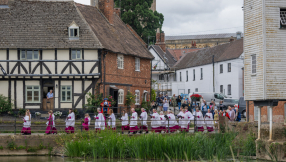
Gloucester churches come together to bless River Avon amid pollution concerns
It is part of a broader campaign against river pollution as concerns remain about the amount of untreated sewage in the Avon.

Life beyond burnout: how Christians can grow in the desert seasons
Christian Today speaks to author and Anglican priest Tish Harrison Warren about growth in desert seasons and why the Church shouldn’t treat all spiritual weariness as a problem to fix.
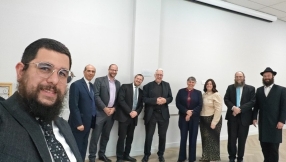
Iranian-born bishop stands in solidarity with Britain's Jews
2025 had the second highest number of antisemitic incidents on record.

Bishops protest Israeli arrest of another Palestinian Christian
An Evangelical Lutheran has been accused of "promoting terrorist activities".
MANSPOT Electric Pubic Hair Trimmer - Waterproof Body and Groin Shaver for Men and Women (Black)
$20.39
Lick-Safe Dog Paw and Nose Balm Stick - All-Natural Moisturizer with Coconut Oil for Dry, Cracked Pads and Snout
$11.69
Men's Quick Dry Moisture Wicking Polo Shirt - High Elasticity Slim Fit Athletic Top (Runs Small)
$6.99
Men's Running Shorts with Zipper Pockets - Lightweight, Quick-Dry, Multi-Sport
$12.95
NEWFAST NF-RE523 AC1200 WiFi Extender - 1200Mbps Dual Band Signal Booster & Internet Repeater
$18.5
G Gradual Men's 7-inch Workout Running Shorts - Lightweight, Quick-Dry, Comfort
$12.91
NOVETE Under Sink Water Filter - 3 Years, 30,000 Gallons, High-Efficiency Filtration
$41.99
HDPE All-Weather Adirondack Chair with Built-In Cup Holder - Tool-Free Assembly (Grey)
$69.99
HOMETUK Clear Plastic Storage Bins with Dividers - 3-Pack Stackable Acrylic Organizer Containers for Fridge and Pantry
$19.99
G Gradual Men's Fishing Shirt - UPF 50+ Lightweight Short Sleeve Button Down with Zipper Pockets
$14.99
Everyfun 60" Rectangular Platform Tree Swing - 700lbs Heavy Duty Adjustable Outdoor Swing (Colorful)
$49.99
Ekouaer Women's Casual Loose Jumpsuit - One-Piece Printed Sleeveless Wide Leg Romper with Pockets
$14.99
Men's Athletic Running Shorts with Zipper Pockets - Lightweight & Quick Dry
$12.74
Modern Ceiling Fan with Light and Remote - Reversible Quiet DC Motor
$69.3
MOOKA H13 True HEPA Air Purifier for Home Large Room - 1076 sq ft Odor Eliminator
$39.97
X-Sense XS01-WX Smart Smoke Alarm - 2.4 GHz Wi-Fi Photoelectric Fire Detector with Mobile App Alerts
$65.99
VitaUp Beet Root Gummies with CoQ10 & Grape Seed - Nitric Oxide Circulation Support (60 Count)
$24.91
Sealy 2-Pack Tritech 16" Twin Inflatable Air Mattress with Built-in AC Pump
$0
INTEX Prism Frame 20ft x 52in Above Ground Pool Set - Round Steel Frame Swimming Pool
$695.99
Gardner Pet 43" Heavy Duty Dog Crate with Wheels - Indestructible Folding Metal Cage (Black)
$0