
NEW DELHI - The Supreme Court of India has postponed hearings on demands made by Dalit Christians and Muslims for full constitutional rights after the central government again failed to officially respond.
"The adjournment came after Gopal Subramanium, additional solicitor general for the Indian government, told the court that the United Progressive Alliance government led by Prime Minister D. Manmohan Singh had still not received a report from the National Commission for Scheduled Castes," reported the All India Christian Council.
An earlier report by former Chief Justice Ranganath Misra's panel had accepted the appeal of Dalits, formerly known as "untouchables", and recommended in May 2007 that Christian and Muslim converts from the Dalit caste be given the same privileges offered to Dalits who become Sikhs, Buddhists or Hindus. The commission has yet to render judgment based upon the panel's recommendation.
National Integration Council member Dr John Dayal said, "This seems part of a planned dilatory tactic. This entire process of referring the issue to various commissions has taken more a year. If the government wants it and has the political will, it can change the law and restore full rights to all Dalits.
"Dalits who converted to Sikhism and Buddhism have been given these rights, but those to Islam and Christianity continue to be punished by being deprived of affirmative action," Dayal continued.
"Article 341 Para 3, which was amended in 1956 and 1990 to benefit Sikhs and Buddhists, must now be changed to also include others. Indian secularism will be strengthened by not bringing in religion in matters of affirmative action."
Dr Joseph D'souza, president of the All India Christian Council noted that the demand for "Scheduled Caste" status for Dalit Christians and Muslims is a fundamental civil right. "The access to affirmative action must be restored to all Dalits unconditionally and irrespective of religion," he said.
Although the Constitution Scheduled Castes Order 1950 provides the status of scheduled caste benefits such as reservations in education and government jobs, these benefits cannot be applied if a Hindu converts to any other religion. Later the order was revised to include Dalit Sikhs and Buddhists while there was no inclusion of the Dalit Christians.
Christians disappointed by the latest delay by the government organized a dharna, or hunger fast, Thursday in the capital. The dharna was to seek equal rights and justice from the government.
-

First Cornish musical setting of the Eucharist receives cultural award
-

Christians called to engage confidently amid growing curiosity in ‘dangerous’ New Age spirituality
-

Pete Greig shares prophetic word: 'Prepare for war'
-

Decline in marriage and relationships among factors driving global fertility slump - study
News
-

‘No easy answers,’ say church leaders after death of pastor at Christian festival
-

Pete Greig shares prophetic word: 'Prepare for war'
-

Nightclub deal with St Paul's Cathedral a 'sad reflection' on Christianity
-

What can we learn from the US pastor who created an AI version of himself?
-

Christians move to protect themselves as another Indian state enacts anti-conversion law
-

CoE clergy feel 'undervalued, under-resourced, overworked, frustrated and vulnerable'
Most Popular
News
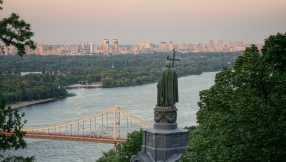
Ukrainian bishop on war: ‘We understand the value of peace most clearly when it is gone’
A Ukrainian Catholic bishop has spoken of the immense value of peace and religious freedom as his country marks 35 years since regaining independence from the Soviet Union while continuing to endure the devastation of war.

Calls for release of Christian pro-democracy activist Joshua Wong
Nancy Pelosi told colleagues on the House floor that lawmakers must speak out for freedom.

Decline in marriage and relationships among factors driving global fertility slump - study
A growing “relationship recession”, alongside economic insecurity, delayed parenthood and changing attitudes towards having children, is contributing to an unprecedented fall in fertility rates around the world, according to a major new study.
US closes door to Christians fleeing persecution, report warns
The United States is on track to admit zero Christians fleeing from the world's worst countries for persecution in fiscal year 2026, according to a new report from the global watchdog Open Doors and the Evangelical refugee resettlement agency World Relief.