1.The Armenian Genocide commemorations
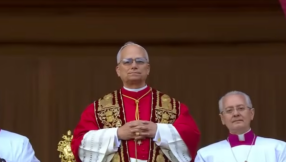
The centenary of the Armenian genocide was commemorated this week with the mass canonisation of its estimated 1.5 million victims. The killings began in Constantinople on this day in 1915 during the First World War and are still not recognised by Turkey as genocide. They were the most shocking example of Ottoman mass murder, which saw hundreds of thousands of Christians killed in the region. Turkey's refusal to acknowledge its past crimes – and deal with its present discrimination against Christians – calls into question its claim to be a modern democratic state. Admission of the genocide should be a condition of entry to the EU.
2. Mediterranean migrant deaths have led to Europe-wide heartsearching
The deaths of more than 700 migrants in one sinking in the Mediterranean have forced EU leaders to reconsider their search and rescue policy. Around 1,500 have died this year alone after the over-crowded boats capsized. The trade is driven by people traffickers in Libya and elsewhere who charge refugees from crisis-hit or poverty-stricken countries hundreds of pounds for a passage, and one argument is that Europe should just make it easier for them to come. But the problem has to be tackled much further back than the Mediterranean: if these people's countries were easier to live in, they wouldn't run the risks they do.
3. 30 Ethiopian Christians were murdered by Islamic State
A video showing the killing of 30 Ethiopian Christians in Libya was released by Islamic State. They too were evidently migrants on their way to the West. The episode was a repeat of the killing of 21 Egyptian Christians in February and caused similar outrage; in this case half were beheaded and half were shot. One of the killers says to the camera: "To the nation of the cross: We are now back again." Islamic State and similar terrorist groups have no future, but they can still cause terrible damage before their final defeat. We should pray for that, and that Christians remain free of hatred.
4. Britain's party leaders sort of do God
As the election campaign ratcheted ever upwards, some party leaders made cautious pitches for the Christian vote (which doesn't really exist). It's very different from America, whose electorate loves a repentant sinner and where an atheist presidential candidate wouldn't stand a chance. David Cameron addressed a Pentecostal gathering with an odd reference to turning water into wine; Ed Miliband says he finds "common cause" with Christians in some areas.
5. Strains show among British Baptists over gay marriage
It's hardly on an Anglican scale as yet, but the Baptist Union of Great Britain is facing internal dissent about its policy on gay marriage. Last year the Union announced that ministers who conducted them wouldn't be disciplined for it, though it is against the idea in principle; each church is independent, and the Union was trying to strike a balance between its national responsibility for ministerial conduct and the necessity to allow churches freedom to make their own decisions. However, the West of England Baptist Association has attempted to forbid its churches from registering to hold same-sex weddings, with what success remains to be seen. Discussions, as they say, remain ongoing.
A good week for:
Pigs in Wisconsin: a church has cancelled a 44-year-old tradition of mud-wrestling them before they are slaughtered.
A bad week for:
The Church of Scotland, set to be overtaken in the number of weddings it conducts by the Humanist Society of Scotland.
The story you might not have read but ought to know about:
Tigers in India's Sundarbans kill people, but that helps preserve the mangrove forests which protect low-lying land from flooding.
And one for pure enjoyment:
America's greediest pastor Creflo Dollar says the devil was discrediting his ministry and he still wants a private jet, please.