Diplomatic tensions escalated after Argentina's ambassador to the UK claimed support from many different sectors of British society for talks to begin over the future of the Falkland Islands.
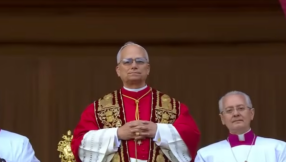
Ambassador Alicia Castro was speaking after Pope Francis was photographed at his Wednesday audience at the Vatican holding up a sign calling in Spanish for talks about the Falklands, known as the Malvinas Islands in Argentina.
Ambassador Castro said in a statement issued by the embassy: "Different sectors of British society support us for different reasons: young people and progressives who do not wish to associate themselves with colonialist policies; pacifists concerned by the increasing militarisation in the South Atlantic; environmental organisations who recognise that oil exploration on the Malvinas Islands could cause an ecological disaster and those British citizens who, in times of major cuts to health, education and social benefits, do not wish to see their taxes put towards defence spending, especially if it is to maintain a costly military base in a few remote islands, to prevent an invasion that will never occur".
Argentine troops who invaded the islands were defeated by British forces in 1982 in a series of land and sea battles that led to the loss of 900 lives. Sovereignty is still disputed.
Noting that Pope Francis, former Archbishop of Buenos Aires, is an advocate of peace and dialogue and has a voice that is widely heeded worldwide, she referred to his intervention in June 2014 when he brought together Palestinian leader Mahmoud Abbas and Israeli President Shimon Peres. He also played a part in re-establishing relations between the United States and Cuba.
"So then, it is only natural to see him promoting dialogue between the United Kingdom and Argentina," she continued.
The Ambassador, who had a private audience with the Pope in December last year, said supporters for talks included the deputy first minister of Northern Ireland, Martin McGuinness, who she had spoken to about it.
This year marks the 50th anniversary of the passing of a United Nations resolution about the Falklands. All member states recognised the existence of a sovereignty dispute over the Islands between the governments of Argentina and the United Kingdom.
"It is unacceptable that the British government that negotiated with the genocidal military dictatorship is today refusing to open a dialogue with a democratic and popular government," she said.
"The entire international community is calling for dialogue. The UK government is isolated in its refusal to engage in dialogue and its failure to honour its obligations under international law to resolve the sovereignty dispute through peaceful and diplomatic means".
In a 2013 referendum on whether the Falklands should remain a British overseas territory, 99.8 percent voted in favour.
When the Pope was in Argentina as Archbishop Bergoglio he was known to be critical of the actions of the British in the Falklands. However since becoming Pope in 2013 he has not spoken about the issue.
Pope Francis was given the sign calling for dialogue by Gustavo Hoyo, leader of a campaign for talks about the Falklands. Vatican officials have claimed that the Pope did not know what was written on the sign when he was handed it.
Hoyo refuted this, and told the Clarin newspaper in Argentina: "When he passed by, I explained what this was about and he kindly took the placard and got the picture taken. He could have chosen not to do it, but he did."
The picture went viral online, and was boosted further when it was tweeted by Cristina Fernandez de Kirchner, president of Argentina, who has four million followers.