
A new exhibition opens at St Paul's Cathedral next week to give members of the public a rare and intimate glimpse into the lives of Indian Dalits.
The groundbreaking Being Untouchable exhibition showcases the photography of Marcus Perkins for Christian Solidarity Worldwide.
The Dalits are a group of people formerly known as "untouchables" who still enjoy terrible discrimination in Indian society today.
The portraits expose the present-day impact of centuries of oppression, and explores how "untouchability" continues to be practised today despite having been abolished by India's Constitution.
Photographer Marcus Perkins said, “Although almost every aspect of life in India has been covered by photography exhibitions, very few have paid systematic attention to casteism.
"Many outside India either don’t know about caste, or assume it is dying out as a result of India’s economic boom.
"That is not the case, and we have sought here to illustrate the lives of a few, who typify both the extreme and the everyday suffering that millions of Dalits face. This exhibition is a tribute to them.”
St Paul's will hold three Meditative Eucharists on Sundays during the exhibition, which runs from June 14 to July 6.
The Eucharists will explore the theme of untouchability and focus on the Dalits of India, the untouchable within our own society, and ultimately the untouchable within ourselves.
The Rev Canon Mark Oakley, Treasurer of St Paul’s Cathedral, said, “Marcus Perkins’ photographs are haunted by the beauty and pain of what is being observed. The colour of India – those wonderful fabrics, textures and smells – is skilfully captured but is shadowed by the darkness of reality for these men, women and children deemed to be unworthy of human touch.
"We are thrown back on ourselves as we look. What can we do? What happened to these people? What do we consider untouchable in our own culture and day?
"It is only right that such vital questions are explored in reflective acts of worship in the cathedral making this more than an exhibition. It is an invitation to see life through a different lens.”
David Griffiths, South Asia Team Leader at CSW, said, “Being Untouchable is both a hand of warm friendship to Dalits, and a cry of protest about their suffering.
"Developed in partnership with Dalit community leaders, who allowed us to share in the privilege of solidarity with their people, it is a plea to let Dalits tell their own story, express their own aspirations and forge their own future.
"St Paul’s Cathedral is one of London’s most iconic institutions, and by highlighting the lives of a people once called ‘untouchable’ and often treated little differently today, it is amplifying the key message that being untouchable has no place in our world.”




-

UN officials demand explanation for Iranian church seizure
-

AI could become a ‘very dangerous master’, warns John Lennox
-
Around 300 Christians killed and over 200 abducted in Nigeria in July alone amid wave of attacks - report
-

When Eastern Europe appeared to be going Protestant
-

Leaked SNP abortion motion 'deeply troubling'
-
Calls for Church of England to be 'rooted in scripture' ahead of General Synod elections
Most Popular
News
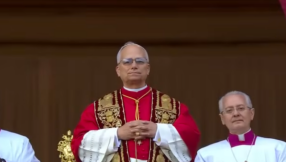
Book of writings by Pope Leo XIV published
The current pope had no published writings prior to his election.

More CoE parishes 'moving away from oil and gas'
Millions has been spent on helping churches improve energy efficiency.
Calls for Church of England to be 'rooted in scripture' ahead of General Synod elections
The Alliance describes itself as a "network of networks".
UN officials demand explanation for Iranian church seizure
Iran has not responded to questions fromUN officials.








