
After the debates at the American General Convention last summer, I wrote directly to all the primates of the Communion to ask about their reaction and the likely reaction of their provinces as to whether the resolutions of Convention had met the proposals of the Windsor Report for restoring something like normal relations between the Episcopal Church and others in the Communion. The answers were instructive. About eleven provinces were fairly satisfied; about eleven were totally dissatisfied. The rest displayed varying levels of optimism or pessimism, but were not eager to see this as a life and death issue for the Communion. Of those who took one or the other of the more pronounced view, several on both sides nonetheless expressed real exasperation that this question and the affairs of one province should be taking up energy to the near-exclusion of other matters.
|QUOTE|The public perception, as we've been reminded by several commentators in the last week or so, is that we are a Church obsessed with sex. The responses I received to my letter to Primates suggests that this is what many within the Church feel as well - and I'd be surprised if many in this chamber did not echo that. It feels as though we are caught in a battle very few really want to be fighting; like soldiers in the trenches somewhere around 1916, trying to remember just what were the decisions that got everyone to a point where hardly anyone was owning the conflict, just enduring it (we don't of course have to go as far back as 1916).
So it is natural to want to say, 'This is a war no-one chose; there must be a simple way of halting the conflict and getting the troops home.' That simple protest has been forcefully expressed, in the media and within the Church, in terms of giving up on the Communion and concentrating on the independent health and integrity of each local church. Unhappily, though, the truth is that when conflicts have passed a certain point, simple solutions are unlikely to work, to the extent that they deliberately ignore the things that bred the conflict in the first place - and that have never been properly addressed. This is a recipe for the whole thing to start up again as soon as possible.
But I'd remind you too of something I said in this Synod last year. It is folly to think that a decision to 'go our separate ways' in the Communion would leave us with a neat and morally satisfying break between two groups of provinces, orthodox and heretics or humane liberals and bigots (depending on where you stand). Every province could break in several different directions. And if you look at parts of this week's agenda, can you honestly say that our debates and their outcomes would be simpler if we didn't have the Communion's challenges as part of the background?
In my remarks today, I want to try and identify some of the factors which, if not addressed, will lead us into more of the same unedifying divisions - if not on this, then on other questions. And I want to outline why the final communiqué from Dar es Salaam might possibly leave open some constructive possibilities. But may I take the opportunity of thanking publicly the countless people who wrote to assure us of their prayers in the last fortnight? We were very deeply supported during our meeting, and that was a palpable blessing.
Two significant factors to start with. The debate triggered by certain decisions in the Episcopal Church is not just about a single matter of sexual ethics. It is about decision making in the Church and it is about the interpretation and authority of Scripture. It has raised, first of all, the painfully difficult question of how far Anglican provinces should feel bound to make decisions in a wholly consultative and corporate way. In other words, it has forced us to ask what we mean by speaking and thinking about ourselves as a global communion. When 'gentlemen's agreements' fail, what should we do about it? Now there is a case for drawing back from doing anything much, for accepting that we are no more than a cluster of historically linked local or national bodies. But to accept this case - and especially to accept it because the alternatives look too difficult - would be to unravel quite a lot of what both internal theological reflection and ecumenical agreement have assumed and worked with for most of the last century. For those of us who still believe that the Communion is a Catholic body, not just an agglomeration of national ones, a body attempting to live in more than one cultural and intellectual setting and committed to addressing major problems in a global way, the case for 'drawing back' is not attractive. But my real point is that we have never really had this discussion properly. It surfaced a bit in our debates over women's ordination, but for a variety of reasons tended to slip out of focus. But we were bound to have to think it through sooner or later.
And it has arisen now in connection with same-sex relationships largely because this has been seen as a test-case for fidelity to Scripture, and so for our Reformed integrity. Rather more than with some other contentious matters (usury, pacifism, divorce), there was and is a prima facie challenge in a scriptural witness that appears to be universally negative about physical same-sex relations.
Now in the last ten years particularly, there have been numerous very substantial studies of the scriptural and traditional material which make it difficult to say that there is simply no debate to be had. Even a solidly conservative New Testament scholar like Richard Hays, to take one example out of many, would admit that work is needed to fill out and defend the traditional position, and to understand more deeply where the challenges to this position come from.
But it is easier to go for one or the other of the less labour-intensive options. There is a virtual fundamentalism which simply declines to reflect at all about principles of interpretation and implicitly denies that every reader of Scripture unconsciously or consciously uses principles of some kind. And there is a chronological or cultural snobbery content to say that we have outgrown biblical categories. These positions do not admit real theological debate. Neither is compatible with the position of a Church that both seeks to be biblically obedient and to read its Scriptures in the light of the best spiritual and intellectual perspectives available in the fellowship of believers. And the possibility of real theological exchange is made still more remote by one group forging ahead with change in discipline and practice and other insistently treating the question as the sole definitive marker of orthodoxy.
Whatever happened, we might ask, to persuasion? To the frustrating business of conducting recognisable arguments in a shared language? It is frustrating because people are so aware of the cost of a long argumentative process. It is intolerable that injustice and bigotry are tolerated by the Church; it is intolerable that souls are put in peril by doubtful teaching and dishonest practice. Yet one of the distinctive things about the Christian Church as biblically defined is surely the presumption (Acts 15) that the default position when faced with conflict is reasoning in council and the search for a shared discernment - so that the truth does not appear as just the imposed settlement of the winners in a battle.
So we should have done more on what it means to be a Catholic church; we should have done more on the use of Scripture. And, mindful of the full text of Lambeth 1.10, we should have done more about offering safe space to homosexual people - including those who have in costly ways lived in entire faithfulness to the traditional biblical ethic - to talk about what it is like to be endlessly discussed and dissected in their absence, patronised or demonised. Again and again we have used the language of respect for their human dignity; again and again we have failed to show it effectively, convertingly and convertedly. This is not just about our fear or prejudice. It is also because we live in an environment that knows nothing of proper reticence in the public exposure and discussion of certain vulnerable places in our humanity. And what then happens is that every attempt to 'listen to the experience of homosexual people' is easily seen as political, an exercise in winning battles rather than winning understanding. Remember that in different ways this is an issue for our engagement with any and every minority group - how to secure patience and privacy and the space to be honest without foreclosing the outcomes of discussion.
It's in this light that I ask you to think about what emerged from the Primates' Meeting. Essentially, what was proposed had four elements. First: what has been called the 'Listening Process', which has gone forward in a very large number of provinces, including some of the most conservative African ones, continues to seek at least to provide the safety and honesty I've just been talking about. It has not been straightforward, but has won a high level of ownership in the Communion, and does so because it has retained its integrity as precisely what it set out to be - a process of resourcing discussion, not of gathering ammunition.
Second, the proposal has been made - partly stimulated by the very successful international consultations held at Coventry Cathedral in the last twelve months - of a serious and sustained piece of work for the Communion on hermeneutics, the theory and practice of biblical interpretation. Combined with the ongoing and very creative programme of the working group on Theological Education in the Communion, it has the potential to take us beyond what I called the non-labour-intensive theologies we see too much of at the moment.
Third, the group that has been working on a draft Covenant for the Communion has made far more progress than anyone expected, and was able to submit a draft for discussion to the Primates which will now be circulated for further comment from Provinces. This tries to outline what a 'wholly consultative' approach to deciding contentious matters might look like - with some of the inevitable consequences spelled out if this is not followed. This is not, I must stress, threatening penalties, but stating what will unavoidably flow from more assertions of unqualified autonomy. To repeat a point I've made many times - you may feel imperatively called to prophetic action, but must not then be surprised if the response is incomprehension, non-acceptance or at least a conviction that time is needed for discernment.
And so to the fourth element, addressed to the Episcopal Church. We have asked for more clarity as to whether a moratorium has indeed been agreed on the election of bishops in active sexual partnerships outside marriage; and we have suggested a similar voluntary moratorium by the bishops on licensing any kind of liturgical order for same-sex blessings (the understanding of the Meeting was certainly that this should be a comprehensive abstention from any public rites), at least for the period during which the wider discussion of the Covenant goes forward. And to try and encourage an internal North American solution to the bitter disputes now raging, we suggested a structure for some kind of supplementary oversight, and an agreement on both sides to back away from litigation - the explicit hope being that this would remove what some see as the need for interventions from other provinces, and would begin to do away with what all agree is the anomaly of diversity of foreign jurisdictions in the USA.
Much here depends upon goodwill and patience. The Presiding Bishop rightly won praise for her careful and sympathetic engagement with these proposals and other matters, in the course of what was undoubtedly a very testing meeting. Likewise the readiness of many of the 'intervening' primates to consider negotiating a new position was welcome and impressive.
So in short, I am commending the Primates' communiqué, for all its inevitable imperfections, as representing a serious attempt to go beyond the surface problems and to give us some space to look at the underlying and neglected theological factors. I'm well aware of the way in which the imminence of the Lambeth Conference focuses some of the risks and choices. But I'm also aware of the continuing obstinate will to make the Communion work, and to work as some sort of properly Catholic and Reformed unity. I'd be sad if that will were so much eroded in this country that we felt no investment in the sort of processes envisaged in Dar es Salaam.
But let me finish with two brief reflections which may be pertinent, given some of the comment on the Tanzanian meeting. Much has been made of the relative nobility of a 'Here I stand' position as compared with the painful brokering and compromising needed for unity's sake. It's impossible not to feel the force of this. Yet - to speak personally for a moment - the persistence of the Communion as an organically international and intercultural unity whose aim is to glorify Jesus Christ and to work for his Kingdom is for me and others just as much a matter of deep personal and theological conviction as any other principle. About this, I am entirely prepared to say 'Here I stand and I cannot do otherwise'. And I believe the Primates have said the same.
But lastly - I shall be returning next week to Africa; first for a consultation in Johannesburg involving the great majority of Anglican provinces across the world and dealing with our contribution to the Millennium Development Goals. It will be surveying our strategy, exploring what's needed for better co-ordination in the development resources of the Communion, discussing with our new representative at the UN - an outstandingly competent and charismatic Ugandan woman - how we become more accountable for what we're doing. After this, I go for a few days to one of the youngest and most vulnerable of our Anglican churches, the new diocese of Angola, engaged both in active development work and in a fast expanding programme of primary evangelisation.
I don't imagine that the agenda of this visit to Southern Africa will feel much like that of the Tanzanian meeting; and it's an obvious point that this is the work that the overwhelming majority of Anglicans are actually doing for the overwhelming bulk of the time, especially in Africa. But I need to say something more. Like it or not, this work will be harder and more poorly resourced if the structures of the Communion are loosened, destroyed or so localised that they cannot work flexibly on the global scene. The agenda of Tanzania has something to do with the more obviously attractive, perhaps for some more obviously gospel-related work of Johannesburg and Angola. The entire complicated business of building the trust necessary for co-operation - ultimately the trust that Christ is at work in the other person, the other group, the other province - needs work, including the kind of work done in Tanzania. In the diverse economy of Christ's Body, Primates' Meetings too have their charism and their place, however much we may yearn for deck-clearing, ground-breaking clarities. But then, you have after all been elected to a Synod, and I suspect you already know that even obscure and time-consuming labours may yet be part of the Kingdom's demands.
Monday 26th February 2007
© Rowan Williams
50% OFF

All-Weather HDPE Plastic Adirondack Chair with Cup Holder – Navy Blue
$70 $139.99
50% OFF

7-Color LED Red Light Therapy Mask for Face and Anti-Aging
$29.99 $59.99
49% OFF

Cordless Vacuum Cleaner - 480W/45Kpa Powerful Stick Vacuum with LED Smart Touch Screen
$55.99 $109.99
20% OFF

Hypoallergenic Pet Wipes for Dogs & Cats - 400 Count Extra Large Coconut Scented Grooming Wipes
$24.79 $30.99
49% OFF

MANSPOT Electric Pubic Hair Trimmer - Waterproof Body and Groin Shaver for Men and Women (Black)
$20.39 $40
25% OFF

Lick-Safe Dog Paw and Nose Balm Stick - All-Natural Moisturizer with Coconut Oil for Dry, Cracked Pads and Snout
$11.69 $15.59
77% OFF

Men's Quick Dry Moisture Wicking Polo Shirt - High Elasticity Slim Fit Athletic Top (Runs Small)
$6.99 $29.99
46% OFF

Men's Running Shorts with Zipper Pockets - Lightweight, Quick-Dry, Multi-Sport
$12.95 $23.99
50% OFF

NEWFAST NF-RE523 AC1200 WiFi Extender - 1200Mbps Dual Band Signal Booster & Internet Repeater
$18.5 $36.99
48% OFF

G Gradual Men's 7-inch Workout Running Shorts - Lightweight, Quick-Dry, Comfort
$12.91 $24.99
30% OFF
NOVETE Under Sink Water Filter - 3 Years, 30,000 Gallons, High-Efficiency Filtration
$41.99 $59.99
50% OFF

HDPE All-Weather Adirondack Chair with Built-In Cup Holder - Tool-Free Assembly (Grey)
$69.99 $139.99
60% OFF

HOMETUK Clear Plastic Storage Bins with Dividers - 3-Pack Stackable Acrylic Organizer Containers for Fridge and Pantry
$19.99 $49.99
58% OFF

G Gradual Men's Fishing Shirt - UPF 50+ Lightweight Short Sleeve Button Down with Zipper Pockets
$14.99 $35.99
55% OFF

Everyfun 60" Rectangular Platform Tree Swing - 700lbs Heavy Duty Adjustable Outdoor Swing (Colorful)
$49.99 $110.99
61% OFF

Ekouaer Women's Casual Loose Jumpsuit - One-Piece Printed Sleeveless Wide Leg Romper with Pockets
$14.99 $37.99
36% OFF

Men's Athletic Running Shorts with Zipper Pockets - Lightweight & Quick Dry
$12.74 $19.99
61% OFF

Modern Ceiling Fan with Light and Remote - Reversible Quiet DC Motor
$69.3 $179.99
50% OFF

MOOKA H13 True HEPA Air Purifier for Home Large Room - 1076 sq ft Odor Eliminator
$39.97 $79.95
40% OFF

X-Sense XS01-WX Smart Smoke Alarm - 2.4 GHz Wi-Fi Photoelectric Fire Detector with Mobile App Alerts
$65.99 $109.99
-

Life beyond burnout: how Christians can grow in the desert seasons
-

New attempt to revive assisted suicide bill faces opposition
-

A Christian reflection on men’s health week: Jesus - the man we were created to be
-

Anti-Christian hate crimes across Europe surge in May as arson attacks reach 2026 high
News
-

Anti-Christian hate crimes across Europe surge in May as arson attacks reach 2026 high
-

Belfast churches 'heartbroken' over unrest
-

South Wales Police back down on imposing Islamic 'blasphemy law'
-

Welsh reverend speaks of culture of fear over LGBT issues
-

Making cohabitation equal with marriage is 'unfair', Christians argue
-

Life beyond burnout: how Christians can grow in the desert seasons
Most Popular
related articles
CofE Announces 'Challenging' General Synod Agenda
CofE Announces 'Challenging' General Synod Agenda
American Anglican Council Welcomes Tanzania Primates' Communiqué
American Anglican Council Welcomes Tanzania Primates' Communiqué
US Christians Continue to Welcome Anglican Communiqué on Episcopal Church
US Christians Continue to Welcome Anglican Communiqué on Episcopal Church
Anglican Head Clarifies Church Stance on Homosexuality
Anglican Head Clarifies Church Stance on Homosexuality
News
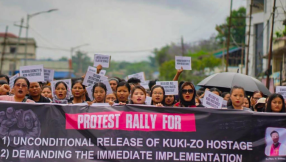
Pastors among hostages found dead amid tensions between Christian groups in Manipur
While the number of people unaccounted for in the northeastern Indian state of Manipur has fallen from 20 to two, with four of the six bodies recovered identified this week, retaliatory attacks continue following a cycle of abductions between Kuki-Zo and Naga groups, both predominantly Christian communities.

‘Eight years is too long’: Christian advocacy groups rally for abducted Nigerian schoolgirl's freedom
Christian Nigerian schoolgirl Leah Sharibu was abducted eight years ago by Islamic extremists. Unlike most of the classmates she was abducted with, she has never been freed.

New AI tool makes it easier for Iranians to access the Gospel
A ministry seeking to bring Christianity to the people of Iran has developed an AI tool to answer common questions about the faith.

Disclosure Day: What does Spielberg’s latest film tell us about the Church?
Disclosure Day asks some of the right questions and hints at all of the wrong answers, writes David Robertson.
All-Weather HDPE Plastic Adirondack Chair with Cup Holder – Navy Blue
$70
7-Color LED Red Light Therapy Mask for Face and Anti-Aging
$29.99
Cordless Vacuum Cleaner - 480W/45Kpa Powerful Stick Vacuum with LED Smart Touch Screen
$55.99
Hypoallergenic Pet Wipes for Dogs & Cats - 400 Count Extra Large Coconut Scented Grooming Wipes
$24.79
MANSPOT Electric Pubic Hair Trimmer - Waterproof Body and Groin Shaver for Men and Women (Black)
$20.39
Lick-Safe Dog Paw and Nose Balm Stick - All-Natural Moisturizer with Coconut Oil for Dry, Cracked Pads and Snout
$11.69
Men's Quick Dry Moisture Wicking Polo Shirt - High Elasticity Slim Fit Athletic Top (Runs Small)
$6.99
Men's Running Shorts with Zipper Pockets - Lightweight, Quick-Dry, Multi-Sport
$12.95
NEWFAST NF-RE523 AC1200 WiFi Extender - 1200Mbps Dual Band Signal Booster & Internet Repeater
$18.5
G Gradual Men's 7-inch Workout Running Shorts - Lightweight, Quick-Dry, Comfort
$12.91
NOVETE Under Sink Water Filter - 3 Years, 30,000 Gallons, High-Efficiency Filtration
$41.99
HDPE All-Weather Adirondack Chair with Built-In Cup Holder - Tool-Free Assembly (Grey)
$69.99
HOMETUK Clear Plastic Storage Bins with Dividers - 3-Pack Stackable Acrylic Organizer Containers for Fridge and Pantry
$19.99
G Gradual Men's Fishing Shirt - UPF 50+ Lightweight Short Sleeve Button Down with Zipper Pockets
$14.99
Everyfun 60" Rectangular Platform Tree Swing - 700lbs Heavy Duty Adjustable Outdoor Swing (Colorful)
$49.99
Ekouaer Women's Casual Loose Jumpsuit - One-Piece Printed Sleeveless Wide Leg Romper with Pockets
$14.99
Men's Athletic Running Shorts with Zipper Pockets - Lightweight & Quick Dry
$12.74
Modern Ceiling Fan with Light and Remote - Reversible Quiet DC Motor
$69.3
MOOKA H13 True HEPA Air Purifier for Home Large Room - 1076 sq ft Odor Eliminator
$39.97
X-Sense XS01-WX Smart Smoke Alarm - 2.4 GHz Wi-Fi Photoelectric Fire Detector with Mobile App Alerts
$65.99