
What I'd like to do is touch briefly - very briefly - on the issues in the final communiqué of our meeting. As usual, you'll see elements there of narrative - this is what we did, these are the activities we shared and these were the subjects we covered. You'll notice the reference there to the commissioning of our new representative at the United Nations, and following on from that, some discussion of future work that can be done on the Millennium Development goals by the Communion, especially in the forthcoming conference in Johannesburg in a few week's time at which I hope to be present.
We also received and welcomed the report on Theological Education and identified a new project on interpretation of the Bible.
|PIC1|The business of following through the recommendations of the Windsor report covers, as you see, a great deal of our business and it touches on what we've called the listening process, and we had an extremely good discussion and report from Canon Philip Groves and a great deal of information about the variety of responses and perspectives around the world on these questions around listening to the experience of homosexual people and the challenges of equitable and patient pastoral ministry to them.
There's a reference to the report on the Panel of Reference, you've heard something already of the Anglican Covenant, but it's probably the remainder of the document, from paragraph 17 onwards that contains the meat of our recommendations.
In short, the feeling of the meeting as a whole was that the response of the General Convention of The Episcopal Church to the recommendations of the Windsor report, a response made at General Convention last year, represented some steps in a very encouraging direction but did not yet represent a situation in which we could say 'business as usual'. What that means in practice is spelled out in what follows.
We're still as a communion in a place where our doctrinal position is that of Lambeth 1.10 and where that position has been reiterated in a number of Primates' Meetings, ACC meetings and a number of other fora. That hasn't changed. However there are two factors which we needed to take seriously and engage with.
The first is this: the response of The Episcopal Church, while not wholly clear, represented a willingness to engage with the Communion and awareness of the cost of difficulty that decisions have generated, so our first questions is 'how do we best engage with that willingness?' How do we work with the stream of desire to remain with the Communion?
The second factor is the very substantial group of bishops and others within The Episcopal Church perhaps amounting to nearly one quarter of the Bishops who have spelt out not only their willingness to abide by the Windsor report in all its aspects, but to provide carefully worked-through system of pastoral oversight for those in The Episcopal Church who are not content with the decisions of General Convention.
So what you have before you is an attempt to see if there is, while the Covenant is being discussed around the Communion, to see if there is an interim solution that will certainly fall very far short of resolving all the disputes that are before us but will provide a way of moving forward with integrity. A system of pastoral care for the substantial minority in The Episcopal Church, an encouragement for them and others within The Episcopal Church in whatever desire they have to remain on stream with the rest of the Communion; and also, more importantly a way of beginning to negotiate a way through the very difficult situations that have been created by interventions from other Provinces in the life of The Episcopal Church.
We accepted the good faith of those responsible for such interventions, and we heard some very moving testimonies about that; at the same time they and we recognise that that can only be a temporary solution and the preferable solution is to have some kind of settlement negotiated within the church life of the United States.
Hence the recommendations of the Primates at the end; a proposal to establish a pastoral council; a responsibility shared between the Primates' Meeting and the Presiding Bishop, asking those bishops who have already offered to take up this responsibility to provide pastoral care within The Episcopal Church for the conscientious minority and a challenge to both sides really, a challenge to The Episcopal Church to clarify its position; a challenge also to those who have intervened from elsewhere to see if they can negotiate their way towards an equitable settlement within the life of the North America Church.
You'll notice that we also suggested, to pick up an unfortunate metaphor that's been around quite a bit, the kind of ceasefire in terms of litigation. At the very end of the recommendations you'll see that the very last paragraph that the primates urge representatives of The Episcopal Church and of those congregations in property disputes with it, to suspend all actions in law arising from this situation, None of us; none of us believe that litigation and counter litigation can be a proper way forward and we don't see that we can move towards sensible balanced reconciliation while that remains a threat in wide use.
Those are the bones of what we've said here; I'd like to put it in the context of the Covenant process which you've already heard a little about and to suggest to you that what it amounts to is a package, not one single proposal, not one single scheme, but a way of encouraging and nurturing certain elements in The Episcopal Church a way of clarifying the challenge overall that the Communion wants to put to The Episcopal Church within that time frame during which the covenant will be discussed and we hope eventually accepted. Thank you.
Question: Concerning homosexuality; is it a gift from God or is it a sin?
The teaching of the Anglican Church remains that homosexual activity is not compatible with scripture. The homosexual condition, the homosexual desire, we don't call conditions sinful in that sense.
Q: Was the cost of keeping the communion together allowing other provinces to continue to trespass on the property of The Episcopal Church?
Well I think if you look at the communiqué you'll see that that's precisely the situation we're trying to rectify and to well, to end. Now that's not going to happen tomorrow, but that is certainly very explicitly there as a concern shared round the room.
Q: What's this we hear about you guys joining up with the Roman Catholic Church?
What's this we hear about the end of the world ... I think what you hear is a really rather remarkably garbled version of a document which has appeared recently which simply states where we are practically in the limits of cooperation between ourselves and the Roman Catholic Church a document agreed by Anglican and Roman Catholic bishops around the world and suggesting what can be done in pastoral practice; it amounts to no more than that.
Q: [response of the (TEC) House of Bishops ...] consequences of failure to spell out
I think it's impossible for me to speculate about the House of Bishops in the US and indeed the Presiding Bishop is not in a position, as indeed none of us is in a position to deliver the whole of the House of Bishops we hope that they will. On the specifics on the wording - well, these are the terms that have been put to them, I think it would be rather difficult if there were a response in other terms.
On consequences, you'll see there in the paper what seems a statement of bare fact; that if the House of Bishops cannot in good conscience - and that's an important phrase because there are consciences involved - on both sides of this debate. If the reassurances cannot in good conscience, then in fact the damage is not repaired, and that has to affect some of the consideration we would want to give about the organs of the Communion.
Q: Including invitations to Lambeth?
Among other things, that'll have to be under consideration, I don't pre-empt a decision but that'll have to be discussed.
Q: Archbishop Akinola ... has he chosen to walk away from this?
Archbishop Akinola has declared that he is prepared to support this document.
Q: What message is this sending to people in the pews who are tired ofthis ... what would you say is the end goal?
The end goal is the Kingdom of God, isn't it, and that takes a while. What would I say to people in the pews? I would say first of all that Gospel remains the Gospel -that is the love of God, the challenge of God the love of God promising absolution, the challenge of God requiring change. That doesn't change and for people to go on in the baptised life, sharing Holy Communion, serving the world, there is no imperative bigger than that.
I said I went back from one session and put the news on and looking at the levels of human grief, terror and suffering around the world, it did seem to me that in many ways it's quite difficult to persuade people that the Church - I don't just mean the Anglican Church - has transforming good news when most of what people hear about us is our own internal divisions. There's a lot in this communiqué about what else we're doing, that is the other 97% of what the Church does in terms of the Millennium Development Goals and other matters. I do hope people will bear that in mind as the primary vision.
Q: Primates concern about the problems of Africa; have they forgotten Africa?
God forbid! The discussion we had on the Millennium Development Goals, to come back to that again, focussed on many of these issues and we heard discussions not only of course about Africa, but certainly about Africa and other places. We heard about the challenge of corruption, the challenge of debt, the challenge of course about HIV and Aids, which is a major focus of a forthcoming conference in Johannesburg; and of course I had the privilege of being able to discuss some of these things with the President of Tanzania and with the President of Zanzibar during this visit and get some sense of what was being done in these terms.
Now one important fact here is that we have tired to reaffirm the capacity of the Church to deliver the Millennium Development Goals at grass roots level in a way that no other voluntary organisation can. This is a central theme in the thinking of many people in the Anglican Church at the moment and one of the challenges we have to rise to is whether we can better coordinate our work for development and in meeting these goals.
Q Primatial vicar - will he trump the canons? ...What authority will this figure have?
Well if you bear with me while I try and explain what is admittedly a slightly complicated concept. The Presiding Bishop has declared willingness to entertain the notion of a Primatial Vicar. What you have here is the model that those bishops within the United States who have declared their willingness to abide by Windsor and so forth should be given the right to nominate a person who will act in the terms that they recognise as constituting and offering adequate pastoral oversight. To that person the PB will delegate certain power, but that person will be responsible to the council, the Pastoral Council that will be set up, as a means of communications with the Primates as a body. Now operating under the canons and constitutions; that's a difficult one to be clear about.
Now you won't have, shouldn't have any bishop operating any canons and constitutions and the bishops we're talking about, never mind for a moment the practice of TEC, the canons and constitutions as such don't violate their conscience even if the practice does, so the challenge is to work out what that would mean, the proper degree of independence and critical engagement which I think is meant to be represented by the link to the Primates meeting as a whole, not just to the Presiding Bishop and the structure do TEC.
It's an experiment; pray for it.
49% OFF

MANSPOT Electric Pubic Hair Trimmer - Waterproof Body and Groin Shaver for Men and Women (Black)
$20.39 $40
25% OFF

Lick-Safe Dog Paw and Nose Balm Stick - All-Natural Moisturizer with Coconut Oil for Dry, Cracked Pads and Snout
$11.69 $15.59
77% OFF

Men's Quick Dry Moisture Wicking Polo Shirt - High Elasticity Slim Fit Athletic Top (Runs Small)
$6.99 $29.99
46% OFF

Men's Running Shorts with Zipper Pockets - Lightweight, Quick-Dry, Multi-Sport
$12.95 $23.99
50% OFF

NEWFAST NF-RE523 AC1200 WiFi Extender - 1200Mbps Dual Band Signal Booster & Internet Repeater
$18.5 $36.99
48% OFF

G Gradual Men's 7-inch Workout Running Shorts - Lightweight, Quick-Dry, Comfort
$12.91 $24.99
30% OFF
NOVETE Under Sink Water Filter - 3 Years, 30,000 Gallons, High-Efficiency Filtration
$41.99 $59.99
50% OFF

HDPE All-Weather Adirondack Chair with Built-In Cup Holder - Tool-Free Assembly (Grey)
$69.99 $139.99
60% OFF

HOMETUK Clear Plastic Storage Bins with Dividers - 3-Pack Stackable Acrylic Organizer Containers for Fridge and Pantry
$19.99 $49.99
58% OFF

G Gradual Men's Fishing Shirt - UPF 50+ Lightweight Short Sleeve Button Down with Zipper Pockets
$14.99 $35.99
55% OFF

Everyfun 60" Rectangular Platform Tree Swing - 700lbs Heavy Duty Adjustable Outdoor Swing (Colorful)
$49.99 $110.99
61% OFF

Ekouaer Women's Casual Loose Jumpsuit - One-Piece Printed Sleeveless Wide Leg Romper with Pockets
$14.99 $37.99
36% OFF

Men's Athletic Running Shorts with Zipper Pockets - Lightweight & Quick Dry
$12.74 $19.99
61% OFF

Modern Ceiling Fan with Light and Remote - Reversible Quiet DC Motor
$69.3 $179.99
50% OFF

MOOKA H13 True HEPA Air Purifier for Home Large Room - 1076 sq ft Odor Eliminator
$39.97 $79.95
40% OFF

X-Sense XS01-WX Smart Smoke Alarm - 2.4 GHz Wi-Fi Photoelectric Fire Detector with Mobile App Alerts
$65.99 $109.99
11% OFF

VitaUp Beet Root Gummies with CoQ10 & Grape Seed - Nitric Oxide Circulation Support (60 Count)
$24.91 $27.91

Sealy 2-Pack Tritech 16" Twin Inflatable Air Mattress with Built-in AC Pump
$0 $113.99
20% OFF

INTEX Prism Frame 20ft x 52in Above Ground Pool Set - Round Steel Frame Swimming Pool
$695.99 $869.99

Gardner Pet 43" Heavy Duty Dog Crate with Wheels - Indestructible Folding Metal Cage (Black)
$0 $149.99




-

Diary of a CEO’s Steven Bartlett and John Lennox discuss AI, faith and the search for meaning
-

Belfast churches 'heartbroken' over unrest
-

Is there a two-tier Britain?
-

Churches must disciple well and listen well in response to rise of Christian nationalism
-

Welsh reverend speaks of culture of fear over LGBT issues
-

South Wales Police back down on imposing Islamic 'blasphemy law'
Most Popular
related articles
Primates Boycott Eucharist at Anglican Tanzania Summit
Primates Boycott Eucharist at Anglican Tanzania Summit
Philip Aspinall, Archbishop of Brisbane at Anglican Tanzania Summit
Philip Aspinall, Archbishop of Brisbane at Anglican Tanzania Summit
Rowan Williams Tells Warring Anglicans to 'Feel Humility Before God'
Rowan Williams Tells Warring Anglicans to 'Feel Humility Before God'
World Anglican Leaders Close Crunch Tanzania Summit
World Anglican Leaders Close Crunch Tanzania Summit
Anglican Leaders 'Unequivocally' Ban Gay Blessings & Consecrations
Anglican Leaders 'Unequivocally' Ban Gay Blessings & Consecrations
News

Anti-Christian hate crimes across Europe surge in May as arson attacks reach 2026 high
Anti-Christian incidents across Europe rose sharply in May, with new figures showing the highest monthly number of arson-related attacks recorded so far this year.
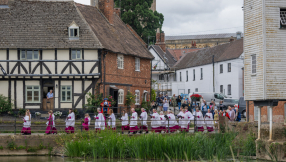
Gloucester churches come together to bless River Avon amid pollution concerns
It is part of a broader campaign against river pollution as concerns remain about the amount of untreated sewage in the Avon.

Life beyond burnout: how Christians can grow in the desert seasons
Christian Today speaks to author and Anglican priest Tish Harrison Warren about growth in desert seasons and why the Church shouldn’t treat all spiritual weariness as a problem to fix.

Iranian-born bishop stands in solidarity with Britain's Jews
2025 had the second highest number of antisemitic incidents on record.
MANSPOT Electric Pubic Hair Trimmer - Waterproof Body and Groin Shaver for Men and Women (Black)
$20.39
Lick-Safe Dog Paw and Nose Balm Stick - All-Natural Moisturizer with Coconut Oil for Dry, Cracked Pads and Snout
$11.69
Men's Quick Dry Moisture Wicking Polo Shirt - High Elasticity Slim Fit Athletic Top (Runs Small)
$6.99
Men's Running Shorts with Zipper Pockets - Lightweight, Quick-Dry, Multi-Sport
$12.95
NEWFAST NF-RE523 AC1200 WiFi Extender - 1200Mbps Dual Band Signal Booster & Internet Repeater
$18.5
G Gradual Men's 7-inch Workout Running Shorts - Lightweight, Quick-Dry, Comfort
$12.91
NOVETE Under Sink Water Filter - 3 Years, 30,000 Gallons, High-Efficiency Filtration
$41.99
HDPE All-Weather Adirondack Chair with Built-In Cup Holder - Tool-Free Assembly (Grey)
$69.99
HOMETUK Clear Plastic Storage Bins with Dividers - 3-Pack Stackable Acrylic Organizer Containers for Fridge and Pantry
$19.99
G Gradual Men's Fishing Shirt - UPF 50+ Lightweight Short Sleeve Button Down with Zipper Pockets
$14.99
Everyfun 60" Rectangular Platform Tree Swing - 700lbs Heavy Duty Adjustable Outdoor Swing (Colorful)
$49.99
Ekouaer Women's Casual Loose Jumpsuit - One-Piece Printed Sleeveless Wide Leg Romper with Pockets
$14.99
Men's Athletic Running Shorts with Zipper Pockets - Lightweight & Quick Dry
$12.74
Modern Ceiling Fan with Light and Remote - Reversible Quiet DC Motor
$69.3
MOOKA H13 True HEPA Air Purifier for Home Large Room - 1076 sq ft Odor Eliminator
$39.97
X-Sense XS01-WX Smart Smoke Alarm - 2.4 GHz Wi-Fi Photoelectric Fire Detector with Mobile App Alerts
$65.99
VitaUp Beet Root Gummies with CoQ10 & Grape Seed - Nitric Oxide Circulation Support (60 Count)
$24.91
Sealy 2-Pack Tritech 16" Twin Inflatable Air Mattress with Built-in AC Pump
$0
INTEX Prism Frame 20ft x 52in Above Ground Pool Set - Round Steel Frame Swimming Pool
$695.99
Gardner Pet 43" Heavy Duty Dog Crate with Wheels - Indestructible Folding Metal Cage (Black)
$0