Two recent things on TV have been highlights. Professor Brian Cox's beautiful programme on BBC Four, Forces of Nature is a long poem of praise to the creation. In the episode on time and space he tackled something I have long wondered about. We live on a huge rock hurtling through space at over 600 miles per minute. Why don't we get a sense of this – why don't we spend our lives dizzy? The answer is that because the earth travels at a constant speed in what is basically a straight line we don't get a sense of motion. Amazing!
The programme is full of his almost boyish awe and wonder at the natural world. In doing so he connects with one of our deepest early experiences of being alive and being thankful for that. The first time we laid in long grass; the time we saw the stars and wondered about all those planets and world far away; a look at the full moon and realising the darkness of the galaxy around.
Professor Cox mentions the hymns he sang as a boy and he does so fondly. But for him this is all a case of random chance – that's why we are here. It isn't that this insight doesn't cause some problems. Later on Professor Cox talks about the whole thing being shot through with magic. And for me the question is can there be magic without a magician.
Professor Cox explains that in space-time all things that have past still leave an imprint and in some way they are still there, although we cannot revisit them because we are trapped in the onward march of linear-time.
It really was a beautiful hour of television.
And then there was the National Television Awards and Sir David Attenborough's heart-rending plea for us to look after our beautiful blue planet. It was a note of rare authenticity in what was otherwise a festival of 'ham and cheese' as someone once described to me a gathering of actors at an awards do.
Both events/programmes were nothing less than hymns of praise to the wonder of the world. It is interesting that each were delivered by people who make no claim to theism. And all this takes me back to the ancient Celts – the originators of the early faith and Church.
In the early-medieval period (The Celtic Golden Age) Christians saw creation as bearing the footsteps and imprint of God. They saw animals and plants as being fellow worshippers – just by being themselves. And they knew that nature is to be treasured as we look in awestruck wonder at the God who is behind it all. Nature points to God and his goodness – which is perhaps an antidote to some elements of the theology that stresses original sin at the expense of original goodness.
Later evangelical revivals in the 19<sup>th Century looked harshly on the Celtic Traditions. For them, this was thinly disguised paganism. But the Celts knew something important. God is matter.
I wonder if we can rediscover our child-like awe of the planet we share with our animal friends? Perhaps only then might we take eco-issues more seriously. GK Chesterton said that Nature is not our mother, she is our sister. And, in this, he is onto something.
I love to look out of my little office into the garden and watch the seasons unfold. I love to watch the woodpeckers and the squirrels. I am still awe-struck by spring and deeply relieved to see the back of winter. It is a relief that I can now love these things and love God at the same time.
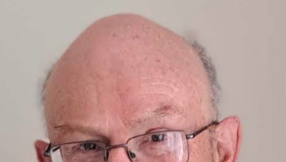
Steve Morris is the parish priest of St Cuthbert's North Wembley. Before being a priest he was a writer and ran a brand agency. In the 1980s he tried to become a pop star. Follow him on Twitter @SteveMorris214