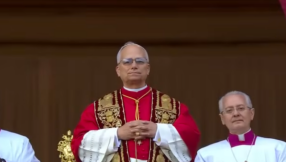
December 13 marked the first time ever for a Pope to meet with the OIC Secretary General to discuss relations between Christians and Muslims around the world.
HE Ekmeleddin Ihsanoglu, Secretary General of the Organisation of Islamic Cooperation, and Pope Francis met in the Vatican City, where they each expressed the need for greater efforts to foster respect between religious groups.
Church relations with Islam have so far been positive under Pope Francis' leadership. In his apostolic exhortation he underlined the importance of Catholic-Muslim relations, and highlighted their common Abrahamic roots.
"We must never forget that they profess to hold the faith of Abraham, and together with us they adore the one, merciful God, who will judge humanity on the last day," the Pope wrote.
"The sacred writings of Islam have retained some Christian teachings; Jesus and Mary receive profound veneration, and it is admirable to see how Muslims, both young and old, men and women, make time for daily prayer and faithfully take part in religious services.
"We Christians should embrace with affection and respect Muslim immigrants to our countries in the same way that we hope and ask to be received and respected in countries of Islamic tradition.
"I ask and I humbly entreat those countries to grant Christians freedom to worship and to practice their faith, in light of the freedom which followers of Islam enjoy in Western countries!"
Founded in 1969, the OIC names itself the 'collective voice of the Muslim world'. It aims to protect the interests of Muslims "in the spirit of promoting international peace and harmony".
The significance of the meeting between the two leaders is increased by the escalation of conflict in Syria, and the rising persecution of Christians in the Middle East, both of which the Pope has commented extensively on.
Inter-communal tension between Muslim and Christian communities was highlighted in the meeting as a concern, in addition to the exploitation of religion in conflict situations as a means to mobilise and engage supporters.
With growing dissent across the globe between members of different faiths, the two leaders stressed that interreligious dialogue is a necessary condition for peace, and as such it is a duty for adherents of all faith traditions.
Secretary General Ihsanoglu shared a vision for a "historic reconciliation" between Islam and Christianity in order to establish harmony in areas torn apart by war. The Pope praised this, and underlined the importance of ensuring that practical steps are taken to see that vision become a reality.
Particular attention was paid to the situation in Palestine, perhaps most significantly Jerusalem, which is at the centre of many conflicts between followers of Judaism, Islam and Christianity. The leaders expressed hope that Jerusalem would become a city where Jews, Christians and Muslims are able to live and worship in harmony.
Also discussed was the importance for justice and equality worldwide, and for the eradication of poverty and hunger.
It is hoped that this new-found relationship between the two leaders will have a significant impact on Muslim-Christian relations worldwide.