Kansas missionary Gracia Burnham and her husband, Martin, were held hostages by a terrorist group in the Philippines more than 15 years ago but God used their ordeal to plant seeds of faith in some of her abductors.
Burnham and her husband were working as missionaries for the New Tribes Mission when the Abu Sayyaf terror group kidnapped them, along with other hostages, from the Dos Palmas Resort in Palawan in 2001.
She was eventually rescued by the Philippine military in 2002, but her husband was killed during a gun fight between the government forces and the terrorists.
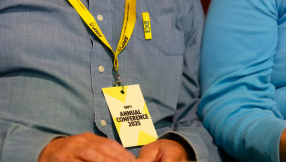
During the recent Voice of the Martyrs Advance Conference in Washington D.C., Burnham revealed that the hardest part of the abduction was not being dragged around in the jungle with her foot bleeding from the long walks, or being forced to sleep at night using only a rice sack to provide cover from the jungle floor.
"The hardest thing for me was seeing myself for what I really was. When everything was gone, the real me surfaced that I didn't even want to believe existed. I saw a hateful Gracia. I saw a faithless Gracia. It was shocking," she said, as reported by The Christian Post.
Burnham noted that she became so desperate that she begged God to change her and asked him how much longer she should endure her captivity.
The missionary said she was not sure if God would answer her prayer, but she recalled God's promise that "He would change us so much that we would start looking like Jesus."
"God started changing me. He can bring peace to the broken hearted. He can bring good things out of pain. He keeps giving us a day of grace to serve Him again," she narrated.
Burnham told the audience at the summit about how she became frustrated during her captivity when Abu Sayyaf leaders received ransom money for their release, but instead of setting them free, they asked for more money.
She recalled that she begged the militants to just take the money and let them leave, but the group did not listen. She noted that her husband told her that night how glad he was that Jesus had already paid their ransom.
"Jesus' payment for us was sufficient. It satisfied God and there doesn't need to be anymore sacrifice for sin," she told the crowd at the conference, according to The Christian Post.
Burnham believes that her experience in captivity not only profoundly changed her, but it also planted seeds of faith in her captors.
She said at least four of her kidnappers went on to give their life to Christ with the help of a military couple in the Philippines.
In an interview with Mission Network News in 2016, Burnham revealed her gratitude in playing a small part in leading her captors to Christ.
"I have found some of the guys who held us captive, in a maximum security prison in Manila, and I've been able to work with them in a small way through a missionary couple who works in the prison," she told Mission Network News.
Burnham said that the work of the missionary couple had reminded her that her time in captivity and the death of her husband had not been wasted.
"Others are reaping what we sewed ever so long ago. God is Almighty, and He can do anything," she said.