The Middle East is 'going backwards in development terms', according to the founder and head of the Christian satellite TV broadcaster SAT-7, Dr Terence Ascott.
In its annual report, SAT-7 points out that while the Arab world comprises just five per cent of the global population, in 2014 it saw 45 per cent of global terror attacks, 58 per cent of the world's refugees, 47 per cent of its Internally Displaced Peoples (IDPs) and 70 per cent of total battle-related deaths. Those numbers have dramatically worsened since then, the report shows, as by 2016 the ongoing conflicts in Libya, Syria, Yemen and Iraq directly affected 60 million people.
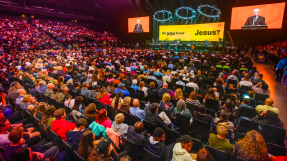
Last year marked 20 years of broadcasting for SAT-7, which is the region's largest Christian broadcaster.
Ascott said: 'In the midst of all this turmoil, pain and grief, and with the growing influence of "fake news", people are hungry for authenticity, truth and hope. There has, therefore, never been a more important time to be a Christian broadcaster and digital media provider in the Middle East.'
Ascott told Christian Today that he was pessimistic over Syria and its Christians, adding that the country may need 'more time' in its state of war before peace emerges after all parties are 'exhausted' by the fighting.
'While a lot of people are tired and half the infrastructure in Syria is destroyed – partially or fully – I am not sure that this is going to lead to a peace, unless the country is willing to be split up...[between] Kurds and the Sunnis and so on, and I don't think that is a solution the international community will want.
'If there's going to be a new united Syria going forwards there has to be change including, as many feel, that the Assad government would need to step down because there is too much bad blood between them and the other factions that would need to be included in a government of reconciliation. And him stepping down could lead to a further de-stabilisation so there is no obvious solution here.
'When you look at other conflicts such as the Lebanese civil war, it actually ended because everyone was exhausted, and they couldn't take any more of the killing and hopelessness. And I think it may need a bit more time in Syria despite the level of violence being remarkable. But people have to realise there is no future without compromise and while all the displaced people have reached that conclusion, I'm not sure the key players have, importantly the backers of the Syrian government – Russia, Iran and so on. All need to recognise that hard compromises have to be made.
'The other unknown in this is still the ultimate goals of the different factions that make up the Syrian Opposition groupings...which include some very dodgy characters. We do don't want to go from one bad regime to chaos or another oppressive regime, so this again complicates things. Really the only known quantity in this are the Kurdish groups – you know where they stand and can better predict their behaviour – but the others are mostly unknown quantities.'
Asked about the plight of Christians, Ascott said: 'The Churches in Syria are in a very difficult situation – many of the Christians are in the government-controlled areas which gives them important protection from Islamist groups, but it also makes them look like they are very supportive of the regime and they may pay the price for that if the regime goes. So they are caught between a rock and a hard place. The Russian media have made a lot of the idea that Assad, with Russian support, is protecting the Christians of Syria and this has been largely ignored by the western media.'