The 2019 Michael Ramsay Prize for Theological Writing has been awarded to the Rev Canon Mark Oakley for his book, The Splash of Words: Believing in Poetry.
He was unveiled as the winner of the annual award at the Greenbelt Festival on Sunday after impressing a panel of five judges.
The Splash of Words, published by Canterbury Press, is a collection of 40 poems, both old and new, that are written alongside a personal reflection from the author.
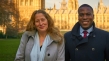
Archbishop Justin Welby was one of this year's judges and presented the award to Rev Oakley.
He praised Rev Oakley's book: "Mark Oakley's work shines with an infectious love for poetry and for theology. Written with power and subtlety, Mark shows us how poetry can change our whole view of the world.
"He sees poetry not just as a tool for expressing faith but as a way of understanding: God is in the world as poetry is in a poem. I'm grateful to have had the chance to read six varied books as part of the Michael Ramsey Prize shortlist.
"The Splash of Words will bring alive poetry to anyone who reads it and shows us how vital poetry is for all Christians – rather than just an elite activity. Reading poetry alone and together will help us grown in faith, hope and love."
The Michael Ramsay prize has taken place each year since its launch by former Archbishop of Canterbury Dr Rowan Williams in 2005 and seeks to recognise distinguished Christian writing.
Rev Oakley's book was chosen from a shortlist that included other highly acclaimed writers and thinkers like Home for Good founder Krish Kandiah, who was nominated for his book God is Stranger, and Illia Delio, for Making All Things New.
As the winner, Rev Oakley takes home a £10,000 prize, while the other shortlisted authors each receive £1,000.
Rev Oakley said: "Theology is a language of love and poetry is the theologian's native language. Poetry takes the difficulties of life seriously and it also feels a bit like home.
"I put down some poems that have meant a lot to me and did a reflection. It's a full range across the centuries, not all of them are 'religious' but I do think within there's this exploratory of the Divine."