Mandisa's cause of death revealed

Christian singer Mandisa died of complications arising from class III obesity, the official autopsy into her death has revealed.

Mandisa was found dead in her Franklin, Tennessee, home on 18 April at the age of 47. Police said at the time that there was no evidence of foul play. 

In the days that followed, it was feared that she might have self-harmed because of her past struggles with mental health, but her family strongly denied this and said she had been struggling to recover from Covid. 

The autopsy report confirms that her death was related to class III obesity and natural causes, People magazine reports. 

Mandisa shot to fame after competing on American Idol in 2006. 

She had a successful career as a Christian singer, collaborating with popular artists like TobyMac, Michael W Smith and Kirk Franklin. 

In addition to her powerful voice, she was known for her contagious joy and generous spirit.

News
Nashville team uses AI to convert whole Bible into musical form

You can now listen to the whole Bible in musical form while you do your exercise.

People view religious education positively, study finds

The government is consulting on plans to add RE to the national curriculum.

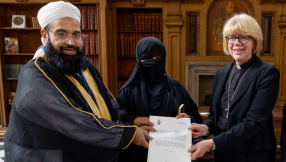
Archbishop of Canterbury withdraws award given to Muslim cleric who praised Bin Laden

Reform leader Nigel Farage said the decision to award Hafiz Muhammad Tahir Mehmood Ashrafi was "astonishing". 

How the new General Synod could move beyond the present disagreement over same-sex relationships

How might the next Synod make progress in the next five years based on a recognition that there are those in the Church of England who hold fundamentally opposed positions on the matter? Is there a way of allowing both sides to achieve what they want? Martin Davie argues that the answer to this question is ‘Yes.’