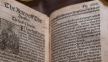
A man accused of attempting to steal an 800-year-old copy of the Magna Carta from Salisbury Cathedral has told the court that he did not know what the document was.
Mark Royden, from Canterbury in Kent, is to go on trial in January accused of trying to break into the display cabinet that housed the ancient document using a hammer last October.
It is alleged that he was stopped by cathedral staff and a tourist after the alarm went off just before 5pm on October 25.
Salisbury Cathedral is home to one of only four surviving copies of the Magna Carta, a charter of rights commissioned by England's King John in 1215. The document sets down the governing principles for justice, rights and power in England.
Although the attempted theft left three holes in the glass of the display case, the document itself was not damaged in the incident.
It was, however, withdrawn from public display and a facsimile of the original document was displayed until this February instead while the case was being repaired. The damage to the display case has been valued at £14,466.
Appearing in Winchester Crown Court in Hampshire this week, Mr Royden pleaded not guilty to a charge of attempting to steal the document and of causing criminal damage.
The charge sheet described the Magna Carta as a "priceless irreplaceable document belonging to Salisbury Cathedral".
Speaking during the hearing, Mr Royden said: "I didn't even know what the Magna Carta was until these charges were brought against me."
He added: "I was just going into church and now here I am."
He is to stand trial at Salisbury Crown Court on January 27.
Mr Royden was released on bail on the condition that he does not enter Salisbury Cathedral or Cathedral Close, the grounds immediately surrounding the building.