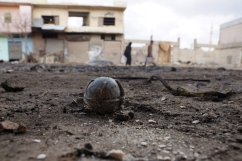
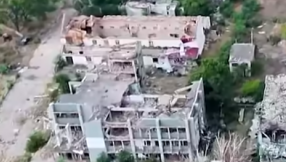
ISIS attacked Kurdish forces in Erbil, Iraq with mustard gas last year, according to a diplomat. This would be the first known use of chemical weapons in Iraq since the fall of Saddam Hussein in 2003.
An international chemical arms watchdog, Organisation for the Prohibition of Chemical Weapons (OPCW), has confirmed that sulphur mustard (mustard gas) was used in Erbil, after around 35 Kurdish troops fell ill on the battlefield in August.
Although the OPCW would not identify who used the weapon, the diplomat – who spoke to Reuters on condition of anonymity as the report is yet to be released – said the result confirmed that chemical weapons had been used by ISIS fighters.
The samples were taken after the soldiers became ill during fighting against Islamic State militants South West of Erbil, capital of Iraq's autonomous Kurdish region.
The OPCW already concluded that ISIS used chemical weapons in fightin with a rebel group in Syria in 2015 and the border between the Syria and Iraq are not recognised by ISIS, as they have declared a caliphate.
This news comes days after James Clapper, the director of US National Intelligence, told a security conference in Munich on Saturday that ISIS "would like to use chemical weapons" in an attack in America.
"It is pretty clear that they [Isis] have used this [chemical weapons] numerous times," said Clapper. "It is very clear aspirationally they would like to do more and it is a concern to us in the United States because the indications are that they would like to use chemical weapons against us."
If Islamic State used chemical weapons in Iraq, experts are still uncertain of how the group might have obtained them, or whether it could have access to more.
Another diplomat, speaking on condition of anonymity, said Syria's stockpile was a possible source of the sulphur mustard used in Iraq. That would mean Damascus had failed to fully disclose its chemical weapons programme, which was dismantled under international supervision in 2013-2014, the diplomat said.
"If Syria has indeed given up its chemical weapons to the international community, it is only the part that has been declared to the OPCW and the declaration was obviously incomplete," the diplomat told Reuters.
Syria agreed to give up its chemical weapons stockpile after hundreds of people died in an attack with Sarin nerve gas in a Damascus suburb in 2013. Western countries blame that attack on the government of President Bashar al-Assad, which denies it.
Iraq's chemical arsenal, part of a "weapons of mass destruction" programme used to justify the US-British invasion of 2003, proved to have been destroyed and dismantled in the Saddam era, although US troops occasionally encountered old Saddam-era chemical munitions during the 2003-2011 occupation.
Hamish de Bretton-Gordon, a specialist in biological and chemical warfare, said Islamic State fighters may have developed their own chemical weapons capability, and could be preparing to use it again.
"I'm pretty convinced that the mustard IS are using in Iraq is made by them in Mosul," he said. "They have all the precursors at hand from the oil industry and all the experts at hand to do it."
Sulphur mustard is a Class 1 chemical agent, which means it has very few uses outside chemical warfare. Used with lethal effectiveness in World War One, it causes severe delayed burns to the eyes, skin and respiratory tract.
Additional reporting by Reuters.