
The Church of England has published the 142-page report of the Revision Committee that has been considering in detail the draft legislation to enable women to become bishops in the Church of England.
Also published is an amended version of the draft, eleven clause Measure and associated draft Amending Canon.
The Committee has met on 16 occasions over the past 12 months and considered 114 submissions from members of the General Synod and a further 183 submissions from others.
After much discussion the Committee rejected proposals aimed at fundamentally changing the approach of the legislation, whether by converting it into the simplest possible draft Measure or by creating more developed arrangements – whether through additional dioceses, a statutorily recognised society or some transfer of jurisdiction – for those unable to receive the ministry of female bishops.
As indicated to the General Synod in February*, the draft legislation continues to provide special arrangements for those with conscientious difficulties by way of delegation from the diocesan bishop under a statutory Code of Practice. The legislation has been amended in a number of detailed respects. Provision for statutory declarations by bishops unable to take part in the consecration of women as bishops or their ordination as priests has been removed as has an obligation on the Archbishops to nominate particular suffragan sees to be occupied by those who do not consecrate or ordain women.
Added to the Measure are new provisions requiring each diocesan bishop to draw up a scheme in his or her diocese that takes account of the national Code of Practice and provides local arrangements for the performance of certain episcopal functions in relation to parishes with conscientious difficulties. A further new provision allows such parishes to request, when there is a vacancy, that only a male incumbent or priest-in-charge be appointed.
It is expected that much of the July group of sessions of the General Synod in York (9-13 July) will be devoted to debating the Revision Committee’s report and conducting the Revision Stage of the legislation. This is the moment (equivalent to a parliamentary Report Stage) when all 470 members of the Synod have the opportunity to consider the draft legislation clause by clause and to vote on proposed amendments.
Proposals rejected by the Revision Committee can be debated afresh at the Revision Stage.
Once the Revision Stage has been completed – and provided the Synod does not decide that further work is necessary in Revision Committee – the draft legislation will have to be referred to diocesan synods and cannot come back to the General Synod for final approval unless a majority of diocesan synods approve it.
The earliest that the legislation could achieve final approval in Synod (when two-thirds majorities in each of the Houses of Bishops, Clergy and Laity will be required) is 2012, following which parliamentary approval and the Royal Assent would be needed. 2014 remains the earliest realistic date when the first women might be consecrated as bishops.




-

From Tyndale to today: The enduring hunger for the Bible
-

500 million Christians worldwide face Bible access restrictions, report finds
-

800 years on: Why St Francis of Assisi still captivates the world
-

More than 4,200 Christians killed in Nigeria this year - report
-

Franklin Graham preaches with warning from Sodom in Manchester
-

KC warns Northern Ireland conversion therapy bill has a 'sting in the tail'
Most Popular
News

Winnie-the-Pooh centenary marked with new Christian reflection resources for schools
Church schools are being invited to explore Christian values through the much-loved stories of Winnie-the-Pooh as part of new resources produced to mark the character’s 100th anniversary.

UK ranks seventh globally for daily Bible App use as searches for anxiety and hope rise
The UK has ranked seventh in the world for daily Bible App engagement, as new figures from YouVersion suggest growing numbers of people are turning to Scripture for reassurance, guidance and spiritual support.
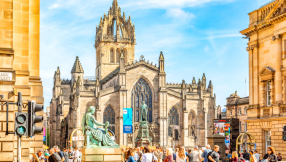
Scottish cathedral to charge non-Scottish visitors £12 entrance fee for first time
The Church of Scotland is struggling to hold on to its historic buildings.
SNP decision to drop extreme abortion motion welcomed
For some people, there can never be enough abortion.








