
The US President George W. Bush has left China after a state visit in which he urged greater freedom for the country’s people with regard human rights and democratisation, as well as religious freedom.
|PIC1|The President’s calls seem to have had little impact on the Chinese leader Hu Jintoa, however, with commentators drawing the conclusion that the US has not managed to gain much of the ground it was hoping to.
Bush emphasised his desire for greater religious freedom in China by making a special visit to a state-controlled Protestant church on Sunday, Gangwashi, before meeting with Chinese leaders where he put forward the case for liberty, as well as other items on his political-economic agenda.
First Lady Laura Bush and U.S. evangelist Luis Palau accompanied Bush on his visit to the church. Secretary of State Condoleeza Rice said of the visit: “He wanted to set a framework for his discussions then about religious freedom and human rights with his Chinese counterparts.”
Christians in China are allowed to practise their faith only at the “patriotic” Protestant organisation, the Three-Self Patriotic Movement (TSPM), or the Catholic equivalent which does not recognise papal authority.
The Gangwashi church is part of the TSPM and reportedly one of only five such churches in Beijing, China’s capital, giving it a large share in the responsibility of providing pastoral care to the city’s roughly 30,000 registered Protestants.
|QUOTE|Mike Green, presidential adviser, defended the decision by the President to visit the church, reports CNSNews: “The church where he will worship is a church that is often called a state-sponsored church, but it’s a real church and people really do worship.”
“The parishioners are real people of faith who are congregating to express that faith.”
Bush also complemented the church on its service when speaking outside after the service. He told Pastor Du Fengying, after listening to his sermon via a translation headset: “The spirit of the Lord is very strong inside your church.”
The President also indicated such cases were still to be regarded as a positive development: “It wasn’t all that long ago that people were not allowed to worship openly in this society.”
He added: “My hope is that the government of China will not fear Christians who gather to worship openly. A healthy society is a society that welcomes all faiths, and gives people a chance to express themselves through worship with the Almighty.”
|TOP|Bush’s call echoes the speech he made in Japan last week in which he urged China to allow its people the right “to worship without state control and to print Bibles and other sacred texts without fear of punishment”.
The vast majority of Chinese Christians, however, belong to illegal Protestant ‘house’ churches or underground Catholic congregations which remain loyal to the Pope.
A report by Christian Solidarity Worldwide issued last week said that there has been a considerable rise in the number of reports of religious persecution against unregistered Protestant Christians in China.
According to the report, “Punishments include imprisonment, torture, humiliating treatment, fines, welfare deductions, withholding of medical treatment, church and business closures and confiscation of valuables and religious materials”.
|AD|During talks with President Hu later on Sunday, the President told reporters he had discussed “both political and religious freedom”, as well as people who “we believe are improperly imprisoned”, reports CNSNews.
President Bush also told reporters he had urged Beijing to hold talks with Vatican leaders on religious freedom and to discuss the future of Tibet, under Chinese occupation since 1950.
President Hu said that China had made notable progress in developing “a democratic political system and human rights”.
“The Chinese people are exercising their right of democratic elections, democratic decision-making, democratic management and democratic supervision, according to law.”
He added, however, that the Chinese Government would continue to take into account “national conditions” and “build democratic politics with Chinese characteristics”.
President Bush responded by saying, “It is important that social, political and religious freedoms grow in China and we encourage China to continue making the historic transition to greater freedom”.




-

Why the Archbishop of Canterbury’s award controversy matters
-

More than one in four US Protestant churchgoers believe some biblical truths become outdated
-

Christian leaders issue ‘sober and urgent call’ for Western Church to prepare for disruption
-

Australia's anti-therapy laws harm the most vulnerable - Britain should not copy them
-

Songs of Praise celebrates 65 years with special anniversary episode - and finds a new generation online
-
First segments of Eternal Wall of Answered Prayer near Birmingham completed
Most Popular
related articles
Luis Palau Visits China to set up Open Street Christian Festival
Luis Palau Visits China to set up Open Street Christian Festival
Hong Kong Churches Push for Democratic China
Hong Kong Churches Push for Democratic China
US President Bush Attends Worship at State-Sanctioned Church in China
US President Bush Attends Worship at State-Sanctioned Church in China
President Bush Expresses Concerns over Religious Freedom in China
President Bush Expresses Concerns over Religious Freedom in China
News

Disabled baby euthanized in the Netherlands
Doctors in the Netherlands euthanized a severely disabled one-year-old child, the first case reported by Dutch authorities under rules introduced in 2024 that allow ending the lives of seriously ill children between the ages of one and 12.

400% increase in euthanasia deaths in Australian state of Victoria
Right To Life UK said the surge in numbers showed why UK MPs were right to reject assisted suicide.

Ukrainian churches appeal for aid in starving Oleshky
Russia and Ukraine have blamed each other for the crisis in Oleshky.
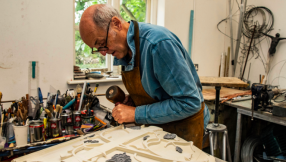
Westminster Abbey plans memorial to JRR Tolkien
The memorial will go next to that of his friend CS Lewis.








