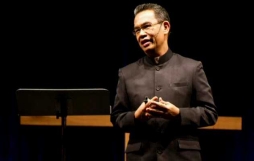
The Secretary General of the World Evangelical Alliance, Bishop Efraim has warned against forgetting the plight of minority evangelicals in the effort to find unity with the Catholic Church.
"In order to have relations with Roman Catholicism, we need to be first sensitive towards our own group, and particularly those who are from the Latin side," Tendero told Evangelical Focus.
While unity with the Catholic Church remains a key focus for the Bishop, he reiterated that the priority remains to first ensure "a good relationship" with evangelicals.
He highlighted that in many contexts, including Italy and the Bishop's country the Philippines, evangelical christians exist in Catholic majority countries.
For this reason, he said, it is essential to "first hear their perspectives" on the Catholic church before building closer relationship with the Vatican.
This does not exclude the possibility of Catholic and Evangelical churches working together, but rather determines the nature of the collaboration.
Bishop Efraim suggested that the two denominations work together in "co-belligerence", rather than ecumenicalism, in addressing key societal issues, including "the fight against corruption (both in government and in society), the alleviation of poverty, the promotion of peace processes, the promotion of integrity in the electoral process, the fight against human trafficking or addressing the adverse effects of climate change."
Co-belligerence allows a union focused around a common issue, rather than uniting in a more integral sense.
Bishop Efraim was speaking ahead of the release of a joint document between the Pontifical Commission for the Unity and the World Evangelical Alliance.
He also spoke on the church's responsibility to engage with the issue of climate change, as "God created this universe" and "entrusted" it to us, "so, this is part of our Creation mandate, to care for what He has given to us."
He said the refugee crisis was an opportunity for the church to "show the love of Christ" to "the people whom God is bringing right to our doorsteps.
"It is an opportunity to minister to them in the time of need. And as we minister to them, they are not only in need in terms of the physical needs but also the spiritual needs. Therefore, the churches are in the position where they can provide for both needs."