Auschwitz anniversary a 'reminder of what happens when we remain silent'

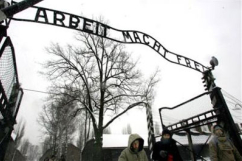
Next month's 70th anniversary of the liberation of the Auschwitz death camp is a reminder, at a time when anti-Semitism is on the rise again, of what happens when the world stays silent about persecution, the president of the World Jewish Congress said.

Ronald S. Lauder told Reuters in an interview anti-Semitism had reached levels not seen since World War Two, driven by Islamist extremists using hatred of Jews as a way to attack Israel, and by far-right nationalists in Europe.

He said the commemorations on Jan. 27 to mark the day Soviet troops liberated Auschwitz in 1945 would be the last major anniversary when survivors would be able to attend in numbers. The youngest are now in their 70s.

"I believe it is a good reminder to people of what happens when we remain silent, and the world was silent when Hitler was starting, the world was silent when Jews were taken away, the world was silent at Kristallnacht and in many ways, although many people knew what was happening in the concentration camps, it was not publicized," Lauder said.

"After World War Two, into the 50s, 60s and 70s, the type of anti-Semitism we see today, nobody would ever have thought of happening. But as time has gone on and generations have passed, we see the rise of anti-Semitism."

"Hopefully this commemoration of the 70th anniversary of the freeing of Auschwitz, and the ceremonies that will take place, may remind the world what it is happens when anti-Semitism is allowed to run wild, so to speak."

At the Auschwitz camp, in southern Poland, the Nazis killed some 1.5 million people between 1940 and 1945, most of them Jews.

Lauder, who has helped fund conservation efforts to preserve artifacts at Auschwitz including inmates' hair and shoes, said the World Jewish Congress would this year bring about 100 survivors and their families to Poland to take part in the commemorations.

He said Hungary, where the far-right Jobbik party is now the second biggest political force, was one example of a European country where a political party was fanning anti-Semitism.

"The government will talk about 'There is no place for anti-Semitism in the world,' but that is not necessarily speeches being made inside Hungary," Lauder said.

"There is a total disconnect between what they say for external consumption and internal consumption."

Hungarian Prime Minister Viktor Orban has called anti-Semitism intolerable and says his government is a determined participant in the fight against it. Jobbik's leaders deny being anti-Semitic.


related articles
\'That Jew died for you\' – controversial video hits one million views but is deemed \'offensive\' by Jewish community
'That Jew died for you' – controversial video hits one million views but is deemed 'offensive' by Jewish community

A video produced by Jews for Jesus that shows Jesus being sentenced to death at a Nazi concentration camp has been generating controversy across the internet.

Reviling Jews for Jesus: acceptable anti-Semitism?

When it comes to the Holocaust, we are on uniquely sensitive ground.

The problem of evil is a bigger problem for atheists than Christians

David Robertson explores why the evil in the world can bring us closer to God rather than pushing us away

Worldwide increase in religious communities fleeing persecution

The US State Department's International Religious Freedom Report 2013 was released on Monday, showing the largest displacement of religious communities in recent memory.

Is secularism to blame for the rise in antisemitic and anti-Muslim sentiment in Britain?

Secularists have condemned communities secretary Eric Pickles for implying that "aggressive secularism" has contributed to religious conflict and intolerance.

News
Faith in difficult times: lessons from 1930s Britain

Architectural historian Steven Brindle talks to Christian Today about the faith that shaped 1930s Britain, the churches that supported struggling communities and what lessons the decade might have for us today.

Campaign aims to mobilise 500,000 Christians for Christmas outreach

Shine Your Light is aiming to mobilise half a million Christians to share the gospel with five million people across the UK this Christmas, with more than 2,000 churches already signed up, organisers say.

The Church of England should repent for previous calls to ban 'conversion therapy'

The Church of England's uneasiness about the government's ‘conversion practices’ bill is a perfect lesson in the old adage, 'be careful what you wish for,' writes Dr Martin Davie.

Leaked Home Office report links 'Christian extremism' to traditionalist beliefs and immigration concerns

An internal Home Office report lists concerns about immigration, multiculturalism and changing social values among the characteristics associated with what it calls "Christian extremism", it has been reported.