
|TOP|The Council of Christian Churches of Angola (CICA) will hold an ecumenical service of gratitude for the signing of peace accords in Cabinda, next Saturday in Cidadela stadium.
The signing of a Memorandum of Understanding for Peace and Reconciliation in Cabinda marks the end of 45 years of violence afflicting this Angolan province, the richest in the country because of its oil, gold, diamonds, phosphate, uranium, potassium and exotic woods.
The peace accords in Paz Cabinda were signed on August 1 in Namibe Province, by the Minister of Territory Administration, Virgílio de Fontes Pereira, and António Bento Bembe, leader of the Cabinda Forum for Dialogue (FCD).
Acting President of the Republic, Roberto Victor de Almeida attended the ceremony.
|AD|The document outlines the attribution of a special status for the Cabinda enclave, based on the respect of the Constitutional Law and other legislations in force in the Republic of Angola as a united and indivisible nation.
The Angolan Council of Christian Churches (CICA), based in Luanda, is an ecumenical institution founded in 1977 to be the Angolan faith community's guiding institution in the country, as well as the prophetic voice of its member institutions.
CICA's mission is to contribute to the peace process and to strengthen ecumenism in Angola. Its role is one of a motivator and facilitator to its members as it supports churches' implementation of projects at the grassroots level. CICA provides guidance and technical assistance in community assistance and development, literacy, vocational training, community health (including HIV/AIDS), development of youth, ecumenical cooperation, and peace education and reconciliation. CICA supports activities and ecumenical offices in 17 of Angola’s 18 provinces.
Twenty-five staff from two organisations, CICA-Angola and KOINONIA-Brazil, are participating in this project. Forty member institutions of CICA-Angola and KOINONIA-Brazil, and the churches-at-large in Angola and Brazil, are indirectly participating.




-

Wes Huff confesses to plagiarism, asks for prayer: 'It was sinful'
-

Jonathan Aitken says Russell Brand asked him for prayer after rape conviction
-

Where is this ‘space for faith’ that the King speaks of?
-

Attacks on Christians in Europe rise by 44%, report finds
-

‘Beyond astonishing’ that schools are encouraging children to play GTA 6, Christian group says
-
Christ’s example offers lasting hope in uncertain times, King tells Church of England Synod
Most Popular
related articles
46,000 Attend Franklin Graham Evangelical Christian Event in Angola
An historical Christian event has been held in Lubango, Angola, Africa on 10th-12th June. The world renowned American evangelist Franklin Graham launched the Festival of Hope in Lubango’s soccer stadium which drew almost 47,000 people...
African Churches in Britain Discuss Child Abuse Cases
A court case was heard last week regarding three people involved in physical abuse of an eight-year-old girl in extreme religious rituals. All three people were found guilty by the court. African minorities, evangelical Christians...
Angolan Pastor Wins Right to Challenge Deportation
An Angolan pastor and his family whose application for asylum was turned down have won the right to appeal the decision. Pastor Daly's fight for his family's right to stay has won the support of many...
CWS Launches Emergency Appeals for Tanzania, Angola
Church World Service is appealing for donors to contribute to ...
News
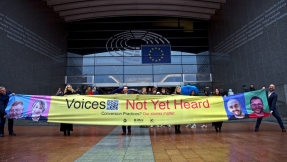
Christian prosecuted in Malta asks European Parliament to oppose bans on conversion practices
Matthew Grech spent three years fighting criminal proceedings before finally being acquitted this year.
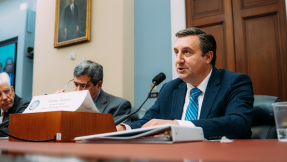
Christian freedoms 'under attack in Europe', US Congress hears
Religious freedom lawyer Jeremy Tedesco said there was "growing state censorship of Christians" in Europe, including the UK where Christians have been prosecuted for silent prayer.

Does the BBC understand worship?
As a Christian minister who values both the BBC’s religion output, and the community role played by its network of local radio stations, this latest move seems wrong in so many ways.
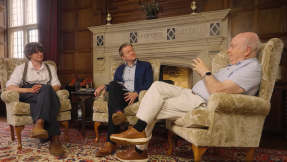
John Lennox says there is enough evidence to take Christianity seriously
Speaking with agnostic YouTuber Joe Folley, Oxford mathematician John Lennox argued that the historical evidence for Jesus’ resurrection is enough of a reason for sceptics to explore whether his promises hold true in their own lives.





