
The Fisherfolk were something of a phenomenon in the charismatic movement of the 1970s, as was the community they belonged to, the Community of Celebration. Based in Britain, their worship attracted crowds in churches and cathedrals. Recordings sold in thousands. Christians around the world were inspired to make the attempt at community living.
In the way of such things, however, life moved on. After a while the Fisherfolk became just a memory. But the Community of Celebration did not come to an end. It continued, at times with several branches, slowly evolving over a period of decades. Beginning as an almost hippie-style commune with an international ministry, they gradually became more locally focused and reflective.
After relocating to Aliquippa, an old steel town in desperate need near Pittsburgh (USA), their life and ministry developed through several phases until they achieved formal recognition as a religious community of The Episcopal Church of the United States. Today they are a familiar Christian presence in the town, with their own purpose built chapel, providing a focus and support for other agencies which have since come with a mission to the poor of Aliquippa.
Following the Spirit is the story of the Community of Celebration. Taking its title from a TV documentary describing the extraordinary renewal in Houston in the sixties that led to the founding of the Community of Celebration in Britain, it traces the development of the ‘religious order’ concept that was ultimately to become the Community’s identity. The Community’s founder, Graham Pulkingham, became less and less essential to it as its members took on the work of establishing that identity for themselves.
The subtitle of the book is 'Seeing Christian faith through community eyes'. Community living confronted many issues in ordinary church life, where institutional needs and social and religious conventions powerfully control the way people think and what is practically possible. Often, the real casualty here is a truly Christian spirituality that unites the human and the divine. A major section of the book looks at several issues in which there was a characteristic ‘community’ way of looking at things.
For some, the Community’s evolution was as much a spiritual and theological journey as one in life experience, and a third section attempts to give a flavour of this. The author’s own background, for example, is evangelical and charismatic. That inspired the move to community living and yet the very circumstances of community life promoted a deeper appreciation of the Incarnation and its implications for Christian life and theology.
The author, Philip Bradshaw, is an Anglican priest who has taken life vows in the Community of Celebration. He and his wife live near London, where they maintain a Community house on behalf of the parent Community in the USA.
Following the Spirit is due for publication on 28 May 2010. RRP £12.99. Pre-order it from Amazon HERE for £11.69).
-

Sharing your faith: practical tips for evangelism
-

‘The UK is a mission field’ - churches encouraged to embrace cross-cultural mission on their doorstep
-

Hillsong’s Joel Houston opens up about season of 'soul-searching' after difficult few years
-

The Conversion Practices Bill is weaponised vagueness
News
-
Priest dies after cross falls on him during livestreamed Mass
-
John Lennox urges Christians to overcome fear of sharing their faith
-

The Conversion Practices Bill is weaponised vagueness
-

Hillsong’s Joel Houston opens up about season of 'soul-searching' after difficult few years
-
Anti-Christian harassment continues to rise in Jerusalem
-

Christians remember Aberfan disaster 60 years on
Most Popular
News
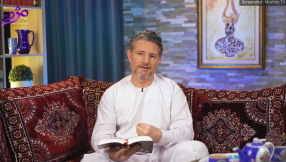
Afghanistan's first dedicated Christian TV channel launches despite Taliban restrictions
Mozhda TV, which its founders describe as the first Afghan Christian television channel, began broadcasting Saturday, Oct. 24, as church leaders, mission partners and Afghan believers gathered to mark its launch.
Yemen is key funding hub for Islamic State attacks on Christians - report
The report warns that Christians are seen as a particular target by the Islamic State.
Christian widows in Nigeria hold fast to faith as they rebuild lives after violence
Hundreds of Christian widows in Nigeria’s Plateau State are putting their lives back together after losing husbands, homes and livelihoods to violence.
8 killed in attack on church in Jordan
In response to the shooting, Church leaders vowed that Christians will not be driven from their homeland.








