2 Kings 6-7 contain a heart-rendingly bleak story of famine and death that becomes an illustration of the grace of God.
The city of Samaria, the capital of the northern kingdom of Israel, is besieged by the Arameans or Syrians. Ben-Hadad, the Syrian king, has mobilised his whole army and surrounded it. The people are starving: a donkey's head or a tub of dove's dung, which no one would ever normally eat, change hands for huge prices. On a walk through the city, Israel's King Jehoram is button-holed by a woman who asks him for justice. "If the Lord does not help you, where can I get help for you?" he asks, adding bitterly: "From the threshing floor? From the winepress?"
A tale of horror follows: she and her neighbour have eaten her son, but now they have finished him the neighbour has hidden her own. The king, enraged, swears to kill the prophet Elisha, whom he holds responsible. But Elisha prophesies an immediate end to the siege: "About this time tomorrow a seah of flour will sell for a shekel and two seahs of barley for a shekel at the gate of Samaria." One of the king's officers laughs: "Even if the Lord should open the floodgates of the heavens, could this happen?"
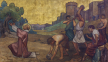
The Lord, though, is not to be denied. The besiegers think they're being attacked; panicked, they run for their lives and raise the siege. Four lepers, unmolested outside the walls, decide to go into their camp; they have nothing to lose. They find it empty. After eating and drinking and a spot of looting, they realise they have to tell the rest of the city: "This is a day of good news and we are keeping it to ourselves."
When the messengers sent out by the king report back to him, the citizens flood out to the Aramean camp – and the doubting officer is killed in the rush.

There are three lessons to learn from this story.
First, faith is sometimes tested to breaking point. The city was saved, but it was too late for many of its citizens – including the women forced to such a dreadful choice. King Jehoram wore sackcloth under his clothes as a sign of repentance, but the city was still reduced to absolute desperation. We should be honest about the depths to which some people fall. There's no point in telling them to cheer up or look on the bright side; sometimes all we can do is acknowledge their pain and grieve with them.
Second, God brought rescue. The king's officer did not believe he could and paid the penalty; so close to survival, he was able to see his salvation but not to take hold of it. Hope is the Christian's great treasure. When all reasonable expectation that things can get better is at an end, Christians still believe God is sovereign.
Third, the message of good news came from people written off by the world. The four lepers – either suffering from leprosy 'proper' or another form of skin disease – were outcast both from Israel and Syria. They weren't even allowed into the city. It was because of their situation that they were able to make their great discovery and take the good news to the people. We should never assume that because someone is an 'outsider' today, perhaps because they don't fit what we think is the model of a 'good Christian', they don't have blessings from God to share with us. Grace can come from anywhere.
This is a hard story to read. But it speaks to us of the grace of God and of the need for us to be faithful in believing.
Follow Mark Woods on Twitter: @RevMarkWoods