
Giving oneself and one's possessions voluntarily for the wellbeing of others and without compulsion is a Christian duty of which organ donation is a "striking" example, the Church of England has told the House of Lords.
The Church's Mission and Public Affairs Division was responding to the Lords' EU Social Policy and Consumer Affairs sub-committee's inquiry into the EU Commission's Communication on organ donation and transplantation: policy actions at EU level.
"Christians have a mandate to heal, motivated by compassion, mercy, knowledge and ability," the response says.
"The Christian tradition both affirms the God-given value of human bodily life, and the principle of putting the needs of others before one's own needs."
The response repeats the Church's opposition to selling organs for commercial gain, while accepting organs being freely given by living donors, with no commercial gain.
It argues that, if the present opt-in system of organ donation is to continue, it will need to be backed by a properly resourced programme of public awareness-building and education.
Whether organ donation should be arranged through an "opt-in" or an "opt out" system is not a question on which Christians hold a single set of views, the response explains.
The opt-in system, where people sign up to be donors if they die, reflects Christian concern "to celebrate and support gracious gifts, freely given".
An opt-out approach, where people state that they do not wish to donate organs, "could stress the Christian concern for human solidarity and living sacrificially for others".
The response goes on to say: "The undoubted need for more organs to be donated for the healing of others has to be weighed against the changed relationship between persons and the State which moving to an opt-out system could entail."
Either way, all EU member states would need to adopt the same opt out or opt in approach to consent for organ donation, it argues.



-

Could the Church face a ‘silver uprising’?
-

From Tyndale to today: The enduring hunger for the Bible
-

500 million Christians worldwide face Bible access restrictions, report finds
-

800 years on: Why St Francis of Assisi still captivates the world
-
More than 4,200 Christians killed in Nigeria this year - report
-

Franklin Graham preaches with warning from Sodom in Manchester
Most Popular
News
Christians take issue with 'one-sided' engagement over conversion therapy ban
LGBT groups have the ear of the Scottish government.
2,700 conversions recorded as Germany’s Free Evangelical Churches report renewed growth
Baptisms and conversions have risen across Germany’s Federation of Free Evangelical Churches, as new figures suggest congregational life has largely rebounded after the setbacks of the Covid-19 pandemic.
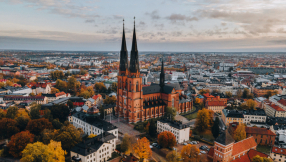
The book that changed Sweden: 500 years of the Swedish New Testament
2026 is the 500th anniversary of the first New Testament in Swedish. This is the story …
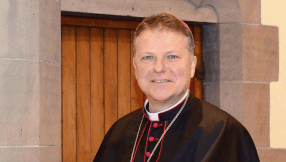
Catholic Church 'deeply disturbed' by Greens call for complete abortion decriminalisation
The Catholic Church in Scotland has said it is “deeply disturbed” by the Scottish Green Party’s call for the complete decriminalisation of abortion.








