Facebook Founder Meets Texas Pastors: Is Mark Zuckerberg Drawing Closer To Christianity After Abandoning Atheism?

Is Facebook founder Mark Zuckerberg seeing the light of Christianity and being drawn to it?

First, he declared that he's no longer an atheist. Now, he has met with pastors of a church in Texas to learn more about their ministries and how they serve the people.

In a recent Facebook post, Zuckerberg wrote that he "met with ministers in Waco who are helping their congregations find deeper meaning in a changing world."

He said the meeting helped him "understand just how important community is, and how we're all just looking for something we can trust."

"We may come from different backgrounds, but we all want to find purpose and authenticity in something bigger than ourselves," the 32-year-old billionaire added.

Aaron Zimmerman, an Episcopal priest from Waco, Texas said he and other religious leaders were stunned to learn that they would be meeting Zuckerberg on Jan. 18, the Baptist Press reported.

"You could have knocked me over with a feather," said Zimmerman, the rector at St. Alban's Episcopal Church.

He said they were doubly surprised when Zuckerberg told them that he came not to give a speech but to ask questions and listen.

"The clergy spoke 90 percent of the time. That impressed me a lot," Zimmerman said.

As Christian Today previously reported, Zuckerberg posted a message on Facebook last month announcing that he has abandoned atheism.

In a post wishing everyone a "Merry Christmas and Happy Hanukkah," Zuckerberg answered a commenter who asked why he wrote the greeting, asking, "But aren't you atheist?"

Zuckerberg responded with a definitive "no," adding, "I was raised Jewish and then I went through a period where I questioned things, but now I believe religion is very important."

Before that, Zuckerberg labelled himself an atheist on his Facebook profile. Later, however, he removed his religious preference from his page, according to Patheos.

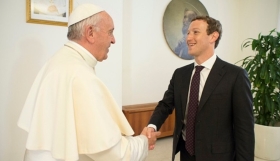
The first inkling of Zuckerberg's apparently evolving spirituality came in August last year when he and his wife met Pope Francis in Vatican City.

In a statement he posted on Facebook about that Vatican meeting, Zuckerberg said he and Pope Francis talked about efforts to help poorer communities connect to the Internet.

"We told him how much we admire his message of mercy and tenderness, and how he's found new ways to communicate with people of every faith around the world," wrote Zuckerberg.

related articles
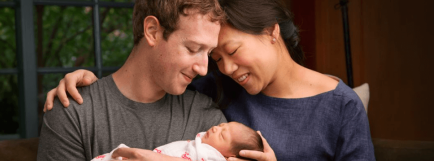
Facebook\'s Mark Zuckerberg writes baby Max: \'We\'re giving away $45B to charity to make our world a better place\'
Facebook's Mark Zuckerberg writes baby Max: 'We're giving away $45B to charity to make our world a better place'

Facebook's Mark Zuckerberg writes baby Max: 'We're giving away $45B to charity to make our world a better place'

Catholic leaders ask: Did Facebook censor religious as well as conservative news?

Catholic leaders ask: Did Facebook censor religious as well as conservative news?

Facebook\'s Mark Zuckerberg Denies He\'s An Atheist: \'Now I Believe Religion Is Very Important\'
Facebook's Mark Zuckerberg Denies He's An Atheist: 'Now I Believe Religion Is Very Important'

Facebook's Mark Zuckerberg Denies He's An Atheist: 'Now I Believe Religion Is Very Important'

News
People view religious education positively, study finds

The government is consulting on plans to add RE to the national curriculum.

Archbishop of Canterbury withdraws award given to Muslim cleric who praised Bin Laden

Reform leader Nigel Farage said the decision to award Hafiz Muhammad Tahir Mehmood Ashrafi was "astonishing". 

How the new General Synod could move beyond the present disagreement over same-sex relationships

How might the next Synod make progress in the next five years based on a recognition that there are those in the Church of England who hold fundamentally opposed positions on the matter? Is there a way of allowing both sides to achieve what they want? Martin Davie argues that the answer to this question is ‘Yes.’

No part of London should become a free speech, gospel exclusion zone

Soho is not exempt from freedom of speech and Christian expression. And Christians do not lose their fundamental freedoms when they cross an invisible boundary into a neighbourhood associated with a different worldview. The streets of London belong to all of us, writes Andrea Williams.