
|PIC1|Orthodox churches will be strengthened as Romania and Bulgaria joins the European Union (EU) this year, reports say.
It says that Orthodox voices will be louder because both nations have growing populations which boost its adherents, according to analysis in the Greek VIMA newspaper.
But at the same time their entry will highlight divisions within Orthodox ranks, because the Romanian patriarchate is preparing to open its own office in Bucharest.
Since Poland joined the EU in 2004, up to two million citizens have left the country, fleeing from the 18 per cent unemployment in the country and seeking career opportunities abroad. In the past three years, Poles have strengthened the churches in Britain. There are already more than 100 Polish priests working in England and Wales.
Scenes of celebration were seen across Romania and Bulgaria as the countries greeted the New Year, marking their accession to the European Union, and 17 years since the fall of communism.
Across the two capitals, Bucharest and Sofia, more than ten thousand people were reported to have attended concerts to rejoice at the newly found status their countries have been given.
The president of Romania, Traian Basescu, addressed the crowds, saying that EU entry was an "enormous chance for future generations".
He said, "It was hard, but we arrived at the end of the road. It is the road of our future. It is the road of our joy. We arrived in Europe. Welcome to Europe," Basescu said.
The EU now increases to 27 members, and surpasses more than half a billion people.
Prior to the speech, the EU flag was raised outside the government HQ in Bucharest as the European anthem, Beethoven's Ode to Joy, was played.
In Sofia, a pyramid of light illuminated the sky, with rays emanating from the city's Orthodox cathedral, its Armenian church, a synagogue, a mosque and another church. Fireworks lit the sky over the building where the Communist Party once held its HQ.
Bulgarian President Georgi Parvanov gave an emotional speech to the nation, calling the country's EU entry a "heavenly moment".
"The day we are welcoming - 1 January 2007 - will undoubtedly find its place among the most important dates in our national history.
"But let's make it clear, our future success as a nation depends not on European funds and resources, but on our own work."
The two new countries will now come under strict monitoring rules, with many analysts saying there is a risk that EU aid will be mis-spent, or just not taken up because the countries' institutions are too disorganised.
-

Sharing your faith: practical tips for evangelism
-

‘The UK is a mission field’ - churches encouraged to embrace cross-cultural mission on their doorstep
-

Hillsong’s Joel Houston opens up about season of 'soul-searching' after difficult few years
-

The Conversion Practices Bill is weaponised vagueness
News
-
Priest dies after cross falls on him during livestreamed Mass
-
John Lennox urges Christians to overcome fear of sharing their faith
-

The Conversion Practices Bill is weaponised vagueness
-
Anti-Christian harassment continues to rise in Jerusalem
-

Christians remember Aberfan disaster 60 years on
-

Young people are finding their way to the Christian faith through media, says bishop
Most Popular
related articles
Romania & Bulgaria Celebrate at EU Entry
Romania & Bulgaria Celebrate at EU Entry
News
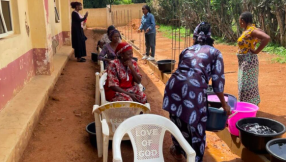
Christian widows in Nigeria hold fast to faith as they rebuild lives after violence
Hundreds of Christian widows in Nigeria’s Plateau State are putting their lives back together after losing husbands, homes and livelihoods to violence.
8 killed in attack on church in Jordan
In response to the shooting, Church leaders vowed that Christians will not be driven from their homeland.
The Christian candidate who lost the election but won my respect
Helen Spiby-Vann secured just 63 votes in the Holborn and St Pancras by-election, but her campaign made me reconsider the value of an explicitly Christian voice in politics, writes Christian Hacking.
Can we afford the society we have created?
Is spending spiralling out of control? Should the state be doing everything we expect of it, or can we simply no longer afford the society we have created?








