
The head of the Roman Catholic Church in Scotland has called on the European Court of Human Rights to uphold the principles of freedom and tolerance ahead of next week’s decision on whether schools in Italy will be allowed to display crucifixes in public school classrooms.
Italy is seeking to overturn the ECHR’s ruling last November, which banned public schools from displaying crucifixes in their classrooms on the grounds that doing so contradicted the right of parents to educate their children in line with their own convictions.
The case will be heard in a public hearing on June 30, although a final decision is not expected until later in the year.
Cardinal Keith O’Brien, President of the Bishops’ Conference of Scotland, warned that the implication of next week’s ruling could be “sweeping”.
“The precious religious heritage of many people and nations across Europe as well as the values of authentic tolerance and freedom of belief that are propounded in democratic societies are under threat,” he said.
“I hope that the European Court of Human Rights will uphold the values of freedom and tolerance, which are integral to our Christian heritage.”
The Cardinal insisted that the public display of the crucifix was “not an imposition of religion” but rather “an invitation and a sign of Christian solidarity with all peoples”.
He said that the desire to keep Church and State clearly separated should not mean rejecting the cultural traditions of European nations.
“Clearly, where a country’s traditions are Christian, the symbols of that faith are naturally accepted and appreciated for the contribution that the Christian message has provided to the creation of our present day societies, built on the respect of the dignity of every human person.”
His call coincided with an announcement from Premier Christian Media that it has applied to represent the UK in the ECHR hearing.
"The matters raised in the case are fundamental issues concerning everyone's right to education and protecting their religious freedoms. This issue extends beyond Italy including, of course, the UK,” said Premier CEO, Peter Kerridge.
“Recent cases in the UK have shown an increasing intolerance towards Christians and the display of Christian symbols such as the cross.
"We understand there are no representations from the UK government or any other UK organisation. Premier Christian Media represents the views of a significant number of Christians from the UK of different denominations, because of this we are requesting to be a third party in the case of Lautsi v Italy."
Armenia, Bulgaria, Cyprus, Greece, Lithuania, Malta, Monaco, San Marino, Romania and Russia will also be present at the hearing as an official “third party” in support of Italy. The “Amicus Curiae” status gives them the right to submit written and oral observations to the Court.


-

UN officials demand explanation for Iranian church seizure
-

AI could become a ‘very dangerous master’, warns John Lennox
-
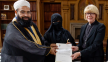
Archbishop of Canterbury withdraws award given to Muslim cleric who praised Bin Laden
-
Calls for Church of England to be 'rooted in scripture' ahead of General Synod elections
-
Most practising Christians are evangelical, study finds
-
Church of England blessing same-sex relationships 'a bridge too far'
Most Popular
News

People view religious education positively, study finds
The government is consulting on plans to add RE to the national curriculum.
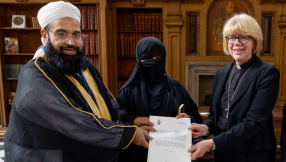
Archbishop of Canterbury withdraws award given to Muslim cleric who praised Bin Laden
Reform leader Nigel Farage said the decision to award Hafiz Muhammad Tahir Mehmood Ashrafi was "astonishing".
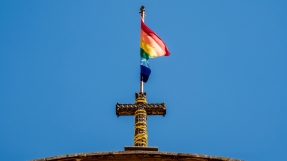
How the new General Synod could move beyond the present disagreement over same-sex relationships
How might the next Synod make progress in the next five years based on a recognition that there are those in the Church of England who hold fundamentally opposed positions on the matter? Is there a way of allowing both sides to achieve what they want? Martin Davie argues that the answer to this question is ‘Yes.’
No part of London should become a free speech, gospel exclusion zone
Soho is not exempt from freedom of speech and Christian expression. And Christians do not lose their fundamental freedoms when they cross an invisible boundary into a neighbourhood associated with a different worldview. The streets of London belong to all of us, writes Andrea Williams.








