
The toppling of Saddam Hussein's regime might have brought democracy to the country, but it also unleashed sectarian violence that has been taking a toll on the country's religious minorities, experts have told The Christian post.
International observers have been unsettled by how the number of Iraqi Christians has diminished by over 600,000 since the 2003 U.S. invasion. The UN Refugee Agency (UNHCR) estimates that up to 2 million Iraqis have fled the country since, with approximately 1.1 million settling in Syria and 450,000 in Jordan. A disproportionate number of those fleeing have been religious minorities, including Christians, Sabian Mandaeans, and Yazidis, according to Minority Rights Group International.
In mid-January, US Military Archbishop Timothy P Broglio, like many others, claimed the collapse of Iraq's Christian population was among the legacies of America's 2003 invasion, according to the Catholic News Agency (CNA). Broglio, especially concerned about Iraq's Catholics, claims believers suffered after the ousting of Hussein. The dictator, he told CNA, tended "to trust Catholics, and gave them positions of responsibility." And even if Catholics "weren't particularly part of the regime, they became identified with the regime," Broglio was quoted as saying.
"Before, they were a minority that was protected, but now they are a minority that is not protected," the Archbishop told CNA.
Other sources have told The Christian Post that the secularist dictator's ousting was part of what caused the rise in sectarian violence immediately after the American invasion.
Now, especially after the complete withdrawal of US troops last December, many observers are concerned about the safety of the Christian community – as well as other religious minorities – in the country.
As the Iraqi government struggles to restore order in the country and maintain it without help from foreign governments, many fear protecting religious minorities has been moved to the back burner.
Simultaneously, some comparisons have been drawn between Iraq and Egypt, as both countries have seen an increase in Islamization after the fall of a dictator. In Egypt, persecution of native Coptic Christians increased visibly after the Egyptian revolution, even if the community did not enjoy relative prosperity under Hosni Mubarak as Iraqi Christians did under Hussein.
Thomas F Farr, Director of the Religious Freedom Project at the Berkley Center for Religion, Peace, and World Affairs, told CP that the status of Iraqi Christians was more stable under Hussein and currently the Christian community in Iraq remains very concerned about the acts of violence and watches the actions of the new government closely.
"'Stability' being defined: if you keep your head down and not make problems, you will be left alone," Farr added, referring to Hussein's rule.
Iraq's new constitution is more egalitarian in some respects, Farr told CP, however, on the other hand, it also contains elements that allow judges to take Islamic law under consideration.
But the core issue in Iraq is not the same as in Egypt, where Muslim political parties recently gained a majority of seats in the parliament. Iraq's main problem is not in the government's policies, but the fact that the secular government remains too weak to keep extremist elements in check.
"There is a sectarian division within the country that is failing to make democracy work," Farr told CP.
"Unless the government is able to curb extremism, religious minorities, including Christians and even moderate Muslims, will live in fear," he said.



-

Could the Church face a ‘silver uprising’?
-

From Tyndale to today: The enduring hunger for the Bible
-

500 million Christians worldwide face Bible access restrictions, report finds
-

800 years on: Why St Francis of Assisi still captivates the world
-
More than 4,200 Christians killed in Nigeria this year - report
-

Franklin Graham preaches with warning from Sodom in Manchester
Most Popular
News
Christians take issue with 'one-sided' engagement over conversion therapy ban
LGBT groups have the ear of the Scottish government.
2,700 conversions recorded as Germany’s Free Evangelical Churches report renewed growth
Baptisms and conversions have risen across Germany’s Federation of Free Evangelical Churches, as new figures suggest congregational life has largely rebounded after the setbacks of the Covid-19 pandemic.
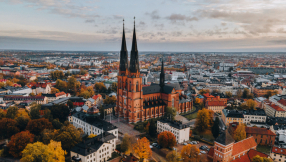
The book that changed Sweden: 500 years of the Swedish New Testament
2026 is the 500th anniversary of the first New Testament in Swedish. This is the story …
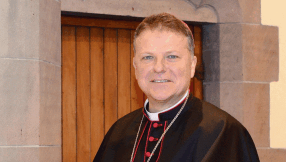
Catholic Church 'deeply disturbed' by Greens call for complete abortion decriminalisation
The Catholic Church in Scotland has said it is “deeply disturbed” by the Scottish Green Party’s call for the complete decriminalisation of abortion.








