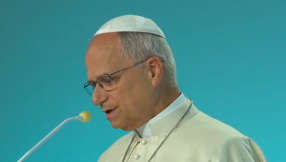
Tim Keller, the prominent megachurch leader in New York, is claiming there is a future for evangelicalism in the US despite the label becoming 'synonymous with "hypocrite"'.
In an op-ed for the New Yorker Keller, who has become a spokesman for conservative Christian thought, admitted evangelicals are regarded with 'fury and incredulity' as well as 'disgust' because of their association with Donald Trump and now Roy Moore.
Pointing out the meaning has 'changed drastically' since he founded Redeemer Presbyterian Church, New York in 1989, he wrote: 'People who once called themselves the "Moral Majority" are now seemingly willing to vote for anyone, however immoral, who supports their political positions.'
'"Evangelical" used to denote people who claimed the high moral ground; now, in popular usage, the word is nearly synonymous with "hypocrite." When I used the word to describe myself in the 1970s, it meant I was not a fundamentalist. If I use the name today, however, it means to hearers that I am.'
In a subtle dig at fellow evangelical leaders he said: 'The conservative leaders who have come to be most identified with the movement have largely driven this redefinition.'
Keller distinguished between capital-E Evangelicalism used by political pollsters who ask people whether they identify as evangelical without any reference to their theological beliefs, and small-e evangelicalism. He said this was a much larger group of Christians, separate from the 'white-evangelicals' voter bloc identified by pollters, who were racially diverse and did not subscribe to a political party.
'While white Evangelicalism is aging and declining, evangelicalism over all is not,' he wrote.
'In my view, these churches tend to be much more committed to racial justice and care for the poor than is commonly seen in white Evangelicalism. In this way, they might be called liberal. On the other hand, these multicultural churches remain avowedly conservative on issues like sex outside of marriage. They look, to most eyes, like a strange mixture of liberal and conservative viewpoints, although they themselves see a strong inner consistency between these views. They resist the contemporary ethical package deals that today's progressivism and conservatism seek to impose on adherents, insisting that true believers must toe the line on every one of a host of issues. But these younger evangelical churches simply won't play by those rules.'
He added: 'The movement may abandon, or at least demote, the prominence of the name, yet be more committed to its theology and historic impulses than ever.'