The breeze ruffling the treetops outside the window is no ordinary wind. It's a sigh of relief all the way from the Urals at the decision by the International Olympic Committee to let Russia take part in the Rio games.
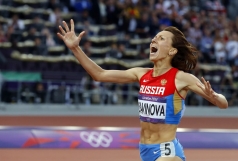
According to a report from Canadian law professor Richard MacLaren, Russia operated a state-sponsored doping programme from 2011-2015 in a flagrant breach of the rules and of the sporting spirit. So serious were its transgressions that a total ban of every Russian athlete was on the cards. It was necessary, many argued, not just in order to punish the nation for cheating, but to ensure the games were as clean as possible. The scale of the doping was such that any Russian athlete would automatically be tainted by suspicion, though they might personally be as pure as the driven snow.
In the event, the IOC backed down from a total ban, leaving it up to individual sports' governing bodies to decide if competitors are clean and should be allowed to take part. However, the ban on track and field athletes will remain and – a rather puzzling clause, this – any Russian competitor who has previously been found guilty of doping, whether or not the conviction is spent, won't be allowed in either. The same ban doesn't apply to competitors from other nations.
Many commentators aren't happy. The World Anti Doping Agency wanted a total ban. UK Sports Minister Tracey Crouch said: "The scale of the evidence in the McLaren report arguably pointed to the need for stronger sanctions rather than leaving it to the international federations at this late stage." Olympic long-jump champion Greg Rutherford told the Guardian: "We know the pros and the cons of a blanket ban, we know the risks of 'collective justice', but we also know the risk of not punishing a culture of doping that comes from the very top. I would say that the latter is a much greater threat to sport."
The IOC stands accused of caving in to Kremlin political pressure, failing to take a hard enough line against doping and general spinelessness. Russia, as a state, tried to subvert the whole Olympic movement. Rather than facing punishment, it's been allowed to get away with it.
It's easy to see the force of these arguments. We want athletics, of whatever discipline, to be a fair contest between the best in the world. If people cheat, it's we who are cheated. We're angry and we want revenge.
But expose the argument over Russia and the IOC to the light of Scripture, and we might be less certain of our moral ground in punishing individuals for the sins of a nation. Because that's what is at stake: should Russian athletes who've never taken drugs in their lives be denied the chance of their lifetimes because powerful, shadowy officials have decided to modify other athletes' bodies for the sake of national prestige? Do those calling for a blanket ban have any idea of how much those clean athletes, who are what they are because they have demonstrated a monkish devotion to their sport for years, would suffer because of it?
And this isn't just about the Olympics, either. Behind these calls for Russia to suffer for doping are other angers and fears. There's a near-universal international detestation of the Putin regime. Its behaviour in Crimea and Ukraine is indefensible. NATO is bolstering the defences of the Baltic states in a sign the Cold War is back. There's an undercurrent of public opinion in favour of showing Russia who's boss.
So the tendency is to ignore the concerns of individuals in favour of punishing an entire nation. And this is a tendency Christians ought to resist. It's perfectly true that in Scripture there are plenty of references to the way God deals with whole nations, either in blessing or (more usually) in judgment. But threaded through the Bible there's a message that is far more in tune with evangelical theology: that we are judged as individuals, not as members of a bloc. Each of us is responsible for our own actions, and each of us ultimately stands on our own before the judgment seat of Christ. As the prophet Ezekiel puts it: "Every living soul belongs to me, the father as well as the son – both alike belong to me. The soul who sins is the one who will die" (18:4).
The IOC faced a decision not just about athletics, but about justice. It's the same decision we all have to make. Do we judge people because of where they were born, or what their religion is, or their colour, or their political views, or do we judge them by what they do? We're living in a time when all these issues – nation, faith, ethnicity, politics – are polarised to an extraordinary degree and generate extreme reactions. The IOC, in a generally praiseworthy decision, has chosen to focus on people as individuals rather than as a mass. Russia is relieved, but so should we all be.
Follow Mark Woods on Twitter: @RevMarkWoods