
On Sept 11, 2004, one of the vanguards of the Christian-Muslim ecumenical dialouge in the Greek Orthodox Church died alongside 16 others in a fatal helicopter crash in the northern Aegean Sea. Within the Greek Orthodox ranks, the Petros VII - patriarch of Alexandria - was considered second in rank only to the ecumenical patriarch in Istanbul, and was largely known as the architect of modern-day Greek Orthodoxy in Africa. Following the news of his death, thousands of Orthodox Christians mourned, and dozens of prominent ecumenical voices cried out in remembrance of the great prelate.
"We join the mourning of the Petros Patriarch - a tireless witness of the gospel, a true servant of the people committed into his care by God, an advocate of fraternity and peace among peoples, an enthusiastic animator and renovator, a builder of the ecumenical movement in the Middle East, in Africa, and the world," wrote the World Council of Churches (WCC), upon hearing the news of the helicopter crash.
No cause has yet to be determined for the crash, which occured just minutes before the scheduled landing of a military helicopter carrying Petros VII, his brother, a crew of five and 10 religious officials; none of those onboard survived the crash. The helicopter, according to the Associated Press, was a "powerful Chinook" and just over a year old; the winds faced by the helicopter was "strong but not extrodinary," calling for further confusion.
The controversy over the Patriarch's death surrounds the delayed rescue operations. According to the Defense Ministry, rescue efforts did not begin for more than two hours after contact was lost. Some say a faster response may have lowered the death toll.
Meanwhile, the Middle East Council of Churches (MECC) also released a statement of grief, lamenting the loss of one of the Council's greatest leaders.
"The council has known the dearly departed patriarch as one of the main pillars of ecumenical endeavour in the Middle East as well as a presence in international gatherings. In his desire for the unity of the Body of Christ, he was an effective advocate for rapprochement between the churches," the MECC's Sept 12 statement read. "He became one of the presidents of the MECC in 1999 and was re-elected to that office in December 2003. He was tireless in pursuit of the goals of the council as regards promoting fellowship between the churches and giving substance to their common witness in the ministries of service, justice and peace."
Patriarch Petros was widely known to have led the ecumenical movement and expansion of greek orthodoxy in Arab countries. During the time he took the post as the 115th patriarch and pope of Alexandria and all Africa in 1997, the Greek Orthodox church was struggling to find priests and other staff members to take up missionary work in Africa. Following his entronement, Petros expanded the dwindling church into East Africa, South Africa and several countries of West Africa, ultimately serving over 250,000 ethnic Greeks in Africa and a growing number of natives in the continent.
Realising the sensitive nature of such expansion into Muslim-majoirty countries, the Patriarch was known to promote mutual respect and understanding between Orthodoxy and Islam.
"The world is tired of religious wars and conflicts," he was quoted as saying. "Christians and Muslims are duty-bound to respect absolutely each other's religious beliefs and overcome antagonistic feelings. We must strive for solidarity if we are to resolve the problems facing the world, for the earth is the common home of all nations wherein we are called to worship the one true God."
The Patriarch was born in Sichari, Cyprus, on Sept. 3, 1949, and entered the monastery of Macheras at the age of 12. He became a deacon at the monastery in 1969 and was sent to Alexandria to serve as deacon to Patriarch Nicolaos VI. He studied at the Theological School in Athens and was ordained a priest in the summer of 1978. Under his leadership, the number of Orthodox Christians pledging their allegiance to Alexandria rose to levels not seen since Roman imperial times.
The helicopter crash occured during the Patriarch's first trip to visit a 1,000-year old santuary in Mount Athos.
Pauline J. Chang
Ecumenical Press




-

Thousands sign petition against drag show after advert showed baby Jesus in nipple tape
-

Wes Huff confesses to plagiarism, asks for prayer: 'It was sinful'
-

Jonathan Aitken says Russell Brand asked him for prayer after rape conviction
-

Where is this ‘space for faith’ that the King speaks of?
-

Attacks on Christians in Europe rise by 44%, report finds
-

‘Beyond astonishing’ that schools are encouraging children to play GTA 6, Christian group says
Most Popular
News
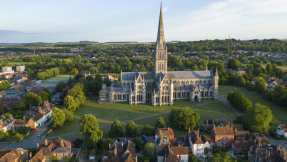
Salisbury Cathedral contributes £35m to British economy every year
It costs £22,000 a day to keep the cathedral running.
Calls for Egypt to release Christian convert facing death sentence
Six US lawmakers have called on Egypt’s president to release Said Abdelrazek, a Christian convert who has been detained since July 2025 and could face the death penalty.

Scottish Greens face criticism over calls to decriminalise abortion
Pro-life campaigners have called on Scottish ministers to reject proposals to decriminalise abortion and scrap the requirement for two doctors to approve it.
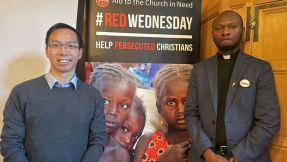
Persecuted Christians speak of power of faith and forgiveness
Nigeria and North Korea are both in the world's top 10 persecutors of Christians.





