Britain’s ancient tradition of pilgrimage is being rediscovered, with new walking and cycling routes opening this summer and a national event set to bring thousands together in September.
In Devon, the Diocese of Exeter has introduced the Lee Abbey to Lundy Way, a 20-mile route linking two ancient places of worship - St Mary’s Church in Lynton and St Helen’s Church on Lundy Island.
Travel to and from Lundy runs by ferry in summer and by helicopter in winter, with pilgrims pausing at Christian retreat centre Lee Abbey for a blessing before moving on along the dramatic coast.
Mike Harrison, the Bishop of Exeter, said of Lundy Island: “This is a place with a very long, deep Christian spirituality associated with it. You can feel that as you walk around.”
The route was designed by the Rev Jane Skinner and is the fifth to be launched as part of the Devon Pilgrim project. It features pilgrim passports with stamps available at churches along the way.
Rev Skinner remarked: “Pilgrimage is having a moment. I’m keen that everyone feels they can have a go without needing to travel abroad.”
Simultaneously, in North Wiltshire, the Diocese of Bristol is preparing to celebrate the launch of the last stage of the Athelstan Pilgrim Way.
The 100-mile trail, which officially opens in September, covers 11 churches across the Braydon Brook and Upper Thames benefices.
Its launch at St Sampson’s Church in Cricklade will include an address by writer and environmentalist Martin Palmer, with guidebooks, children’s trails, pilgrim passports and family-friendly short walks available.
The Catholic Church is also encouraging people to undertake a pilgrimage during its Jubilee Year in 2025.
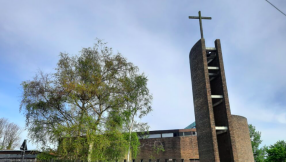
The 'Pilgrimage of Hope' will trace the shape of a vast cross through England and Wales, intersecting at Nottingham’s Cathedral of St Barnabas on 13 September.
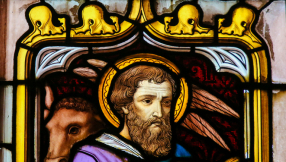
Pilgrims will walk four major routes - called after Saints Matthew, Mark, Luke and John — starting from Cardiff, Southwark, Norwich and Leeds.
Along the way, walkers will visit historic cathedrals and shrines before gathering for a Solemn Mass on the Feast of the Exaltation of the Holy Cross on 14 September at 11:15am.
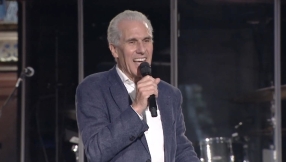
Phil McCarthy, the organiser, said the project aims to restore a practice once central to British Christian life: “If you look at walking pilgrimage in England and Wales, it’s really underdone compared with many of our continental neighbours. It was stopped at the time of Reformation and we’ve never really recovered it.
“What I’d really like to do is undo some of the work done by Thomas Cromwell and Henry VIII to see walking pilgrimage re-established as an important part of our Christian heritage in this country, and an important Christian practice.”
He said that pilgrimage was an opportunity to show compassion to each other and the people encountered along the way, while also growing in prayer and faith.
"You want it to be a witness to your faith. You want it to be an opportunity for prayer, and you want to build up community – not just on the way, but hopefully something going forward," he said.
Pilgrims can join as 'day pilgrims' for individual stretches or as 'perpetual pilgrims' who complete the full distances.
Routes will include off-road sections, accessible paths, and opportunities for prayer, hospitality, and community along the way.
For those eager to take on longer journeys, additional 'feeder routes' connect into the four main Ways from every Catholic cathedral across England and Wales. This means pilgrims from each diocese can join the wider pilgrimage network.
With so many new trails to explore, advocates of pilgrimage are hoping it will once again become an enduring expression of faith in Britain.
Rev Skinner said: “Here is a chance to walk on the earth. This is time to slow down, reflect, rejoice and gain a sense of achievement.”