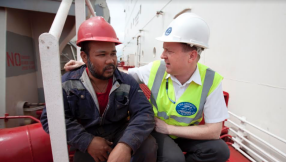
Nazanin Zaghari-Ratcliffe has spoken about her six years of imprisonment in Iran and her complex relationship with faith during and after her ordeal.
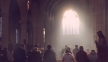
Speaking at an event in Salisbury Cathedral, Zaghari-Ratcliffe told of her arrest in Iran in 2016 as she was boarding a flight to return to Britain. Zaghari-Ratcliffe was separated from her then-22-month-old daughter, who was sent to live with her parents.
At first she was convinced that it was simply a case of mistaken identity but Zaghari-Ratcliffe was charged and convicted of plotting to overthrow the Iranian government, something she has always denied.
In 2017, she claims the judge overseeing her case confirmed that she was effectively a hostage being used as a bargaining chip with the British government. Iran claimed that Britain owed it a debt after it bought 1,500 Chieftain tanks which were never delivered.
The order was placed before the 1979 Islamic revolution, at which point Britain refused to send the tanks.
Zaghari-Ratcliffe was in the unique position of having no power at all to influence her treatment in prison or her chances of release.
“What was frustrating was, regardless of how good or how bad I was in prison, that was not going to impact my freedom. They were very, very clear that there was something they would want of the British government, and until [they got it], they’re not going to let me go," she said, according to Church Times.
Zaghari-Ratcliffe spoke of the anguish of being separated from her baby and of the “silent violence” of being placed in solitary confinement for nine months.
During her time in solitary, she relied on God and her faith.
“I was lonely and scared and uncertain of what was going to happen. I had to find something to hold on to and faith was the nearest thing I could find . . . Trying to read and to talk to God, it did help me a lot.”
Despite this, upon her release in 2022, Zaghari-Ratcliffe said her relationship with faith changed.
“We live in a very kind of messed up world, with the world being, in my opinion, a bad place. Let’s put it that way," she said.
“I am questioning, and I think we all go through a journey of . . . questioning the things that are happening. And I have parked the idea of my faith. I still believe in love and humanity and helping other people, but from a different perspective than . . . when I was in prison. But I think it was my faith that actually saved me.”