Iran's Gulf state neighbours are planning to acquire the Israeli-developed Iron Dome anti-missile systems in response to Iran's "growing stockpile of weapons,'' according to reports by Sky News.
Negotiations for the purchase of the Israeli-developed weapons, which the United States has quietly brokered, are said to be in the advanced stages. Once a deal is finalised, it is expected to pour in "hundreds of billions of dollars" for the Israeli company the produces the system, the report said.
"The Israelis have their small Iron Dome. We'll have a much bigger one in the GCC,'' Sky News said, quoting Bahrain Foreign Minister Khaled bin Mohammed.
Sky News said the sale of the Iron Dome would also include longer range interceptor missiles such as David's Sling, and the Arrow I and Arrow II which are capable of intercepting supersonic intercontinental ballistic missiles.
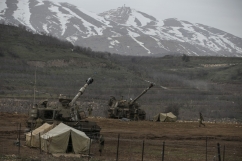
The Iron Dome system is reportedly used by Israel to intercept rockets fired from Gaza and Hezbollah's rocket arsenal in southern Lebanon, which is being supplied by Iran.
The Israeli-developed defensive system has reduced the effectiveness of rockets fired by terrorists out of Gaza into Israel by about 90 percent and has saved many Israeli lives during Operation Protective Edge, said UnitedWithIsrael.org.
Sky News explained that Gulf states these days perceived Iran's military strength and ambitions as primary threat to their existence after the nuclear deal was signed between the Islamic Republic and the US and coalition nations in July.
"Iran has been trying to undermine and topple governments in our region for years," said Khalifa, according to the report.
He said Iran's precision missile capacity is certain to increase as a consequence of the lifting of sanctions by the UN Security Council and the US following the nuclear deal with Tehran.
"They [Iran] will put a lot of money into this programme to develop techniques and tactics to defeat our missile defences ... the strategy appears to be one of saturation to stockpile enough missiles to overwhelm any defence system we build in the Gulf," Sky News quoted Khalifa as saying.
The Gulf Cooperation Council (GCC) nations—which includes Bahrain, Qatar, Saudi Arabia and United Arab Emirates—are said to be fighting against Houiti rebels in Yemen, claiming that these rebel groups are backed by Iran.
The Embassy of Bahrain in London has denied reports about purchasing Israeli-developed weapons but admitted that GCC countries are in the process of planning to acquire an anti-missiles defence system and are negotiating with the United States, according to a report by IBTimes.