
PARIS - A full service was restored on the Paris Metro and most French trains were running on Saturday after transport workers ended a crippling strike so that talks on pension reform could run their course.
The nine-day walkout over President Nicolas Sarkozy's plan to end a system of special pension rights has been the biggest challenge yet of his presidency, testing his credibility in keeping an election promise of sweeping economic reforms.
Talks between employers, workers and the state over the specifics of the pension reform plan are due to last a month. Union leaders have said the negotiations must lead to concrete results and hardliners have warned strikes could resume.
"There is much to work with on the agenda of the talks. Now we will see what it will lead to concretely because workers are expecting concrete things," Jean-Claude Mailly, head of the Force Ouvriere union, told Europe 1 radio.
"The fact that there has been a strike means that there has been a whole series of points that they have not obtained and that are on the calendar of negotiations," he added.
Train services have been improving steadily since Thursday, when most union members on strike voted to end their walkout.
Sarkozy has refused to back down on the main element of his reform -- ending early retirement rights for most workers who have them -- and index-linking their pensions to inflation rather than salaries.
However, he has indicated he is ready to make concessions in other areas, such as pay, and French media have reported that an eventual deal might cost the SNCF railways alone 100 million euros ($150 million) a year in salary hikes and perks.
The fact that unions agreed to discuss scrapping special pension rights in the transport and energy sectors is a first, and in stark contrast to 1995 when a previous reform was withdrawn after a massive strike.
State rail operator SNCF said its high-speed TGV lines were running normally or almost normally but only its international night trains would be running on Saturday night. Regional train services had improved but were still disrupted, it said.
In Paris, public transport authority RATP said traffic had returned to normal on the underground Metro network as well as bus and tram lines.
Public opinion has been on the government's side in the dispute, but widespread worries over the cost of living have put pressure on it to stop the dispute escalating.
An IFOP poll for regional newspaper Ouest France published on Saturday found 65 percent of respondents felt their purchasing power had fallen over the past 12 months, compared with 59 percent when asked the same question in January.




-

Thousands sign petition against drag show after advert showed baby Jesus in nipple tape
-

Wes Huff confesses to plagiarism, asks for prayer: 'It was sinful'
-

Where is this ‘space for faith’ that the King speaks of?
-

‘Beyond astonishing’ that schools are encouraging children to play GTA 6, Christian group says
-

John Lennox says there is enough evidence to take Christianity seriously
-

Does the BBC understand worship?
Most Popular
News
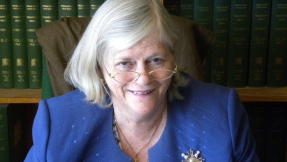
Hundreds gather to remember Ann Widdecombe at Westminster Cathedral
Prime Minister Andy Burnham and four of his predecessors joined around 600 people at Westminster Cathedral on Thursday for a memorial service for Ann Widdecombe.
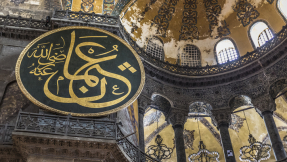
Wake up and smell the coffee: why the rise of Islam is a call to discipleship
New demographic forecasts from the Pew Research Centre predict that Islam is set to overtake Christianity globally by 2035. And in the UK, the Christian share is set to collapse to 25 per cent by 2070. Drawing on 30 years’ reporting on the persecuted church, Andrew Boyd argues that these figures are a sharp wake-up call.

EU envoy pledges support for persecuted Christians
The envoy spoke of the “terrible and unnecessary suffering” faced by persecuted Christians.

When Jacob and Esau meet
Jewish academic and Hebrew scholar Irene Lancaster explores the rabbinic interpretation of Jacob’s encounter with Esau.





