
The war on terror will "never" be won "as long as there are conditions in the world that make people desperate," like dehumanising poverty, disease and ignorance, former Archbishop Desmond Tutu told ecumenical participants at the start of the 2007 World Social Forum (WSF) in Nairobi.
|PIC1|"God is weeping," Tutu told the ecumenical gathering at Nairobi's Holy Family Roman Catholic Basilica, at the sight of the awful things happening in the world today.
"God weeps and says: 'Who will help me so we can have a different kind of world, one in which the rich know they have been given much so they can share and help others?'" A creation that was very good has "turned into a nightmare".
Presiding at the event along with Tutu were His Holiness Abune Paulos, patriarch of the Ethiopian Orthodox Tewahedo Church, and Archbishop Zaccheaus Okoth, president of the East Region of Caritas Africa. Kenyan Nobel Peace laureate Wangari Maathai also participated in the 20 January ceremony.
Tutu emphasised that the "fundamental law of our being" is that "we are bound to one another". Because of that, "the only way we can make it is together, all of us". Only together can we be free, safe and secure.
According to Tutu, this rule applies also to politics: "Not even the only superpower can be totally self-sufficient; it needs other nations."
As the WSF takes place for the first time in Africa, Tutu called Africans to be proud of their legacy. "We are not God's stepchildren," he said, recalling that it was an African who helped Jesus to carry his cross, and as Africans were also the first doctors of the early church. He mentioned overcoming slavery, colonialism and apartheid among African accomplishments.
After the prayers guided by Archbishop Okoth and the blessing of Patriarch Paulos, the participants went in procession to the All Saints Anglican Cathedral, where a second part of the ceremony took place before participants joined the official opening of the WSF at Nairobi's Uhuru Park.
Members of the 2007 global ecumenical coalition at the WSF include the All Africa Conference of Churches (AACC), APRODEV, Brazil Ecumenical Forum, Caritas Internationalis, International Cooperation for Development and Solidarity (CIDSE), Ecumenical Advocacy Alliance (EAA), Frontier Internship in Mission, Koinonia, Lutheran World Federation (LWF), Pax Romana, World Alliance of Reformed Churches (WARC), World Council of Churches, World Student Christian Federation (WSCF), the YWCA and YMCA.
-

Teenagers in Britain come bottom of survey for life satisfaction
-

Third of young people now turning to AI for friendship, research finds
-
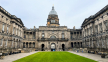
Edinburgh University ends divinity programmes as theology faces a changing future
-

From Genesis to Revelation: The ambitious AI project turning the Bible into music
News
-

Archbishop of Canterbury withdraws award given to Muslim cleric who praised Bin Laden
-
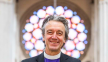
What links Tommy Robinson, Andrew Tate and the CofE’s newest diocesan bishop?
-

Edinburgh University ends divinity programmes as theology faces a changing future
-

Third of young people now turning to AI for friendship, research finds
-

No part of London should become a free speech, gospel exclusion zone
-

Most practising Christians are evangelical, study finds
Most Popular
related articles
Kelly Looks to Fight Extremism by Targeting Educational 'Hotspots'
Kelly Looks to Fight Extremism by Targeting Educational 'Hotspots'
Religious Tensions Increase as Al-Qaeda Makes Britain Top Target
Religious Tensions Increase as Al-Qaeda Makes Britain Top Target
Britain & Pakistan Unite to Fight Terrorism
Britain & Pakistan Unite to Fight Terrorism
Thousands of Police Guard Religious Sites in Indonesia as Terrorist Threats Increase Over Christmas
Thousands of Police Guard Religious Sites in Indonesia as Terrorist Threats Increase Over Christmas
Fears Over Backers of Huge East London 'Mega-Mosque' Proposals
Fears Over Backers of Huge East London 'Mega-Mosque' Proposals
News
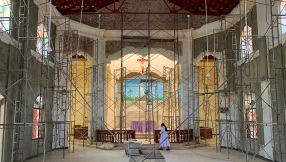
Cautious welcome as 15 men sentenced over Sri Lanka Easter Sunday bombings
Christian groups welcomed the convictions but say questions remain about who was involved.
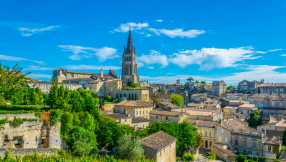
Catholicism in France has 'collapsed'
A new report on Catholicism in France comes days ahead of Pope Leo XIV's visit.
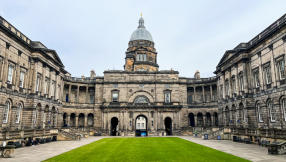
Edinburgh University ends divinity programmes as theology faces a changing future
It marks a significant change for an institution whose history has been closely intertwined with theological education for centuries.
Lib Dems to investigate treatment of the faithful as Campanale case rumbles on
The Liberal Democrats have begun a review into how it treats people of faith within the party.








