Chinese state media and the public have criticised the government and police for failing to prevent a New Year's Eve stampede in Shanghai that killed 36 people and dented the city's image as modern China's global financial hub.
Apart from Hong Kong, which is run as a separate territory, Shanghai is China's most international and cosmopolitan city, a glitzy home to global companies with ambitions to become a world financial center by 2020.
The official Xinhua news agency said the government could not shake responsibility for what happened. It asked why there were apparently so few police on duty for the tens of thousands thronging Shanghai's famous waterfront, known as the Bund.
"It was a lack of vigilance from the government, a sloppiness," the news agency wrote.
Xinhua noted that the crush happened not far from a much trumpeted new free trade zone described as the "pride of the country".
"The disaster, which happened in China's financial hub of Shanghai, served as a wake-up call that the world's second-largest economy is still a developing country which has fragile social management," it said in an English-language commentary.
Shanghai people echoed those complaints.
"There was not enough policing and planning. It is really sad to see a stampede happen in a big city like Shanghai," said resident Tang Lifeng, 38.
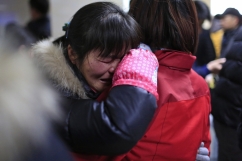
The site of the stampede was cordoned off on Friday, with grieving relatives holding a candlelight memorial. Most victims were students in their 20s.
City officials said one Taiwanese was among the dead. Of the 47 injured, 13 were in critical condition, they said.
The waterfront has become a New Year countdown site in recent years after authorities brought in performances such as 3D light shows and fireworks. Celebrations in 2013 drew more than 300,000 revelers.
Police have given few answers, saying an investigation is going on. On Thursday, they did not allow foreign media into a briefing, underscoring concern about negative coverage.
They have dismissed reports that a rush to pick up coupons thrown from a bar overlooking the Bund was the cause, with focus shifting to overcrowding on a raised viewing area.
The stampede has prompted unflattering comparisons with India, where stampedes are relatively common, another rapidly developing country and rival that many Chinese feel superior to.
"I originally thought that stampedes like this could only happen to Indians on pilgrimages," Cheng Daolin, a manager at a Chinese engineering company, wrote on Weibo, China's answer to Twitter.
"In the space of one night, China has become like India, and Shanghai has become like Mumbai," wrote another Weibo user.