
New York, USA - A recent cartoon of the Prophet Muhammad published by a Swedish newspaper and condemned in Islamic countries demonstrates the need for a journalistic code of standards when depicting religion, says a US-based advocacy group that has now developed such a set of standards.
A charter developed by Institute on Religion and Public Policy in Washington DC, "takes into account the paramount principles of freedom of expression and freedom of religion or belief, and attempts to strike an appropriate balance that preserves both of these fundamental freedoms," said Joseph K. Grieboski, the institute's president.
Among other things, the charter's four-part declaration states, "A responsible media never promotes religious hatred. It scrupulously avoids engendering hostility towards religions and their members likely to lead to imminent violence or systematic deprivation of human rights."
On 5 September, a group of Swedish Muslims called off a demonstration after a meeting with the country's prime minister that followed the publication by the Nerikes Allehanda newspaper of a cartoon that placed the Prophet Muhammad's head on the body of a dog.
"I personally would never intentionally act in a way that could be perceived by other religions as provocative or offensive," Prime Minister Fredirk Reinfeldt was quoted as saying by the Agence France-Presse news agency. He also insisted that press freedom and freedom of expression were "an inalienable part of our country and our democracy".
Nerikes Allehanda commented, "It is only natural to feel offended. But that doesn't give one the right to curtail or annul others' freedom of expression. Freedom of expression is the lifeblood of democracy."
The Institute on Religion and Public Policy said its charter also states, "A responsible media does not refer to religions or religious institutions in a prejudicial, biased or pejorative context; when religious references are essential to the reported matter or facilitate understanding, they are made accurately, fairly, impartially and respectfully."
The publication of the Swedish cartoon stemmed from news coverage of attempts to exhibit drawings of Muhammad in the country. Citing security concerns, at least two art galleries declined to exhibit the drawings. Ulf Johansson, the editor of Nerikes Allehanda, defended his publication of the cartoon, and in a commentary on the issue criticised self-censorship among exhibition galleries.
Officials in Iran, Jordan, Pakistan and Egypt condemned the cartoon's publication, with a spokesperson for the Jordanian government saying, "Such cartoons do not serve interfaith dialogue and co-existence, in which Jordan believes."
The text of the Institute on Religion and Public Policy charter can be found at: www.mediacharter.org
[Source: ENI]


-

Could the Church face a ‘silver uprising’?
-

From Tyndale to today: The enduring hunger for the Bible
-

500 million Christians worldwide face Bible access restrictions, report finds
-

800 years on: Why St Francis of Assisi still captivates the world
-
More than 4,200 Christians killed in Nigeria this year - report
-

Franklin Graham preaches with warning from Sodom in Manchester
Most Popular
News
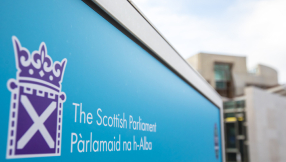
Christians take issue with 'one-sided' engagement over conversion therapy ban
LGBT groups have the ear of the Scottish government.
2,700 conversions recorded as Germany’s Free Evangelical Churches report renewed growth
Baptisms and conversions have risen across Germany’s Federation of Free Evangelical Churches, as new figures suggest congregational life has largely rebounded after the setbacks of the Covid-19 pandemic.
The book that changed Sweden: 500 years of the Swedish New Testament
2026 is the 500th anniversary of the first New Testament in Swedish. This is the story …
Catholic Church 'deeply disturbed' by Greens call for complete abortion decriminalisation
The Catholic Church in Scotland has said it is “deeply disturbed” by the Scottish Green Party’s call for the complete decriminalisation of abortion.








