
The Bishop of Durham has challenged a Bill giving more power to the Bank of England.
The Financial Services Bill proposes abolishing the Financial Services Authority and dividing its powers between a new Financial Conduct Authority (FCA) and the Bank of England.
The Rt Rev Justin Welby said the Bill would make the Governor of the Bank of England "almost unchallengeable" in the running of the three main committees overseeing financial stability, while leaving the FCA as "the runt of the litter".
The amendments put forward by the Bill support locally based and easily accessible financial services.
If voted through, they would require the Financial Conduct Authority to "promote an appropriate level of financial services provision in deprived communities".
Lenders would be required to disclose the value of loans they make in these communities.
The amendment also requires the FCA to "have regard to the needs of small enterprises, third sector organisations and consumers in deprived communities".
In addition to the Bishop of Durham, the amendments have cross-party support, including from Baroness Andrews, Lord Sharkey and Baroness Kramer.
-

The dire American political situation: a brief overview for faithful Christians in Britain
-
Police appeal for witnesses after head smashed off Jesus statue at church war memorial
-

Many churches lack AI policies despite widespread support among pastors, study finds
-

Poll shows support for conversion therapy ban disappears once people learn its implications
News
-

Former Crowded House pastor and wife charged with rape
-

Enoch Burke accuses Archbishop of remaining 'silent' in school trans dispute
-

'Such a blessing' - church that closed down 15 years ago opens its doors again
-

Half of Christian questions on ChatGPT are attempts to understand the Bible
-
Christians urged to speak out against 'conversion practices' bill
-
Archaeologists may have discovered identity of mystery skeleton in Westminster Abbey
Most Popular
News

The dire American political situation: a brief overview for faithful Christians in Britain
Professor Robert AJ Gagnon argues that Christians have a moral duty to vote Republican, contending that Democratic policies pose a greater threat than Republican candidates’ failings.

Poll shows support for conversion therapy ban disappears once people learn its implications
The full implications of the law are not widely known.
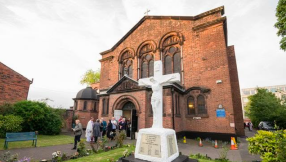
Police appeal for witnesses after head smashed off Jesus statue at church war memorial
Officers have released a CCTV image after a war memorial at St Alban’s Church in Warrington was vandalised and daubed with offensive graffiti.

Belief in ghosts and magic linked to faith and trust in science, study finds
A new study suggests that Americans who believe in God while placing strong trust in science and reason may be more likely to believe in ghosts, curses and other supernatural phenomena.





