The World Council of Churches (WCC) has added its voice to calls for the Iranian government to return control of a 150-year-old church to its proper owners.
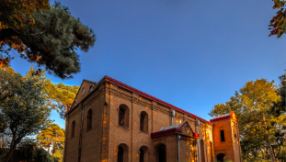
Iranian authorities seized control of St Peter Evangelical Church in Tehran and evicted 20 families who were living in the 10-acre property.
The families were from the Assyrian and Armenian ethnic communities.
The compound contained homes, two schools and offices used by the Bible Society and of the Council of Evangelical Churches of Iran, which owns the land.
WCC General Secretary Dr Jerry Pillay expressed his “grave concern” at the developments in Tehran.
“The confiscation of church property and displacement of its community constitute a serious violation of freedom of religion or belief and threaten Iran’s longstanding Christian presence and heritage," he said.
"These developments are especially troubling in light of other recent measures affecting churches and Christian communities in the country.”
Dr Pillay urged the government to hand the church back to the Council of Evangelical Churches in Iran and allow residents to return.
He added, “The WCC stands in solidarity with the Council of Evangelical Churches of Iran and all those affected, and urges the Iranian authorities to uphold human dignity, religious freedom, and the rights of religious minorities in accordance with international human rights law.”
United Nations experts have also condemned the seizure. They said that most of the families forced to leave the church compound were “low income, long-standing residents" who were reportedly given just two weeks' notice.
"The church’s leaders were threatened with arrest if they failed to comply. The final resident left on 12 July, prompting fears that the complex may be demolished,” they said.
“Forced evictions are incompatible with international human rights law and risk leaving members of recognised religious and ethnic minorities homeless."
According to the UN, there used to be around 50 Protestant churches in Iran, most of them offering services in Persian. Now there are "effectively none" as they have either been closed down or have had to stop their Persian language services.
“This is not an isolated incident, but the culmination of a long pattern of measures directed against Iran’s Christian community, and in particular against Persian-speaking Christian worship,” the experts said, citing the closure of Tabriz's Assyrian Presbyterian church in 2019 and the demolition in June of a Presbyterian church in Mashhad that had been forced to close decades earlier.
“Freedom of religion or belief includes the freedom to worship in community with others, in one’s own language, and to maintain places of worship. When a church is confiscated, a community loses not only a building but a place of worship and community life,” the experts added.
Ranked number 10 on Open Doors' watch list of Christian persecutors, Iran is a tough place to follow Christ. It is not illegal to be a Christian in Iran, but it is illegal for a Muslim to become a Christian.
Although still not easy, the Iranian government has traditionally given more leeway to the historic Armenian and Assyrian communities. Due to their historic status, Armenians and Assyrians are reportedly permitted, at least in theory, to conduct Christian worship services in Persian.
Reports suggest however that what the law says and what the Iranian government does may not be the same thing.
Iranian authorities justified their seizure of the property on the grounds that is under foreign ownership, a claim denied by religious liberty group Voice of the Martyrs in an email to World.