Ancient 'gospel' may have been used to tell fortunes

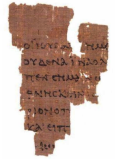
A 1,500-year-old 'gospel' may have been used as a spiritual guide to everyday problems, according to a researcher who has deciphered the text.

Written in Coptic, the language of ancient Egypt still used in the Coptic Church's liturgy today, the tiny book – only three inches high – was deciphered by Princeton papyrologist Anne Marie Luijendijk. It begins: "The Gospel of the lots of Mary, the mother of the Lord Jesus Christ, she to whom Gabriel the Archangel brought the good news. He who will go forward with his whole heart will obtain what he seeks. Only do not be of two minds."

In her book 'Forbidden Oracles? The Gospel of the Lots of Mary', Luijendijk says that she expected to find an account of the life of Jesus when she read the opening. However, the book consists of 37 vague 'oracles' which would have been used to help someone make decisions about a problem facing them, something like a newspaper horoscope.

For example, Oracle 34 reads, "Go forward immediately. This is a thing from God. You know that, behold, for many days you are suffering greatly. But it is of no concern to you, because you have come to the haven of victory."

Luijendijk said that the book's owner could have acted as a diviner, helping to interpret the oracles for people seeking an answer to a question – or it might have been for purely personal use. Its small size meant that it might have been designed to be concealed, as the Church discouraged such practices.

The 'gospel' is an example of a 'lot book', used in the ancient world to try to predict a person's future. According to Luijendijk, this is the only lot book found so far that calls itself a 'gospel'.

She told the LiveScience website: "The fact that this book is called that way is very significant. To me, it also really indicated that it had something to do [with] how people would consult it and also about being [seen] as good news.

"Nobody who wants to know the future wants to hear bad news in a sense."

The text is now owned by Harvard University's Sackler Museum. It was given to Harvard in 1984 by Beatrice Kelekian, who donated it in memory of her husband, Charles Dikran Kelekian. His father, Dikran Kelekian (1868-1951), was an influential trader of Coptic antiquaries.

It is not know how the Kelekians acquired the book, but Luijendijk believes it may have been used by a diviner at the Shrine of Saint Colluthus in Egypt, where archaeologists have found texts with written questions, indicating that the site was used for divination.


related articles
Syria\'s ancient cultural treasures are being destroyed by ongoing war
Syria's ancient cultural treasures are being destroyed by ongoing war

Syria's ancient cultural treasures are being destroyed by ongoing war

Ancient \'Tomb of Osiris\' found in Egypt\'s Valley of the Nobles
Ancient 'Tomb of Osiris' found in Egypt's Valley of the Nobles

Ancient 'Tomb of Osiris' found in Egypt's Valley of the Nobles

Researchers claim to have found ancient Gospel of Mark fragment in mummy\'s mask
Researchers claim to have found ancient Gospel of Mark fragment in mummy's mask

Researchers claim to have found ancient Gospel of Mark fragment in mummy's mask

Researchers may soon be able to read 2,000-year-old scrolls charred when vesuvius erupted over Pompeii

Researchers may soon be able to read 2,000-year-old scrolls charred when vesuvius erupted over Pompeii

Iraq: Priest is working to save historic Christian manuscripts from the Islamic State

Iraq: Priest is working to save historic Christian manuscripts from the Islamic State

News
Pope seeks prayers for peace in Christmas Day message

The Pope asked people to pray in particular for the "tormented people of Ukraine" in his Christmas Day 'Urbi et Orbi' message. 

Who was St Stephen and why is he remembered on December 26?

The carol says, “Good King Wenceslas last looked out on the Feast of Stephen.” In many countries, December 26, also known as Boxing Day, is better known as St Stephen’s Day. Stephen was the first Christian martyr. This is the story …

King Charles reflects on pilgrimage, reconciliation and hope in Christmas Day address

King Charles III used his Christmas Day speech to reflect on the significance of pilgrimage as he appealed to the nation "to cherish the values of compassion and reconciliation". 

2 Timothy 3:16 is Logos' Bible verse of the year, Matthew was the most studied book

One of the most-studied Bible verses of the year is from 2 Timothy in the New Testament, according to an analysis of millions of Bible study sessions that tracked how believers worldwide are engaging with Scripture.