A Japanese priest has spoken of his training for kamikaze suicide attacks during World War II and of how he came to faith in Christ.
Retired Anglican bishop Rt Rev Paul Saneaki Nakamura, 87, spoke to around 300 US marines at Camp Hansen in Okinawa, Japan in an address reported by Stars and Stripes, the US military community news service.
Nakamura spoke of his service in the Imperial Japanese army during the war and of his commitment to Japanese victory. "We were convinced that the Japanese army with its great success was god's army with a special divine favour," he said.
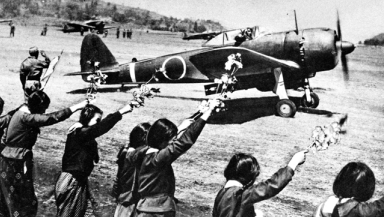
In the later stages of the war it was clear that Japan was losing, however. Suicide corps were organised – from which eldest sons were exempt as they were needed to continue the family line – and Nakamura, a second son, volunteered as a kamikaze pilot. He trained on gliders as not enough planes were available. "We were taught that since we were such a small island nation and because we were one country fighting against many, great sacrifices were required," he said.
He vividly remembers the last words of one comrade with whom he and his fellow trainees drank water from a sake cup before his mission – a traditional farewell – "You can have my dinner tonight."
Nakamura did not fly as a kamikaze pilot as the navy ran out of aircraft. He also trained as a 'human torpedo', piloting a one-man submarine into which he would have been sealed, with no possible escape. Again, the navy ran out of torpedos. As a suicide bomber, he was taught to dig a hole, strap explosives to himself, wait for an enemy tank and explode them.
Surviving the war, Nakamura said that he became a "beggar on the street" in his devastated country. "You remember when the Israelites were wandering in the desert, they were always longing to return to Egypt," he said. "At that time of my life, in despair and loneliness, I lost my dignity as a human being."
He started going to church, recounting that a minister there "told me to become a priest to help Japan to restore life, like Jesus restored Lazarus to life four days after his death".
On returning to his home in Okinawa he found that all of the eldest sons who had stayed there were killed in the fighting, which lasted for 82 days. Japan lost an estimated 77,166 soldiers, who were either killed or committed suicide, and the Allies suffered 14,009 deaths. At the same time between 42,000-150,000 local people were killed or committed suicide.
Nakamura said: "Possibly in some strange way that I could not understand, God had spared my life as He had a plan for my life."
He also said: "The ultimate message I wanted everyone to leave here with is that arms will never achieve peace. Peace only comes through discussion, dialogue and an understanding of each other."