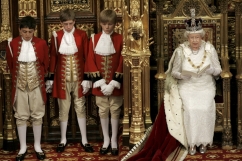
Leaders of Britain's evangelical Christian community have criticised plans for an Extremism Bill, expected to be announced in today's Queen's Speech.
The Bill is expected to include new civil orders to ban extremist groups, restrict the behaviour of extremist individuals and close down premises used for extremist purposes. The Bil would also provide Ofcom with powers to censor extremist content, and enable employers to conduct checks on employees for involvement in extremism.
The Bill is aimed at non-violent forms of extremism.
Simon McCrossan, head of public policy at the Evangelical Alliance, said: "It's extreme to try and tell religious groups what they can and can't teach under the guise of fundamental British values. It's extreme to threaten to send Ofsted inspectors into churches if they don't teach British values. This government's trying to fight extremism with extremism and the main casualty will be our fundamental freedoms.
"It's right that the government act decisively to address issues of terrorism and radicalisation that undermine the rule of law and attack our way of life in the UK.
"This should not be an excuse to clamp down on free speech and religious freedom. We are privileged to live in a plural society where we all get to play our part.
"We are deeply concerned that the definitions of extremism, especially the extension of non-violent extremism, threaten to trample on the freedoms that have been hard won, long enjoyed, and underpin our democracy. To date, the definitions are so broad there could be many unforeseen consequences to fundamental freedoms in our plural multi-faith society."
The Evangelical Alliance has previously spoken out against government plans to regulate out of school settings, and the threat of Ofsted inspections over a wide variety of clubs and societies, including churches that provide youth and children's work in every corner of the UK.
McCrossan said: "In pressing ahead with these plans the government are opting for Big Brother over the Big Society. There's a very real risk churches will feel pressured to step back from the valuable services they currently provide to children and young people across society. Whether intentional or not, this strategy looks like the wholesale nationalisation of youth work and the indirect state regulation of private religious practice – the very antithesis of a free liberal democracy. It is extremism."