
The DRC and the plight of its women and girls can seem a world away – even beyond our geographical reach to help. But UK-based organisations are working on various levels to turn the situation around by bringing it to the attention of the international community and supporting indigenous partners in their work on the ground.
In March 2011, Christian development agency Tearfund launched the report ‘Silent no More’ to address the issue of sexual violence in the DRC, Liberia and Rwanda. The report, published in cooperation with the Archbishop of Canterbury, presented a compelling case for the church to be a vital part of the solution.
It was out of this that an international coalition of 13 like-minded Christian organisations was established “to end the silence, pain and stigma faced by survivors of sexual violence”. Harnessing the power of the internet, ‘We Will Speak Out’ has made it easier for individuals the world over to help break the silence and raise awareness by pledging and taking a stand against sexual violence on their website www.wewillspeakout.org.
Many of these organisations have been working for years to end sexual violence in the DRC. One of them is Christian Aid, which advocates a “policy of zero tolerance towards rape”. It believes that collaborating with already existing structures like the judiciary, the government, the police, and most importantly the Congolese army (FARDC), is crucial in fighting sexual violence.
The FARDC has gained a terrifying reputation for initiating rapes and massacres in numerous communities. Rather than denouncing the army for its actions, Christian Aid believes it is more effective to work with soldiers in raising awareness through training sessions on sexual violence and other topics such as civilian rights.
A further strategy is bringing the army and the community together in reconciliation church services.
Major Janvier Bulambo, a training participant, is concerned about the negative reputation of the army caused by the misconduct of “certain soldiers”. He welcomes the work of Christian Aid and its partners, and has acknowledged the need to “improve” and “address our behaviour”.
Likewise, Tearfund, its partner HEAL Africa, and CAFOD believe in a two-pronged approach, raising awareness internationally and working with affected communities to offer medical and psychosocial support to the victims.
Taking the view that rape stems from culturally ingrained concepts of female inferiority, HEAL Africa runs workshops with the authorities of affected communities. They address gender equality and challenge traditional mindsets in the hope of preventing further crimes.
CAFOD has a special interest in removing the stigma of rape within the communities. After having been assaulted, many victims are ostracised by parents, husbands and their community, and are blamed for what has happened to them.
They see reintegration into the community as key to a “faster and better” healing process and hold workshops emphasising the need to welcome the victims back instead of rejecting them.
There are so many people in need of healing, but just how much can be done is often dependent on funding.
Emmanuel Baboo, evaluation officer at HEAL Africa, senses something of a reluctance on the side of potential donors to support sexual violence programmes.
“The lack of finance is a big problem for us,” he says.
The American Journal of Public Health published a study based on the figures of the Congolese government’s health study, which found that 400,000 Congolese women were raped within a period of 12-months.
Despite the horrendous figures, telling the world about the nightmare situation in the DRC is difficult.
Baboo says plainly that he does not see the “interest of the international community” in the situation.
Pascale Palmer, senior press officer at CAFOD, reports an increase in public consciousness and media interest since the study was released.
She receives many enquiries from news producers wanting to report on the situation but once they realise the sensitivity of the issue and the fact that the reality is just so harrowing, many retract their interest.
“It is not that the journalists don’t want to report the horror of this story, it is just a very difficult and harrowing tale to tell again and again,” she empathises.
Despite the challenges of the work and the relentless number of victims, Katie Harrison, media officer at Tearfund does not lose hope.
“We continue to pray for those affected by sexual violence and do all we can to see an end to this crime.”
-

Sharing your faith: practical tips for evangelism
-

‘The UK is a mission field’ - churches encouraged to embrace cross-cultural mission on their doorstep
-

Hillsong’s Joel Houston opens up about season of 'soul-searching' after difficult few years
-

The Conversion Practices Bill is weaponised vagueness
News
-
Priest dies after cross falls on him during livestreamed Mass
-
John Lennox urges Christians to overcome fear of sharing their faith
-

The Conversion Practices Bill is weaponised vagueness
-

Hillsong’s Joel Houston opens up about season of 'soul-searching' after difficult few years
-

Anti-Christian harassment continues to rise in Jerusalem
-

Young people are finding their way to the Christian faith through media, says bishop
Most Popular
News
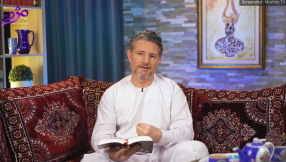
Afghanistan's first dedicated Christian TV channel launches despite Taliban restrictions
Mozhda TV, which its founders describe as the first Afghan Christian television channel, began broadcasting Saturday, Oct. 24, as church leaders, mission partners and Afghan believers gathered to mark its launch.
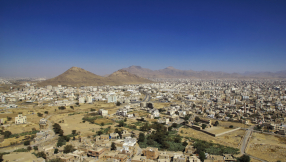
Yemen is key funding hub for Islamic State attacks on Christians - report
The report warns that Christians are seen as a particular target by the Islamic State.
Christian widows in Nigeria hold fast to faith as they rebuild lives after violence
Hundreds of Christian widows in Nigeria’s Plateau State are putting their lives back together after losing husbands, homes and livelihoods to violence.
8 killed in attack on church in Jordan
In response to the shooting, Church leaders vowed that Christians will not be driven from their homeland.








